 English
 中文简体
中文简体 русский
 عربى
عربى

Content
- 1 What an HDPE Fusion Machine Actually Does
- 2 Types of Butt Fusion Welding Machines on the Market
- 3 Step-by-Step: How Butt Fusion Welding Actually Happens
- 4 The Parameters That Decide Whether a Weld Actually Holds
- 5 Matching Machine Size to Pipe Diameter
- 6 Common Fusion Defects and What Actually Causes Them
- 7 Butt Fusion vs Electrofusion vs Socket Fusion: Choosing the Right Method
- 8 Main Components of a Hydraulic Fusion Machine, Explained
- 9 Keeping a Fusion Machine Accurate Over Years of Use
- 10 Field Conditions That Change How a Weld Should Be Handled
- 11 What to Weigh Before Buying an HDPE Fusion Machine
- 12 Working Safely Around a Fusion Machine on Site
- 13 Quick Glossary of Fusion Welding Terms
- 14 Frequently Asked Questions About HDPE Fusion Machines
- 14.1 How long does one butt fusion weld typically take?
- 14.2 Can one HDPE fusion machine handle multiple pipe diameters?
- 14.3 Why does the pipe need to be faced before every weld, even if it looks clean?
- 14.4 Is a data-logging fusion machine worth the extra cost?
- 14.5 What happens if the heater plate is removed too slowly during joining?
- 14.6 Does ambient temperature affect the fusion process?
- 14.7 Can a butt fusion joint be repaired if it fails inspection?
- 14.8 What is drag pressure and why does it matter?
- 14.9 How often should a fusion machine's heater plate be replaced?
- 14.10 Can butt fusion machines join pipe made from different polyethylene grades?
What an HDPE Fusion Machine Actually Does
An HDPE fusion machine joins two lengths of polyethylene pipe by heating their end faces to a molten state and then pressing them together under controlled force until the material cools into a single, homogeneous joint. There is no glue, no gasket, and no mechanical fitting involved. Once the fusion cools, the joint area is often stronger than the surrounding pipe wall, because the polyethylene chains from both pipe ends interlock across the interface rather than simply touching.
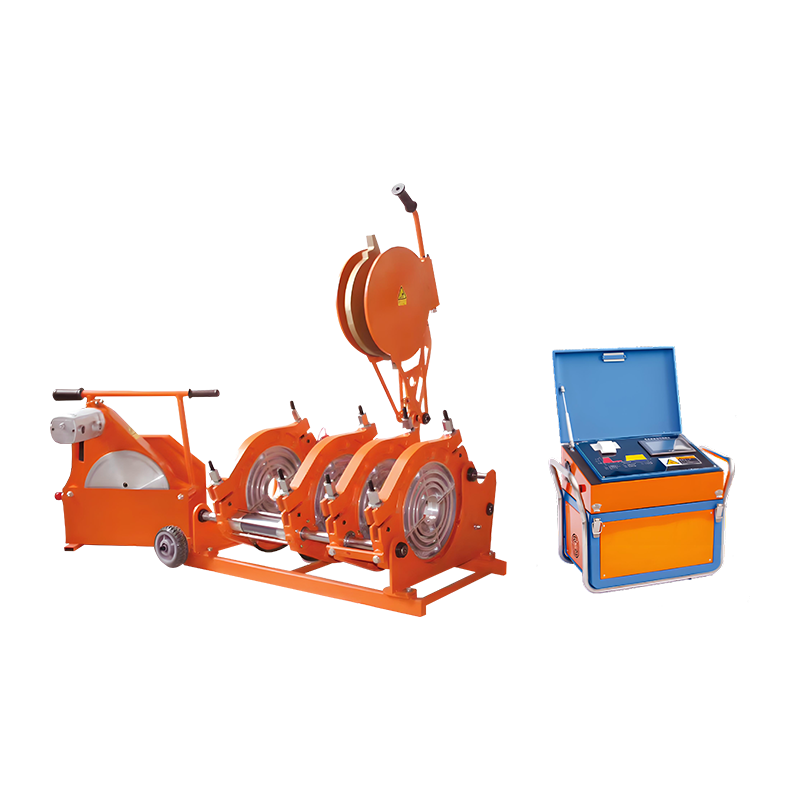
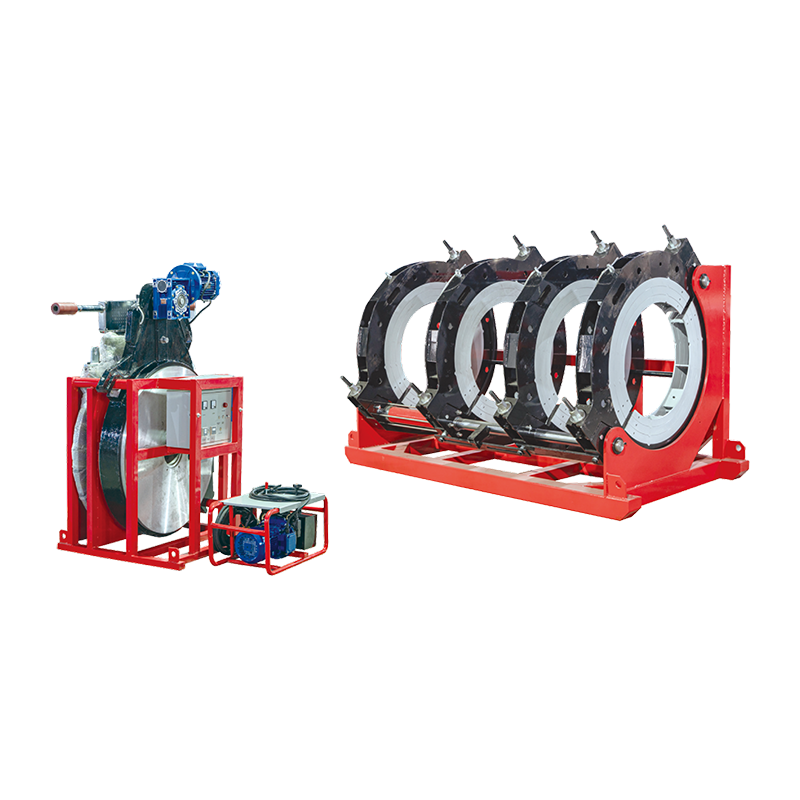
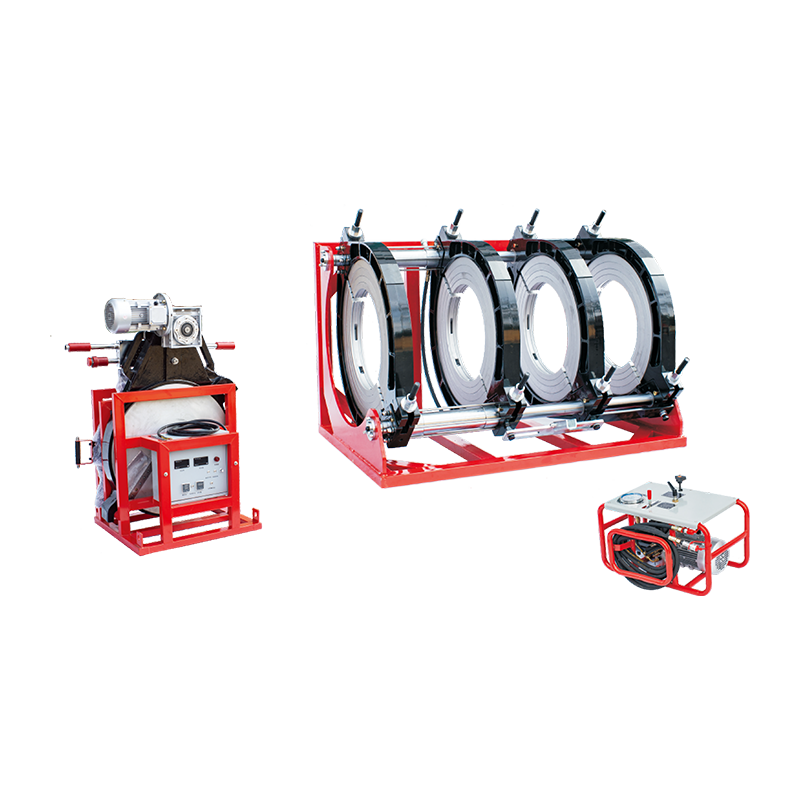
This is why municipal water authorities, gas utilities, mining operators, and irrigation contractors keep coming back to the same core piece of equipment: a Butt Fusion Welding Machine. The machine itself is really a frame that holds two pipe ends in perfect alignment, a heater plate that brings both faces to the correct melt temperature, and a hydraulic or mechanical system that applies and holds pressure for the duration of the weld.
For anyone comparing equipment, the short answer is this: a good HDPE fusion machine is judged on three things — how evenly it distributes pressure across the pipe face, how consistently it controls heater plate temperature, and how well it logs or displays the fusion cycle so an operator can verify the joint was made correctly.
Behind that simple summary sits a fairly deep body of practical knowledge, because the same basic machine can produce either a joint that outlasts the pipeline itself or a hidden weak point that fails years later under pressure or ground movement. The rest of this guide walks through machine types, the physics of the weld cycle, sizing, defects, maintenance, safety, and the questions that come up most often from crews buying or operating this equipment for the first time.

Types of Butt Fusion Welding Machines on the Market
Not every job calls for the same machine. Pipe diameter, wall thickness, jobsite access, and how often the equipment travels between locations all shape which configuration makes sense.
Manual Butt Fusion Units
Built for pipe roughly 20mm to 160mm, these rely on a hand-operated clamping lever rather than hydraulics. They are light, inexpensive, and common on domestic water and gas service lines where crews move quickly between short runs. A single operator can usually carry the whole unit and set it up without a second person.
Hydraulic Fusion Machines
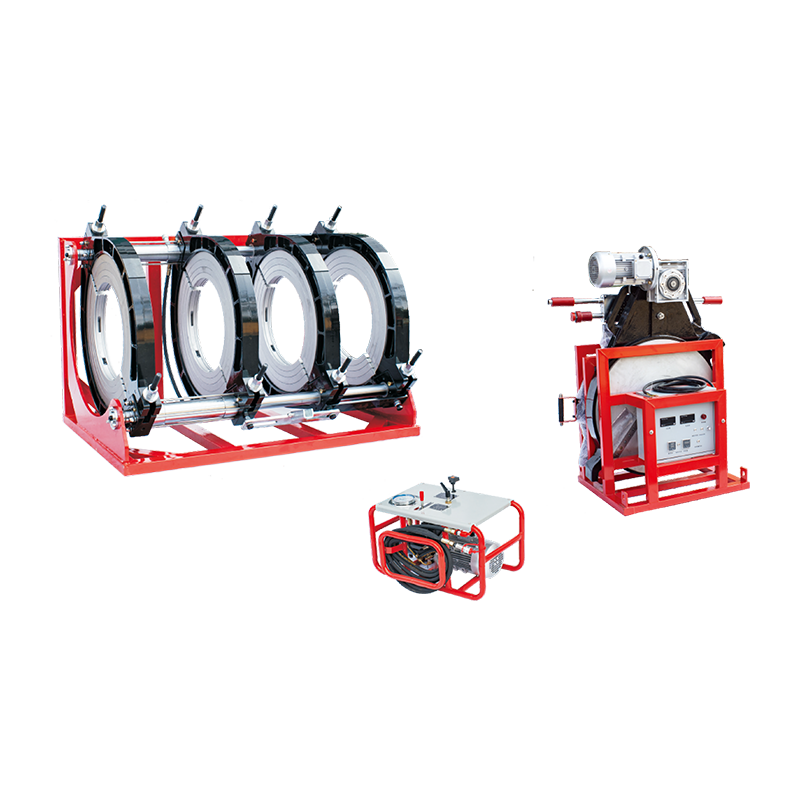
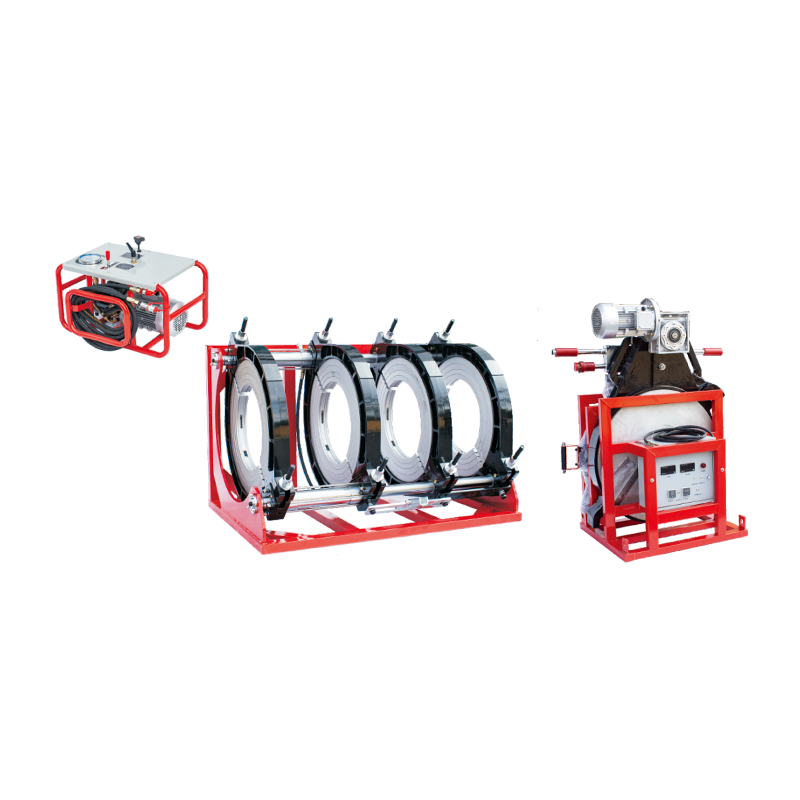
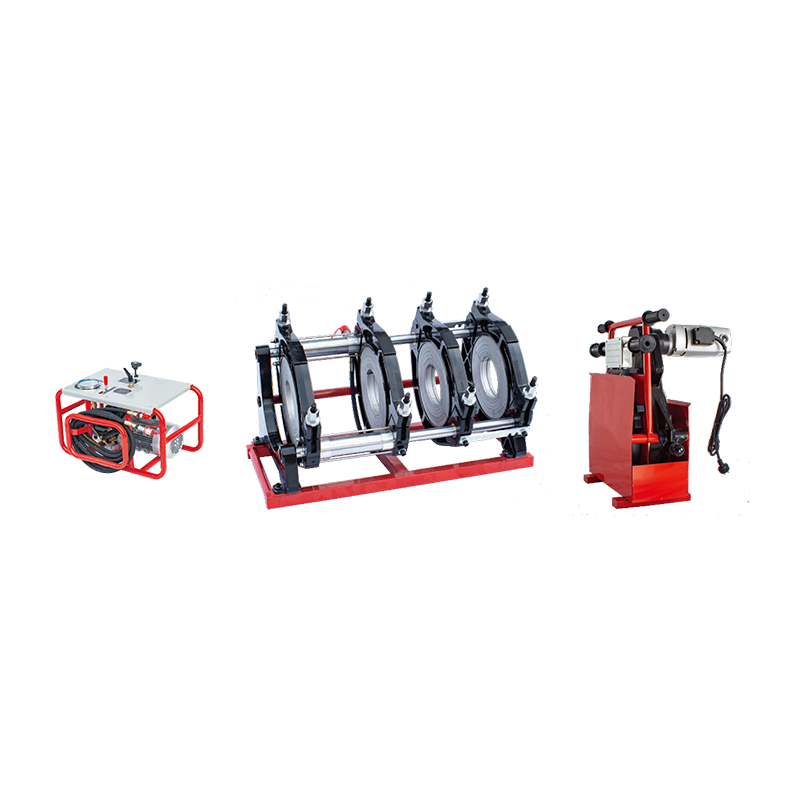
Covering roughly 90mm up to 800mm or larger, hydraulic units use an oil-driven cylinder to generate consistent, repeatable interfacial pressure. This is the segment most municipal and industrial buyers mean when they say HDPE fusion machine. The hydraulic pump can be electric or engine-driven depending on whether grid power is available at the site.
Data Logging Fusion Machines
These add sensors that record heater plate temperature, applied pressure, and cycle timing throughout the weld, storing the result as a digital fusion record. Utilities that need traceable joint records on buried infrastructure favor this configuration, since every weld can later be tied back to a specific operator, date, and parameter set.
Trailer-Mounted / Skid Fusion Rigs
A hydraulic fusion machine, generator, heater plate storage, and sometimes a facing tool are combined onto a single trailer or skid. This setup is popular with pipeline contractors moving frequently between remote fusion locations where setting up a fixed workshop is not practical.
Automated / Semi-Automated Fusion Machines
These units control heat soak time, changeover speed, and joining pressure through a programmable controller rather than an operator watching a stopwatch and gauge. They reduce the chance of human timing error on repetitive production runs, such as prefabricating fittings in a yard before shipment to site.
Saddle and Branch Fusion Attachments
Rather than joining two pipe ends, these attachments fuse a branch saddle or tapping tee onto the side of an existing main line, letting a service connection be added without cutting the main pipe.
Step-by-Step: How Butt Fusion Welding Actually Happens
The mechanics of the process are the same whether the pipe is 63mm or 630mm; only the timing and pressure figures scale up with wall thickness and diameter.
- Clamp and align — Both pipe ends are secured in the machine's clamps, checked for roundness, and aligned so the two faces meet flush with minimal offset. Any visible gap or step at this stage should be corrected before moving forward, since it will not disappear on its own later.
- Face the pipe ends — A rotating planer trims both ends until they are flat, parallel, and free of surface contamination. The shavings produced during facing should be fully cleared from the pipe bore and end faces before the next step.
- Bead-up — The heater plate is inserted and light pressure is applied until a small melt bead forms uniformly around both pipe circumferences. Operators are trained to check that the bead height is even all the way around before proceeding, since an uneven bead at this early point usually signals a facing or alignment problem.
- Soak — Pressure drops to a near-zero heat soak phase, allowing heat to penetrate deeper into the pipe wall so the melt zone is thick enough to fuse properly, not just surface-deep. Thicker-walled pipe needs proportionally longer soak time.
- Heater removal and joining — The heater plate is pulled out quickly, and the two molten faces are brought together under a steadily increasing fusion pressure. The gap between heater removal and full contact needs to be as short as possible to avoid the molten faces cooling or oxidizing before they meet.
- Cooling under pressure — Pressure is held constant while the joint cools, allowing the fused material to solidify without disturbance. Releasing pressure early, even by a few seconds, is one of the most common causes of internal weakness in an otherwise correctly executed weld.
- Visual inspection and bead check — Once the joint has cooled, the operator inspects the external bead for uniform width and shape around the full circumference, which is the first and simplest indicator of weld quality available on site.
Skipping or rushing any one of these stages is the single most common reason a fusion joint fails later, often long after the crew has left the site and the pipe is buried or otherwise inaccessible.
The Parameters That Decide Whether a Weld Actually Holds
Three variables control the outcome of every fusion cycle, and an HDPE fusion machine exists specifically to keep them stable from the first weld of the day to the last.
Heater Plate Temperature
Most polyethylene pipe compounds fuse in a narrow band around 200°C to 220°C. Too cool and the material never truly melts through; too hot and the polymer degrades, weakening the joint even though it may look fine on the surface. Temperature should be checked across the whole plate surface, not just at one point, since a plate that reads correctly in the center can still run cooler near the edges.
Interfacial Pressure
Pressure during the joining phase needs to be uniform across the entire pipe face. Uneven pressure — often from a poorly maintained hydraulic cylinder or a misaligned clamp — produces a joint that is fused on one side and barely touching on the other. This kind of defect is notoriously hard to spot from the outside once the bead has cooled.
Cooling Time Under Load
Cooling time typically scales with wall thickness; a rough field rule of thumb is roughly one minute of cooling per millimeter of wall thickness. Releasing pressure early is one of the fastest ways to introduce internal voids that never show up until pressure testing, or worse, until the pipeline is already in service.
Drag Pressure Compensation
On a horizontal machine, the weight of a long pipe run can add unwanted resistance that skews the pressure gauge reading. Experienced operators measure and offset this drag pressure before starting the cycle so the true fusion pressure applied at the joint face matches what the gauge reports.
Matching Machine Size to Pipe Diameter
Buying a machine larger than the job requires wastes money and makes the unit harder to move; buying one too small leaves no room to grow into bigger projects. The table below is a general guide used across water, gas, and mining pipeline work.
| Machine Class | Pipe Diameter Range | Typical Application |
|---|---|---|
| Small manual unit | 20mm – 160mm | Domestic water and gas service lines |
| Compact hydraulic unit | 90mm – 315mm | Municipal distribution mains, irrigation |
| Mid-range hydraulic unit | 200mm – 500mm | Industrial process piping, mining slurry lines |
| Large hydraulic unit | 450mm – 1000mm+ | Trunk mains, large-diameter transmission pipeline |
| Saddle / branch attachment | Varies by main size | Service connections onto an existing main line |
A common mistake among first-time buyers is sizing the machine only for the largest pipe on the current contract, without considering the smallest diameter the crew regularly encounters. Because most hydraulic units accept interchangeable clamp inserts, it is often more economical to buy one mid-range machine with a wide insert set than two separate machines covering narrower ranges.

Common Fusion Defects and What Actually Causes Them
Recognizing a weak joint before it goes into the ground saves far more time than repairing a failed pipeline later, and most defects trace back to one of a small number of root causes.
| Defect | Visual Sign | Likely Cause |
|---|---|---|
| Cold fusion | Bead separates cleanly with fingernail pressure | Heater plate below target temperature or short soak time |
| Offset / misalignment | Visible step between the two pipe walls | Poor clamp alignment before facing |
| Contaminated joint | Dark specks or streaks inside the bead | Dirt or facing shavings left on the pipe ends |
| Uneven bead | Bead thick on one side, thin on the other | Uneven interfacial pressure across the pipe face |
| Overheated joint | Brittle, glassy-looking bead | Heater plate temperature held too high for too long |
| Trapped oxide layer | Weld appears normal but fails a bend test | Slow heater removal allowing molten faces to skin over |
| Internal void | Not visible externally, found on destructive testing | Pressure released before cooling was complete |
Most crews learn to treat the external bead as a first screening check rather than final proof of quality. A smooth, symmetrical, rolled-over bead of even width on both sides is a good early sign, but it does not replace proper procedure discipline during the actual weld cycle.
Butt Fusion vs Electrofusion vs Socket Fusion: Choosing the Right Method
An HDPE fusion machine designed for butt welding is not always the right tool for the joint in front of you. The three joining methods solve slightly different problems, and many contractors carry equipment for more than one.
- Butt fusion works best on long, straight pipe runs where two open pipe ends can be faced and joined directly — the most economical method for main-line work and typically the fastest way to join large volumes of pipe.
- Electrofusion uses a fitting with an embedded heating coil, making it the better choice in tight trenches, repair situations, or anywhere the pipe cannot be pulled straight for a butt fusion machine. It also tends to be more forgiving of minor pipe end misalignment.
- Socket fusion is generally reserved for smaller diameters, typically under 110mm, where a fitting is heated and pushed directly onto the pipe end, which is fast for small branch work but not practical at larger sizes.
Many pipeline crews carry both a butt fusion machine and an electrofusion control box, switching between the two depending on where in the run they are working, and whether the joint sits on an open trench section or a tight repair pit.
Main Components of a Hydraulic Fusion Machine, Explained
Understanding what each part of the machine does makes it far easier to diagnose a problem in the field rather than guessing.
Clamping Frame and Carriage
The clamps hold the pipe rigidly in place and the carriage slides along guide rails so the two pipe ends can be brought together smoothly and squarely. Wear or looseness here shows up as alignment problems downstream.
Hydraulic Power Pack
This supplies oil pressure to the cylinder that drives the carriage. Its condition directly determines how smoothly and consistently pressure ramps up during the joining phase.
Facing Tool
A rotating cutter mounted between the clamps trims both pipe ends flat and parallel immediately before the weld. It is typically removed once facing is complete and before the heater plate is inserted.
Heater Plate and Thermostat
The plate itself carries a non-stick coating to prevent molten polyethylene from sticking, while an internal thermostat or digital controller regulates surface temperature throughout the bead-up and soak stages.
Pressure Gauge or Digital Control Panel
This is how the operator monitors and adjusts pressure throughout the cycle. On data-logging machines, this same interface also records the full weld history for later review.
Keeping a Fusion Machine Accurate Over Years of Use
A fusion machine is a precision tool disguised as rugged field equipment, and it drifts out of tolerance quietly if it is not checked on a regular schedule.
Heater Plate Surface
Non-stick coatings wear thin after repeated use. A scratched or pitted plate surface transfers heat unevenly and should be resurfaced or replaced rather than pushed further, since uneven heat transfer is difficult to detect visually before the weld.
Facing Tool Blades
Dull planer blades leave a rougher pipe face, which increases the risk of trapped air pockets in the finished bead. Blades are inexpensive relative to a failed joint downstream, so replacing them on schedule is one of the cheapest forms of quality insurance available.
Hydraulic Seals and Gauges
Pressure gauges should be checked against a known reference periodically, since a gauge reading incorrectly gives an operator false confidence in a joint that never received proper pressure. Seals should also be inspected for slow leaks that can cause pressure to bleed off mid-cycle without obvious warning.
Clamp Inserts
Worn clamp inserts allow the pipe to shift slightly during the joining phase, which is a quiet but common source of alignment defects that only becomes visible once the bead has already formed.
Storage and Transport
Vibration during transport can loosen fasteners and knock alignment out of tolerance faster than normal use does. Keeping the machine in a padded case and checking alignment after any rough transport is a habit worth building into a crew's routine.

Field Conditions That Change How a Weld Should Be Handled
Site conditions rarely match a workshop, and an experienced crew adjusts its approach rather than treating every fusion cycle as identical.
- Cold ambient temperature pulls heat away from the pipe faster, so soak time is often extended slightly and the heater plate may need a few extra minutes to stabilize before use.
- Direct sun and high heat can warm one side of the pipe unevenly before the weld even starts, which is why many crews shade the joint area on hot days.
- Wind can cool an exposed heater plate faster than expected during the brief changeover between heating and joining, making a quick, practiced heater removal even more important.
- Dusty or sandy environments raise the risk of contamination landing on freshly faced pipe ends, so many crews shield the joint area during facing and bead-up in these conditions.
- Sloped or uneven ground makes it harder to keep the pipe supported in true alignment through the full cycle, so extra pipe stands or rollers are often added on either side of the machine.
What to Weigh Before Buying an HDPE Fusion Machine
Beyond diameter range, several practical factors separate a machine that earns its keep from one that sits idle in a yard.
Weight and Portability
A machine that is difficult to lift or transport slows down crews working across scattered sites, even if its fusion performance is excellent on paper.
Power Source Compatibility
Confirm whether the hydraulic pump and heater plate run on standard site power, a portable generator, or a specific voltage, since mismatched power requirements cause avoidable downtime.
Available Clamp Insert Range
A wider range of interchangeable inserts extends the useful diameter range of a single machine, reducing how many separate units a fleet needs to own.
Spare Parts Availability
Heater plates, facing blades, and hydraulic seals wear out over time. Machines with readily available spare parts avoid long equipment downtime waiting on replacement components.
Working Safely Around a Fusion Machine on Site
The heater plate reaches temperatures well above 200°C and the hydraulic system can generate several tonnes of force, so a few habits matter more than any single piece of equipment.
Keep the heater plate on its dedicated stand or holster whenever it is not actively between the pipe faces, since a hot plate set down on the wrong surface is a common cause of burns and equipment damage alike. Clear the immediate work area before the hydraulic ram engages, since pinch points around the clamps and carriage are not always obvious to someone standing nearby. Allow the joint to cool fully under pressure before releasing the clamps; a joint pulled apart while still warm can fail even if the fusion parameters were otherwise correct.
When working in a trench or confined excavation, keep cabling and hydraulic hoses routed away from foot traffic paths, and make sure ventilation is adequate if the pump is engine-driven rather than electric. On windy sites, secure loose facing shavings and packaging so they cannot blow onto a freshly faced pipe face while the operator's attention is on the next step of the cycle.

Quick Glossary of Fusion Welding Terms
| Term | Meaning |
|---|---|
| Bead-up pressure | The light pressure applied while the heater plate first forms a melt bead on both pipe faces |
| Heat soak time | The period the heater plate stays in near-zero pressure contact to let heat penetrate the pipe wall |
| Changeover time | The gap between removing the heater plate and bringing the pipe faces into full contact |
| Drag pressure | Resistance caused by pipe weight or friction that must be offset for an accurate pressure reading |
| Rollback | The point during joining pressure where the melt bead visibly rolls outward around the pipe circumference |
Frequently Asked Questions About HDPE Fusion Machines
How long does one butt fusion weld typically take?
For small pipe under 160mm, a full cycle — including facing, heating, and cooling — often takes 15 to 30 minutes. Larger diameters above 500mm can take well over an hour once cooling time is included, since cooling time scales with wall thickness rather than diameter alone.
Can one HDPE fusion machine handle multiple pipe diameters?
Yes, within a range. Most hydraulic units accept interchangeable clamp inserts sized for different diameters, so a single mid-range machine might cover anywhere from 200mm to 400mm with the right insert set on hand.
Why does the pipe need to be faced before every weld, even if it looks clean?
Even a visually clean pipe end can carry a thin oxidized layer or minor surface irregularities from cutting. Facing removes this layer and restores a flat, parallel surface, which is essential for even heat transfer and consistent pressure across the joint.
Is a data-logging fusion machine worth the extra cost?
For buried or otherwise inaccessible pipelines, a digital fusion record can be valuable evidence that each joint was made within the correct parameters, which matters far more once the pipe is no longer visible for inspection.
What happens if the heater plate is removed too slowly during joining?
A slow heater removal allows the molten pipe faces to cool and skin over before they meet, which can trap a thin oxidized layer inside the joint. This is one of the more common causes of a weld that looks acceptable externally but tests weak.
Does ambient temperature affect the fusion process?
Yes. Cold weather draws heat away from the pipe faster during the soak and cooling phases, so heat soak time is often extended slightly in low ambient temperatures to compensate, while hot climates may shorten it.
Can a butt fusion joint be repaired if it fails inspection?
No — a failed or suspect butt fusion joint is normally cut out entirely and re-welded from fresh, correctly faced pipe ends. Attempting to reheat or patch an existing joint does not restore the original fusion strength.
What is drag pressure and why does it matter?
Drag pressure is the resistance created by the weight of a long pipe run resting on its supports rather than hanging freely in the clamps. If it is not measured and offset before the weld, the pressure gauge can overstate the actual force reaching the joint face.
How often should a fusion machine's heater plate be replaced?
There is no fixed interval that applies everywhere, since it depends on usage volume and how carefully the coating is handled between welds. The practical signal is a plate surface that shows visible scratching, pitting, or uneven coloring during heat-up, which indicates the coating is no longer transferring heat evenly.
Can butt fusion machines join pipe made from different polyethylene grades?
Generally, fusion works reliably when both pipe ends share the same or a compatible polyethylene resin family. Mixing significantly different materials can produce a joint that looks normal but has inconsistent strength, so matching pipe compounds on both sides of the joint is standard practice.