 English
 中文简体
中文简体 русский
 عربى
عربى

Content
- 1 Quick Answer: What Butt Fusion Welding Machines Actually Do
- 2 Why Fusion Welding Outperforms Mechanical and Adhesive Joining Methods
- 3 How Plastic Fusion Welding Works: The Five-Stage Process
- 4 The Three Variables That Decide Joint Strength: Temperature, Pressure, and Time
- 5 Types of Plastic Fusion Welding Machines
- 6 Material Compatibility: PE100, PE80, PP-R, and Where Fusion Stops Being Appropriate
- 7 Key Specifications to Check Before Buying a Machine
- 8 Butt Fusion vs Electrofusion vs Socket Fusion vs Saddle Fusion
- 9 Pre-Joint Field Checklist: What to Confirm Before Starting Every Fusion Cycle
- 10 Common Plastic Fusion Welding Defects and How to Prevent Them
- 11 Quality Control Practices on the Job Site
- 12 Maintenance Tips for Longer Machine Life
- 13 Cost Considerations: Machine Price, Consumables, and Crew Time
- 14 Choosing the Right Machine for Your Project
- 15 Frequently Asked Questions About Plastic Fusion Welding
- 15.1 What pipe materials can be joined with butt fusion welding machines?
- 15.2 How long does a typical butt fusion joint take to complete?
- 15.3 Can butt fusion welding be done in cold weather?
- 15.4 What causes a butt fusion joint to fail a pressure test?
- 15.5 Do butt fusion welding machines need electricity on site?
- 15.6 How is pipe diameter range related to machine size?
- 15.7 What is the difference between heating time and soak time in the fusion cycle?
- 15.8 Can the same machine join different pipe diameters?
- 15.9 Why does my fusion bead look uneven on one side only?
- 15.10 Is it safe to reuse a heater plate that has visible scratches?
- 15.11 How do I know if my fusion machine's pressure gauge needs recalibration?
- 15.12 Can butt fusion machines join pipe with different wall thicknesses?
- 15.13 What is the typical lifespan of a butt fusion welding machine?
- 15.14 Do I need a different machine for gas pipe versus water pipe?
Quick Answer: What Butt Fusion Welding Machines Actually Do
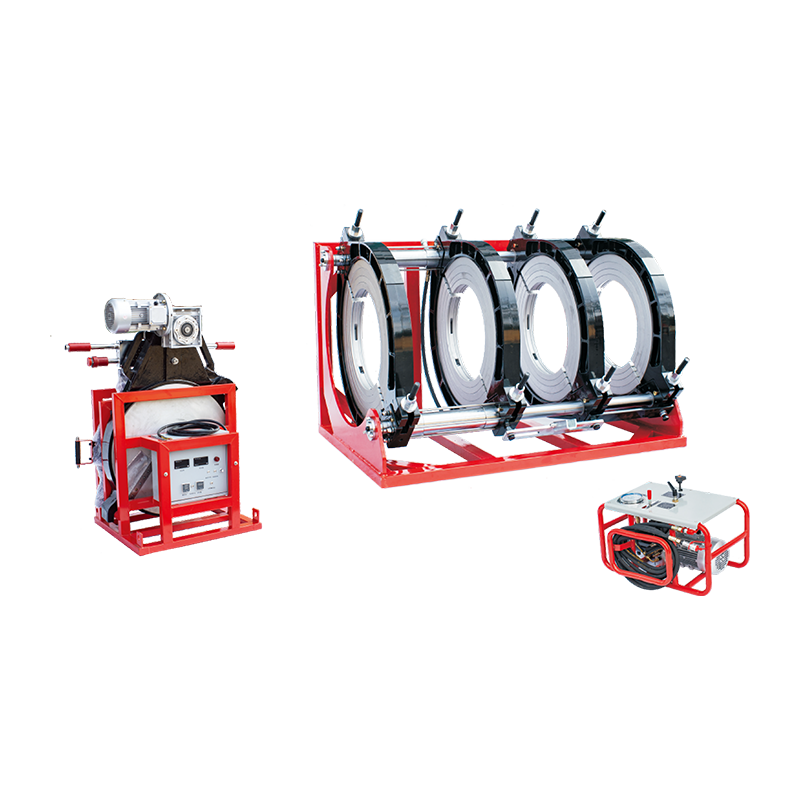
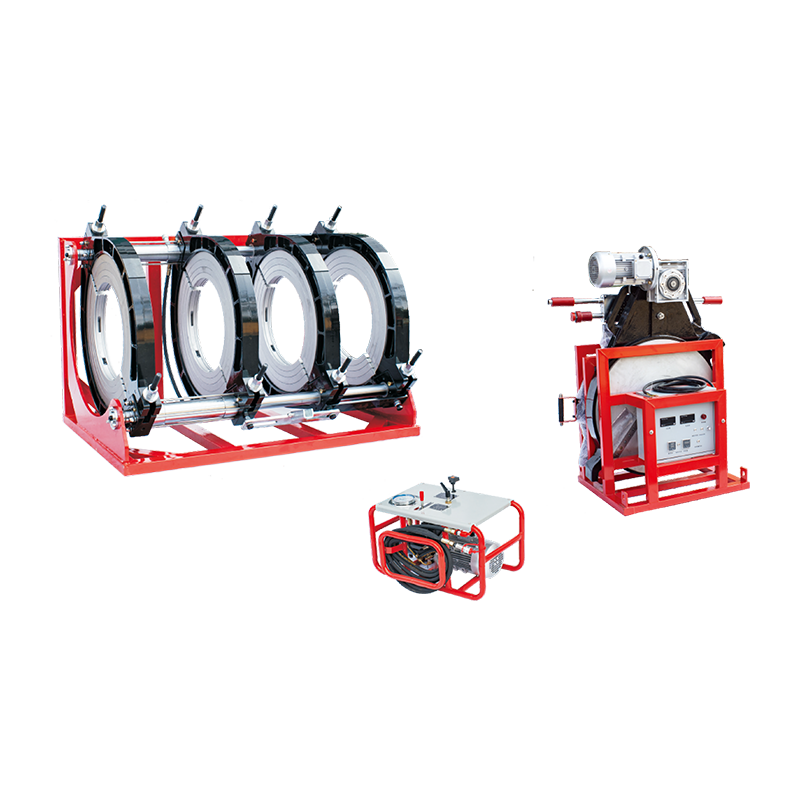
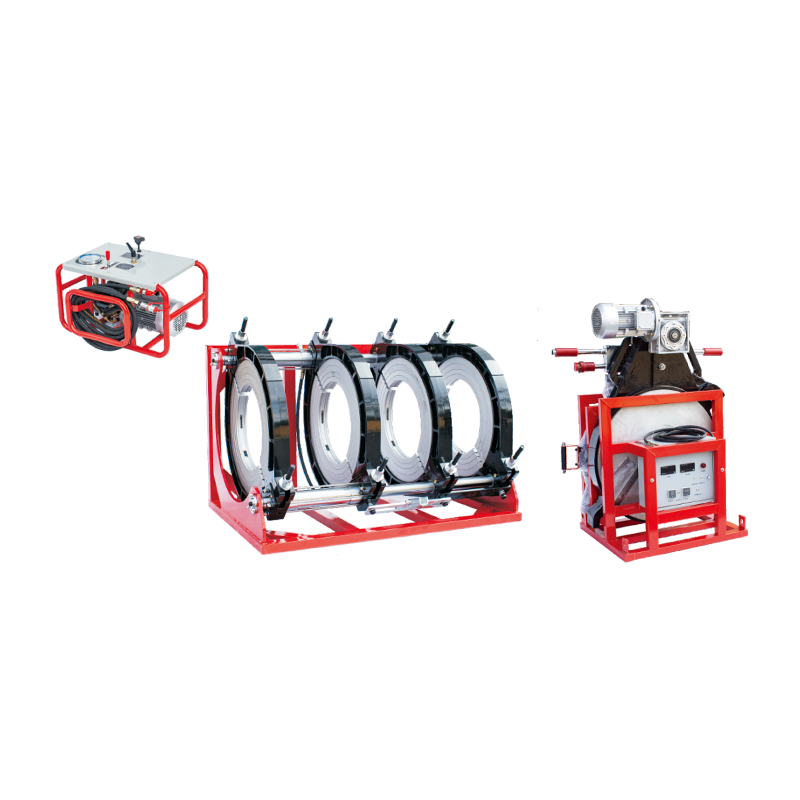
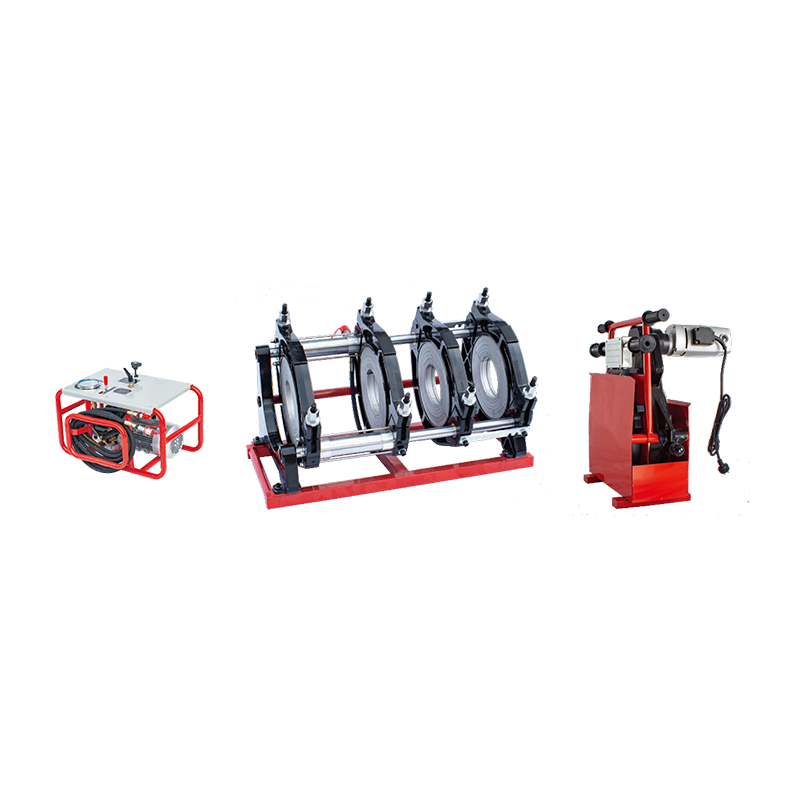
A butt fusion welding machine joins two thermoplastic pipe ends into one continuous, leak-free wall by heating both faces with a heater plate, then pressing them together under controlled pressure while they cool. For most polyethylene (PE) and polypropylene (PP) pipe projects, this is the strongest and most reliable joining method available, producing a weld that is typically as strong as the pipe body itself when the heating temperature, fusion pressure, and cooling time are matched correctly. Plastic fusion welding through butt fusion is the standard joining technique for HDPE and PP pipelines ranging roughly from 20mm to 2000mm in diameter, covering everything from small irrigation lines to large municipal water mains and gas distribution networks.
If you only remember one thing from this guide, remember this: the quality of a butt fusion joint depends far more on operator discipline and machine calibration than on the brand name printed on the housing. A mid-range machine run correctly will outperform a premium machine run carelessly, every single time.
This guide walks through the full picture: how the fusion process actually works at each stage, how to pick between manual, semi-automatic, and fully automatic butt fusion welding machines, which pipe materials are and are not suitable for fusion, how to read the warning signs of a bad joint before it ever reaches a pressure test, a practical maintenance routine, and a cost breakdown that goes beyond the sticker price on the machine itself. Skip to whichever section answers the question you came with, or read straight through if you are evaluating fusion welding equipment for the first time.
Why Fusion Welding Outperforms Mechanical and Adhesive Joining Methods
Before getting into machine types and specifications, it helps to understand why butt fusion became the default joining method for pressurized plastic pipe in the first place, rather than mechanical couplings, flanges, or solvent adhesives.
A Homogeneous Joint Instead of a Mechanical Seal
Mechanical couplings rely on a gasket or O-ring compressed between two surfaces to hold pressure. That gasket is a separate component with its own aging curve, and it can degrade, shrink, or be installed slightly off-center. A fusion joint has no separate sealing element at all; the pipe wall on either side of the joint becomes one continuous piece of material, so there is nothing to age out, loosen, or compress unevenly over decades of burial.
No Reliance on External Hardware Under Load
Flanged and mechanical joints depend on bolts, clamps, or threaded fittings staying torqued correctly for the life of the pipeline. Ground movement, freeze-thaw cycles, and vibration from nearby traffic all work against fastener retention over time. A fused joint carries load the same way the rest of the pipe does, through the wall material itself, removing an entire category of long-term maintenance risk.
Lower Long-Term Failure Rate in Buried Service
Buried mechanical joints are difficult and expensive to inspect or re-tighten once backfilled, so any slow degradation in the seal goes unnoticed until a leak surfaces. Fusion joints, once correctly made and tested, do not loosen with time the way a mechanically compressed seal can, which is part of why utilities increasingly specify fusion welding for new pressure pipe installations rather than mechanical alternatives.

How Plastic Fusion Welding Works: The Five-Stage Process
Butt fusion welding follows a fixed sequence of mechanical and thermal steps. Skipping or rushing any one of them is the single biggest cause of joint failure in the field, so understanding the sequence matters more than memorizing brand-specific button layouts.
Step 1: Alignment and Clamping
The two pipe sections are loaded into the machine's clamps so their centerlines match without offset. Even a small misalignment at this stage carries through every later step, so most professional machines include adjustable clamp inserts for different pipe wall thicknesses. Operators should check that both pipe ends extend far enough past the clamps to allow full travel through facing, heating, and fusion without the pipe walls binding against the clamp jaws partway through the cycle.
Step 2: Facing the Pipe Ends
A rotating planer trims both pipe faces flat, square, and parallel to one another, removing oxidized surface material and any contamination picked up during storage or transport. A properly faced joint should show a continuous, unbroken shaving from the planer with no gaps when the two ends are pressed together by hand. Any gap visible at this stage, sometimes called a light gap check, means the faces are not yet parallel and the planer pass should be repeated rather than carried forward into heating.
Step 3: Heating Both Faces
A heater plate, held at a controlled surface temperature, is placed between the two pipe ends under light pressure until a melt bead of a specified height forms around the circumference. Typical heater plate temperatures for PE pipe sit between 200°C and 220°C, though the exact figure depends on pipe material grade and wall thickness. Thicker walled pipe needs a longer heat soak to let the melt penetrate deeper into the material, not just a hotter plate, which is a distinction many newer operators get wrong.
Step 4: Fusion Under Pressure
The heater plate is withdrawn and the two molten faces are brought together quickly, then held under a steady fusion pressure that forces the materials to intermix at the molecular level. This pressure stage is where the joint actually forms; the heating stage only prepares the material to bond. The changeover time between withdrawing the plate and bringing the faces together is itself controlled, since molten material that cools and skins over before contact will not fuse properly even under correct pressure afterward.
Step 5: Cooling Under Pressure
Pressure is maintained while the joint cools to a safe handling temperature, which for larger diameter pipe can take anywhere from 10 minutes to over an hour. Releasing the clamps too early is one of the most common shortcuts taken on busy job sites, and it is also one of the most damaging, since the joint has not yet developed its full strength. The bead should feel firm and cool to a light touch before clamps are released, not merely cool on the visible outer surface.
The Three Variables That Decide Joint Strength: Temperature, Pressure, and Time
Every fusion joint outcome traces back to how well three interacting variables were controlled during the cycle. Understanding how they interact, rather than treating each as an isolated setting, is what separates a consistently strong fusion crew from one that gets lucky on some joints and not others.
Heater Plate Temperature
Temperature that runs too low produces a shallow melt that looks adequate on the surface but lacks depth, leaving the core of the joint unbonded. Temperature that runs too high can degrade the polymer at the surface, leaving a brittle, oxidized layer that weakens the joint even though the bead appears full and well formed. Both overheating and underheating can produce a bead that looks acceptable to the eye, which is why instrument verification matters more than visual judgment alone.
Fusion Pressure
Pressure that is too low fails to force full material intermixing across the joint face, leaving microscopic voids that act as stress points later. Pressure that is too high can squeeze too much melted material out of the joint area, thinning the wall right at the fusion line and creating a weak point exactly where the pipe needs to be strongest. Correct pressure is specific to pipe diameter and wall thickness, which is why machines are rated by diameter range rather than sold as one-size-fits-all units.
Timing Across Every Stage
Heating time, changeover time between heating and pressing, and cooling time all interact with temperature and pressure rather than operating independently. A joint heated for the correct duration but pressed together too slowly during changeover can still fail, even though the heating stage was executed perfectly. This is why fusion procedures specify maximum changeover times rather than leaving the pace of that step to operator judgment.

Types of Plastic Fusion Welding Machines
Not every job calls for the same machine. Plastic fusion welding equipment is generally grouped by how the fusion pressure is generated and how much of the process is automated, and choosing the wrong category for your typical workload is one of the most common and most costly purchasing mistakes contractors make.
| Machine Type | Typical Pipe Range | Pressure Source | Best Suited For |
|---|---|---|---|
| Manual Hydraulic | 20mm – 315mm | Hand-pumped hydraulics | Small contractors, rural utilities |
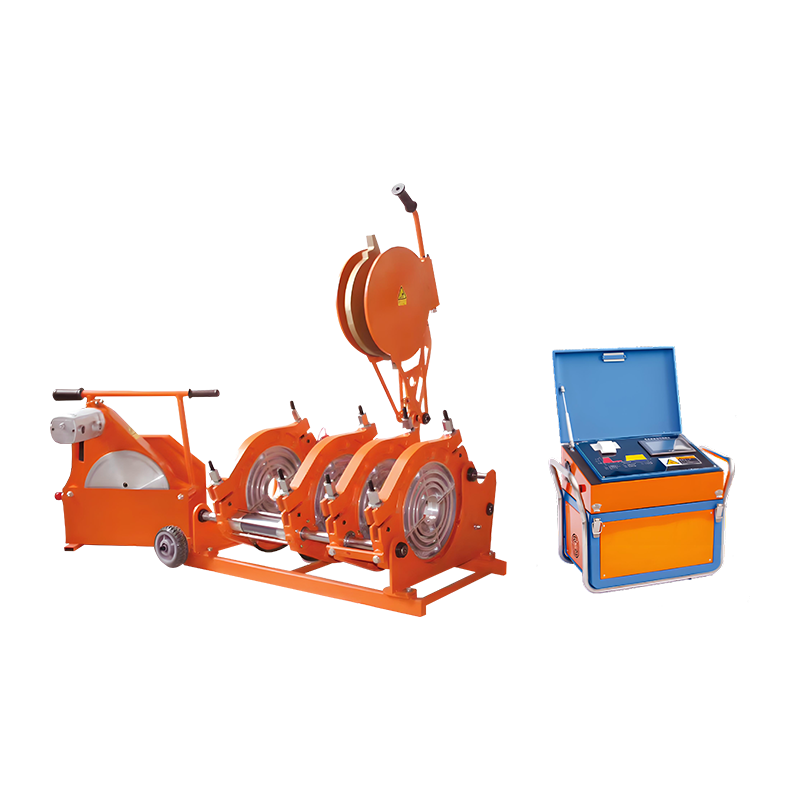
| Semi-Automatic Hydraulic | 90mm – 630mm | Powered hydraulic pump | General contractors, mid-size utilities |
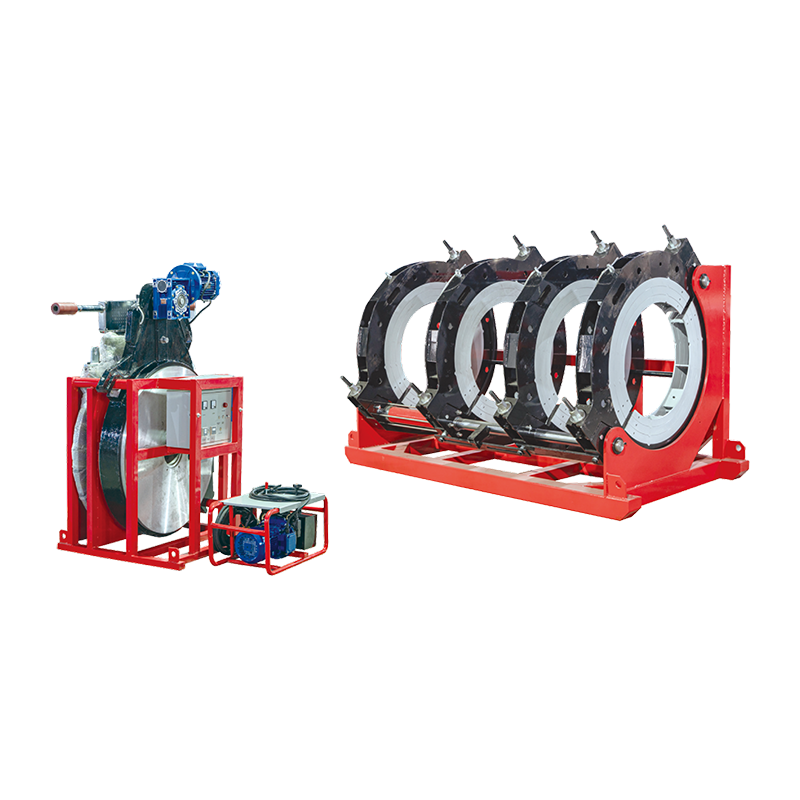
| Fully Automatic / Microprocessor-Controlled | 110mm – 1200mm | Servo or hydraulic with data logging | Gas pipelines, large municipal projects |
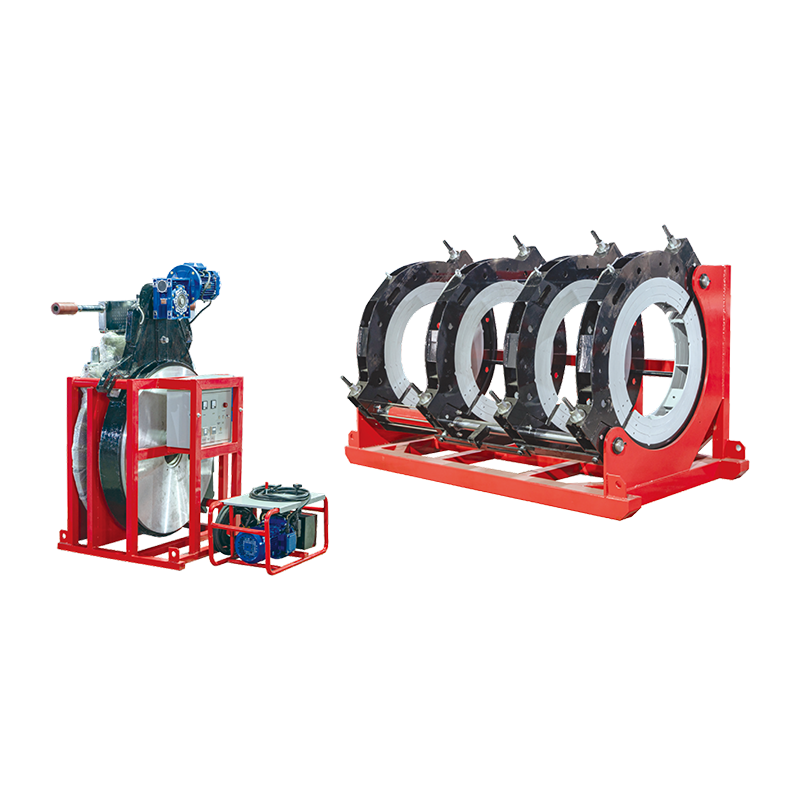
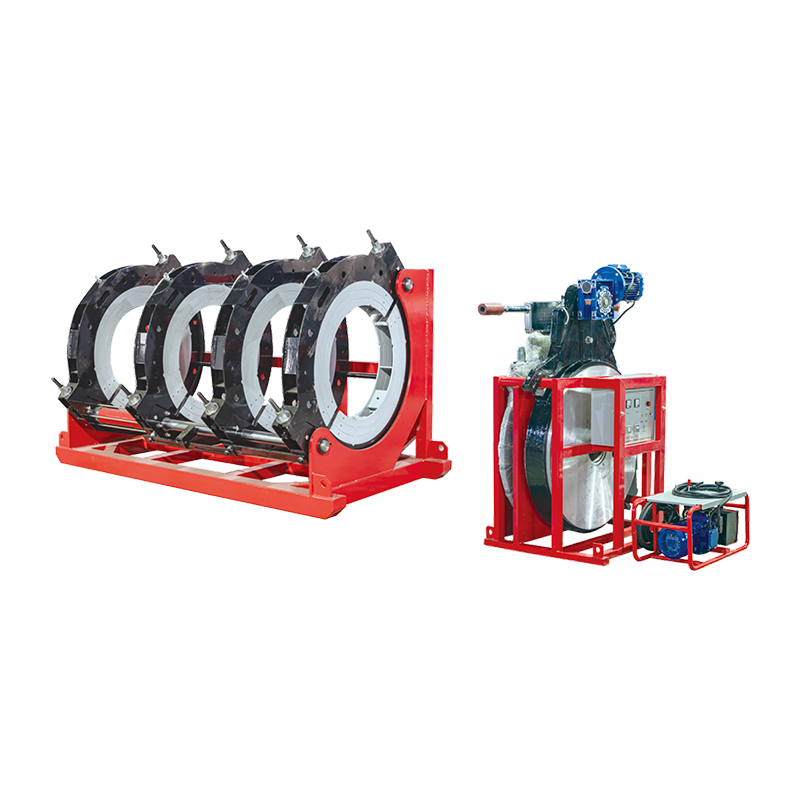
| Large Diameter Track-Mounted | 630mm – 2000mm | High-tonnage hydraulic rams | Trunk mains, mining, marine outfalls |
| Compact Site-Repair Units | 20mm – 110mm | Lightweight manual or battery hydraulics | Emergency repairs, confined trenches |
Manual Machines: Simple, Portable, Limited in Scale
Manual machines remain popular for small-diameter repair work because they are light, inexpensive, and need no power source on site beyond what is required to run the heater plate. Their main limitation is operator fatigue on repeated joints through a long workday, since fusion pressure is generated entirely by hand on a pump lever rather than a powered system.
Semi-Automatic Machines: The Workhorse Category
Semi-automatic machines cover the largest share of everyday contractor work because they remove the physical strain of hand-pumping pressure while still requiring an operator to manage the sequence of facing, heating, and fusing manually. They strike a practical balance between cost and consistency for crews making dozens of joints per week.
Fully Automatic Machines: Built for Traceability
Microprocessor-controlled machines, by contrast, log every heating temperature, pressure value, and timing interval for each joint, which is increasingly expected on gas and large water projects where traceable joint records matter for project handover. These machines also reduce the chance of an operator forgetting a step, since the control system sequences the cycle and will not advance until the prior stage's parameters are met.
Material Compatibility: PE100, PE80, PP-R, and Where Fusion Stops Being Appropriate
Fusion welding only works because the materials involved actually melt and re-solidify into a continuous structure when heated. That single fact defines exactly which materials fusion welding can and cannot join, regardless of how well the machine itself performs.
- PE100 polyethylene — the most common material for pressurized gas and water pipe today, offering higher strength than older grades at a given wall thickness, and fully compatible with standard butt fusion procedures.
- PE80 polyethylene — an older but still widely used grade found in legacy pipelines; fusing PE80 to PE100 pipe is generally avoided unless the procedure has specifically accounted for the difference in melt flow behavior between the two grades.
- PP-R (polypropylene random copolymer) — common in hot and cold water plumbing systems and industrial process piping, fusing well within its own material family but requiring different heater plate temperatures than PE pipe.
- PVC and PVC-U — not suitable for butt fusion welding at all, since PVC does not behave the same way under heat and instead relies on solvent cement or mechanical and flanged joints.
- Cross-linked polyethylene (PEX) — generally not fusion welded due to its cross-linked molecular structure, which resists the kind of clean re-melting that butt fusion depends on.
A frequent and costly mistake on multi-material job sites is assuming that two pipes are compatible simply because they look similar in color and diameter. Pipe material and grade should always be confirmed from markings printed along the pipe wall before fusing, not estimated by appearance, since mismatched materials can produce a joint that looks visually sound but separates under load months or years later.
Key Specifications to Check Before Buying a Machine
Sales brochures tend to highlight pipe diameter range first, but several other specifications affect day-to-day usability and joint consistency more than diameter alone.
- Heater plate temperature stability — look for a plate that holds temperature within plus or minus 2°C across its surface; uneven plates create a thinner melt bead on one side of the joint.
- Maximum fusion pressure and pump capacity — larger pipe walls need more tonnage; a pump that struggles to reach the required pressure will undercut the joint regardless of correct timing.
- Planer motor power and blade wear life — a weak planer motor stalls on thick-walled pipe and leaves an uneven cut face.
- Clamp insert range — confirm the machine ships with, or can be fitted with, inserts matching the specific pipe outer diameters used on your projects.
- Data logging capability — for gas and municipal water work, an onboard or printable log of heating and pressure data is increasingly required at handover, even when not formally mandated.
- Portability and power requirements — site generators vary widely in output, so confirm the machine's startup current draw against what your generator can actually deliver, not just its rated wattage.
- Frame rigidity under load — a frame that flexes slightly under fusion pressure can introduce alignment drift mid-cycle, especially on larger diameters where total fusion force is highest.
- Gauge and sensor readability in direct sunlight — a small detail that matters more than expected, since an operator squinting at a hard-to-read pressure gauge on a bright job site is more likely to misjudge a setting.
Many buyers underestimate how much downtime comes from a weak planer motor on thick-walled industrial pipe, since a planer that cannot cut cleanly in one pass forces operators to make repeated partial cuts, which slows every single joint on the project. The same logic applies to frame rigidity: it rarely shows up in a showroom demonstration but becomes obvious after months of daily large-diameter use, when a worn or flexible frame starts producing joints that pass visual inspection but fail bend testing.
Butt Fusion vs Electrofusion vs Socket Fusion vs Saddle Fusion
Butt fusion is not the only plastic fusion welding method, and choosing the wrong one for a given application wastes both time and material.
| Method | Joint Type | Typical Diameter Use | Field Speed |
|---|---|---|---|
| Butt Fusion | End-to-end straight or fitting joint | 63mm and above | Moderate, longer cool time on large pipe |
| Electrofusion | Fitting with embedded heating coil | 20mm – 400mm | Fast, ideal for tight or confined trenches |
| Socket Fusion | Pipe inserted into heated socket fitting | 20mm – 110mm | Very fast for small branch connections |
| Saddle Fusion | Branch fitting fused onto pipe surface | Branch connections off larger mains | Moderate, done without cutting the main pipe |
As a rule of thumb, butt fusion is preferred for long straight runs and large diameters, electrofusion suits repairs and tie-ins where trench space is limited, socket fusion handles small branch lines and service connections, and saddle fusion allows a new branch line to be added directly onto a live or existing main without cutting and rejoining the entire pipe run.
Crews working on mixed-diameter projects often carry more than one type of fusion equipment for exactly this reason: a single 110mm to 1200mm butt fusion machine cannot economically replace a small electrofusion control box for service connections, and trying to force one method to cover every joint on a project usually costs more in labor than owning the right tool for each diameter.

Pre-Joint Field Checklist: What to Confirm Before Starting Every Fusion Cycle
Experienced fusion crews run through a short mental or written checklist before every single joint, not just at the start of the shift. The few minutes this takes is consistently cheaper than cutting out and redoing a failed joint later.
- Confirm pipe material, grade, and wall thickness match the procedure being used, not just the diameter.
- Check heater plate surface temperature with a contact thermometer rather than trusting the display alone, particularly at the start of a shift or after the plate has been idle.
- Inspect planer blades for nicks or excessive wear before facing, since a damaged blade leaves an uneven face that no amount of correct heating or pressure can fix afterward.
- Verify clamp inserts are the correct size for the pipe outer diameter and seated fully, not just loosely engaged.
- Check ambient weather conditions, since wind, rain, or a sudden temperature drop can all affect heating and cooling times and may call for adjusted procedure parameters.
- Confirm the pipe faces are free of dust, sand, or moisture immediately before heating, even if they were cleaned earlier in the setup.
- Make sure the area around the joint is clear enough that the machine's full range of motion through facing and fusion will not be obstructed mid-cycle.
Common Plastic Fusion Welding Defects and How to Prevent Them
Most field joint failures trace back to one of a small number of repeated mistakes, almost all of which are preventable with consistent procedure.
- Cold fusion — heating time cut short or heater plate temperature too low, leaving the melt depth too shallow to bond properly. Prevented by verifying plate temperature with a contact thermometer before every shift.
- Particulate contamination — dust, sand, or grease on the pipe face left after facing. Prevented by re-cleaning faced surfaces immediately before heating and keeping hands off the contact faces.
- Misalignment — pipe ends that meet at a slight angle, producing an uneven wall around the joint. Prevented by checking clamp insert fit and re-tightening before facing.
- Premature clamp release — releasing pressure before the joint reaches a safe cooling temperature, leaving internal stress in the bead. Prevented by following the manufacturer's published cooling time table for the pipe's wall thickness and ambient temperature.
- Mixed material grades — joining pipes from different resin grades or melt flow rates without checking compatibility first. Prevented by confirming material datasheets match before fusing, particularly on repair jobs using pipe from a different supplier than the original run.
- Excessive bead rollback — too much molten material squeezed out during fusion, thinning the wall at the joint line. Prevented by checking fusion pressure settings against the pipe's actual wall thickness rather than a generic default value.
- Extended changeover delay — too much time passing between heater plate removal and bringing the faces together, allowing the molten surface to skin over and cool. Prevented by training operators to execute this transition briskly and consistently, and by using machines with mechanically guided changeover motion where possible.
A useful field habit is to keep a simple paper or digital log of heater plate temperature readings and ambient conditions for each shift, since a sudden drop in outdoor temperature midday is a common, easily missed cause of inconsistent joints later discovered during pressure testing.
| Visible Symptom | Likely Cause | Recommended Action |
|---|---|---|
| Thin or uneven bead on one side | Misalignment or uneven heater plate temperature | Cut out joint, check clamps and plate before retrying |
| Visible gap or line down the bead | Insufficient heating time or contamination | Reject joint, re-face and re-fuse with verified settings |
| Bead pulls away cleanly under bend test | Extended changeover delay or cold fusion | Retrain on changeover speed, recheck plate temperature |
| Excess material squeezed far outward | Fusion pressure set too high for wall thickness | Recalculate pressure setting against pipe specification |
Quality Control Practices on the Job Site
Visual Inspection of the Weld Bead
After every joint cools, a visual check of the external melt bead tells an experienced operator a great deal. A symmetrical, uniform bead around the full circumference suggests even heating and pressure; a bead that is thicker on one side, or shows a visible gap, points to misalignment or uneven facing that should be cut out and rejoined rather than left in place.
Bead Cut-Out Testing
On larger or critical projects, a sample bead is periodically cut, bent back, and inspected for full material fusion through the cross-section. A properly fused bead should bend without separating or showing a visible line down the middle, which would indicate the two faces never fully merged at depth.
Pressure Testing the Completed Line
Once a section of pipeline is complete, it is filled and pressurized to a level above normal operating pressure and held for a set period to confirm there is no drop indicating a leak. This step catches joint problems that visual inspection alone may miss, particularly on buried sections.
Recording Joint Data for Handover
Keeping a joint-by-joint record of heating temperature, fusion pressure, cooling time, ambient conditions, and operator name creates a traceable history that becomes valuable if a problem surfaces months or years after installation. On projects using fully automatic machines, this record can often be exported directly rather than written by hand, reducing transcription errors.
Periodic Operator Skill Checks
Even experienced operators benefit from occasional supervised joint checks, particularly after a long break from fusion work or when moving to a new pipe diameter range they have not worked with recently. Consistency tends to drift quietly over time without anyone noticing until a test joint reveals it.
Maintenance Tips for Longer Machine Life
- Wipe down heater plates after every use while still warm, since cooled-on plastic residue is harder to remove and can scratch the plate's coated surface.
- Check hydraulic fluid levels and look for leaks at hose fittings weekly on machines in daily use, topping up only with the fluid grade specified by the manufacturer.
- Replace planer blades before they go fully dull rather than after, since a dull blade tears the pipe surface instead of cutting it cleanly, which directly affects joint quality.
- Store heater plates in their protective sleeves between jobs to avoid surface dings that create uneven heat transfer later.
- Recalibrate temperature and pressure gauges on a regular schedule, since drift in either reading is one of the quietest causes of joint inconsistency over a machine's working life.
- Keep clamp inserts free of built-up plastic shavings, which otherwise prevent the clamps from gripping pipe evenly and can reintroduce alignment problems on an otherwise well-maintained machine.
- Inspect hydraulic hoses for cracking or abrasion where they pass near moving parts, replacing them proactively rather than waiting for a failure mid-joint.
- Protect the machine's control unit and gauges from direct rain and dust during storage, since moisture ingress into electronic displays is a common cause of unexplained readout errors.
| Task | Suggested Frequency |
|---|---|
| Heater plate cleaning | After every joint |
| Hydraulic fluid level check | Weekly |
| Planer blade inspection | Weekly or every 50 joints |
| Gauge and sensor calibration | Every 3 to 6 months |
| Full hydraulic hose inspection | Every 6 months |

Cost Considerations: Machine Price, Consumables, and Crew Time
Two machines with identical diameter ranges can end up costing very different amounts once consumables, downtime, and crew training are factored into the comparison, which is why purchase price alone is a poor basis for a buying decision.
Consumable Parts That Add Up Over Time
Heater plates, planer blades, hydraulic seals, and clamp inserts all wear out at different rates depending on how heavily the machine is used and on what pipe sizes. A machine that looks cheaper upfront but uses proprietary, harder-to-source heater plates can end up more expensive across several years of use than a slightly pricier machine with widely available parts.
Downtime Cost Is Often Larger Than Part Cost
A crew sitting idle while waiting for a replacement part to ship usually costs more in lost labor hours than the part itself. Asking a supplier about typical parts lead time, not just parts price, is a question worth asking before purchase rather than discovering the answer during an urgent repair.
Training Time as a Real Cost Line
Moving a crew from manual machines to fully automatic, data-logging equipment is not purely a hardware upgrade. Operators need time to become comfortable with new control interfaces, and rushing this transition on a live project schedule tends to produce more early-cycle mistakes than budgeting dedicated training time upfront.
Choosing the Right Machine for Your Project
Match the Machine to Your Most Common Pipe Diameter, Not Your Largest Job
Many buyers size their machine purchase around the single biggest project they can imagine, then end up running an oversized, harder-to-transport unit on routine work for years afterward. It is usually more cost-effective to own a mid-range machine for everyday diameters and rent a large-diameter unit for the occasional bigger project.
Consider Total Cost of Ownership, Not Just Purchase Price
Replacement heater plates, planer blades, hydraulic seals, and clamp inserts add up over a machine's lifetime. Before buying, it is worth asking a supplier directly how often these parts typically need replacing under normal site use and what they cost, rather than judging machines on sticker price alone.
Factor in Operator Training Time
Microprocessor-controlled machines reduce the chance of operator error but still require training to use their data logging and joint traceability features correctly. Teams switching from manual machines should budget time for this transition rather than assuming the automated features are immediately self-explanatory.
Think About Transport and Site Access
Large diameter track-mounted machines are heavy and need appropriate lifting and transport equipment to move between job sites. Before committing to a large unit, confirm that your typical job sites actually have the access and handling equipment needed to deploy it efficiently, rather than discovering a logistics problem on the first project.
Ask About Support and Spare Parts Availability Locally
A machine that performs well on paper but has no local support network can leave a crew stranded for weeks waiting on a part or a technician. Checking what service and spare parts support exists in your region before purchase avoids this risk entirely.
Frequently Asked Questions About Plastic Fusion Welding
What pipe materials can be joined with butt fusion welding machines?
Butt fusion is used primarily for polyethylene (PE, including PE80 and PE100 grades) and polypropylene (PP) pipe. It is not suitable for PVC, which uses solvent cement or mechanical joints instead, since PVC does not fuse the same way under heat.
How long does a typical butt fusion joint take to complete?
For mid-sized pipe in the 110mm to 250mm range, a full cycle including facing, heating, fusing, and cooling commonly takes between 15 and 40 minutes. Larger diameters extend mainly through longer cooling time, which can stretch well past an hour on pipe over 600mm.
Can butt fusion welding be done in cold weather?
Yes, but ambient temperature affects both heating and cooling phases. Most procedures call for adjusted heating soak times and longer cooling periods in cold conditions, along with windbreaks around the joint area to prevent uneven cooling on one side of the pipe.
What causes a butt fusion joint to fail a pressure test?
The most frequent causes are insufficient heating time, contamination on the pipe faces before fusion, or releasing clamp pressure before the joint has fully cooled. Misalignment severe enough to leave a visible step in the pipe wall is another common cause.
Do butt fusion welding machines need electricity on site?
Manual hydraulic machines generally do not, since pressure is generated by hand pump, though the heater plate itself still needs a power source. Semi-automatic and fully automatic machines require a generator or mains power for both the heater and the hydraulic pump.
Larger diameter machines need proportionally larger clamps, heater plates, and hydraulic rams to generate enough fusion pressure across a bigger pipe face. This is why large diameter machines are typically track-mounted rather than designed for one person to lift and reposition.
What is the difference between heating time and soak time in the fusion cycle?
Heating time refers to the initial period where the heater plate is held against both pipe faces under light pressure until the melt bead reaches its target height. Soak time is the additional period some procedures call for afterward, allowing heat to penetrate slightly deeper into the pipe wall before the plate is withdrawn.
Can the same machine join different pipe diameters?
Most machines accept a defined diameter range using interchangeable clamp inserts, so the same base unit can often handle a span of sizes, such as 110mm through 250mm, by swapping inserts rather than buying a separate machine for each diameter.
Why does my fusion bead look uneven on one side only?
An uneven bead almost always points to either a misaligned clamp setup or a heater plate that is not heating evenly across its full surface. Checking clamp insert seating first, then verifying plate temperature uniformity with a contact thermometer, will usually identify which of the two is the cause.
Is it safe to reuse a heater plate that has visible scratches?
Light surface marks generally do not affect performance, but deeper gouges can create localized cold spots that produce an uneven melt. If scratches are deep enough to catch a fingernail, the plate's heat transfer is likely affected and replacement should be considered.
How do I know if my fusion machine's pressure gauge needs recalibration?
A gauge reading that drifts noticeably compared to a known reference, or a machine that consistently produces beads that look thinner or thicker than expected at its stated pressure setting, are both signs worth investigating with a calibration check rather than assuming operator error.
Can butt fusion machines join pipe with different wall thicknesses?
Joining pipe of different wall thickness within the same diameter is sometimes done in transition fittings, but it requires a procedure specifically designed for that mismatch, since heating and pressure requirements differ by wall thickness and a standard same-thickness procedure will not produce a reliable result.
What is the typical lifespan of a butt fusion welding machine?
With regular maintenance and timely replacement of wear parts like heater plates, planer blades, and hydraulic seals, a well-built machine frame can remain in productive service for well over a decade, though electronic control components on automated machines may need updating sooner as technology moves forward.
Do I need a different machine for gas pipe versus water pipe?
The fusion process itself is largely the same for PE gas and water pipe, but gas pipeline work often carries stricter requirements for joint traceability and data logging, which makes fully automatic machines with recorded fusion data more commonly used on gas projects even at diameters where a semi-automatic machine would otherwise suffice.