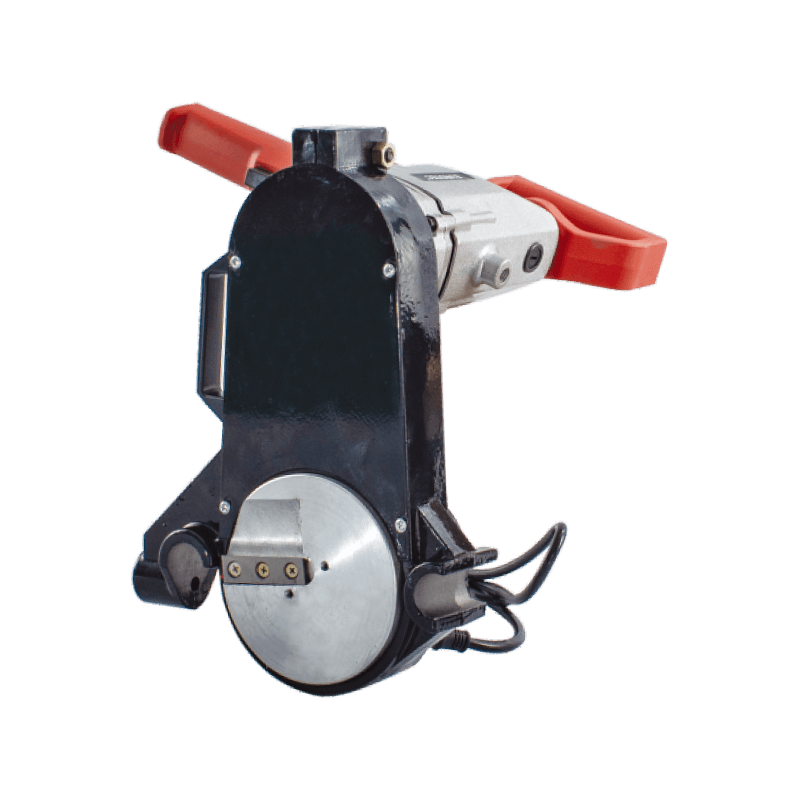
Milling cutters, often simply referred to as end mills or milling tools, are the quintessential cutting tools used in milling machines and machining centers. They are responsible for removing material from a workpiece to achieve the desired shape, size, and surface finish. In the context of mold manufacturing, their role is particularly critical, as molds require high precision, complex geometries, and superior surface quality.
1. The Critical Role of Milling Cutters in Mold Making
Molds, used for injection molding, die-casting, or forging, are essentially the inverse of the final product. Creating them involves a series of meticulous machining processes where milling cutters are indispensable:
Roughing: Using robust, high-feed milling cutters to quickly remove large volumes of material, establishing the basic form of the mold cavity.
Semi-Finishing: Transitional milling operations that prepare the mold for the final finish by leaving a small, uniform amount of stock.
Finishing: Employing high-precision, fine-grained carbide end mills to achieve the final dimensions, tight tolerances, and smooth surface textures required for the mold.
Specialty Operations: This includes using ball-nose end mills for 3D contouring of complex surfaces, taper end mills for drafting angles, and micro-diameter end mills for intricate details and text.
The performance of a milling cutter directly impacts machining efficiency, mold quality, and overall production cost.
2. Key Considerations for Milling Cutter Selection
Choosing the right milling cutter is a complex decision based on several factors:
Workpiece Material: The material of the mold (e.g., P20 steel, H13 tool steel, stainless steel, aluminum) dictates the cutter's material and coating. Harder mold materials require cutters made of solid carbide or with specialized coatings like TiAlN to resist wear and heat.
Geometry and Flute Count: The cutter's geometry (helix angle, rake angle) and the number of flutes (cutting edges) influence chip evacuation, surface finish, and material removal rates. For instance, a 3-flute end mill is often a versatile choice for steel, while a 2-flute is preferred for aluminum to prevent chip clogging.
Coatings: Advanced coatings such as Titanium Nitride (TiN), Titanium Aluminum Nitride (TiAlN), and Aluminum Chromium Nitride (AlCrN) are applied to increase hardness, enhance heat resistance, and reduce friction, significantly extending tool life.
3. The Imperative of Customized Services
Standard milling cutters cover a wide range of applications, but complex and unique mold designs often demand customized tooling solutions. This is where the expertise of an R&D team becomes invaluable.
Application-Specific Designs: An experienced team can design and manufacture non-standard milling cutters tailored for specific challenges, such as deep-cavity milling, hard milling (machining hardened steels), or achieving particular undercuts.
Collaborative Development: This process involves professional communication with the mold maker to understand their specific needs, machine capabilities, and material challenges. The goal is to provide useful suggestions and create a tool that optimizes the entire machining process, reducing cycle times and improving mold quality.
Contextual Link: A company like Zhejiang Chenghong Machinery, with its foundation in design and manufacturing, exemplifies how integrated R&D capabilities are applied not just to their core welding machines, but can be extended to support the tooling needs of their clients in related fabrication fields. Their principle of listening to customer opinions to ensure excellent quality products aligns perfectly with the collaborative nature of developing custom milling solutions.
4. Quality Assurance as a Foundation
The performance and reliability of a milling cutter are only as good as the quality control behind its manufacturing. A strict quality control system, often aligned with international standards, is non-negotiable.
Material Integrity: Ensuring the raw carbide or high-speed steel is free from defects.
Precision Grinding: Utilizing state-of-the-art CNC grinding machines to achieve precise geometries and cutting-edge sharpness.
Consistent Coating: Applying coatings uniformly and at the correct thickness to guarantee predictable performance and tool life.
Rigorous Inspection: Every batch of cutters should undergo dimensional checks and performance testing to ensure they meet the promised specifications.
This guaranteed quality minimizes tool failure during critical machining operations, preventing costly scrapes and production delays.
5. The Importance of Professional Support and Communication
Beyond the physical product, the technical support and communication provided by the supplier are crucial.
Technical Expertise: Professional communication involves more than just taking an order; it's about offering useful suggestions on cutting parameters (speed, feed rate, depth of cut), toolpath strategies, and troubleshooting machining issues like chatter or poor surface finish.
Responsive Support: A quick response to technical inquiries is essential for maintaining production efficiency. When a machinist encounters a problem, timely and patient feedback can help diagnose and resolve the issue swiftly, minimizing machine downtime. The commitment to replying within a short timeframe during working days is a significant value-add for any manufacturing operation.
In conclusion, milling cutters are the workhorses of mold manufacturing. Success in this field relies on a synergy of high-quality, application-specific tooling, robust quality assurance, and a supplier partnership built on professional expertise, responsive support, and reliable delivery—principles that are fundamental to long-term success in the precision manufacturing industry.
 English
 中文简体
中文简体 русский
 عربى
عربى