 English
 中文简体
中文简体 русский
 عربى
عربى

Content
- 1 The Direct Answer: Which ISO Standards Cover Fusion Welding?
- 2 ISO 4063: The Foundation of Welding Process Classification
- 3 ISO 15614: Qualification of Welding Procedures for Metallic Materials
- 4 ISO 21307: The Core Standard for Butt Fusion Welding of Polyethylene Pipes
- 5 ISO 12176: Standards for Butt Fusion Welding Machines and Equipment
- 6 How Butt Fusion Welding Machine Selection Relates to ISO Compliance
- 7 ISO Standards Relevant to Welder and Operator Qualification in Fusion Welding
- 8 Quality Management in Fusion Welding: ISO 3834 and Its Role
- 9 Common Defects in Fusion Welding That ISO Standards Are Designed to Prevent
- 10 Regional and Industry-Specific Standards That Build on ISO Fusion Welding Requirements
- 11 Practical Checklist for ISO Compliance When Using Butt Fusion Welding Machines
- 12 The Long-Term Significance of ISO Compliance in Fusion Welding
The Direct Answer: Which ISO Standards Cover Fusion Welding?
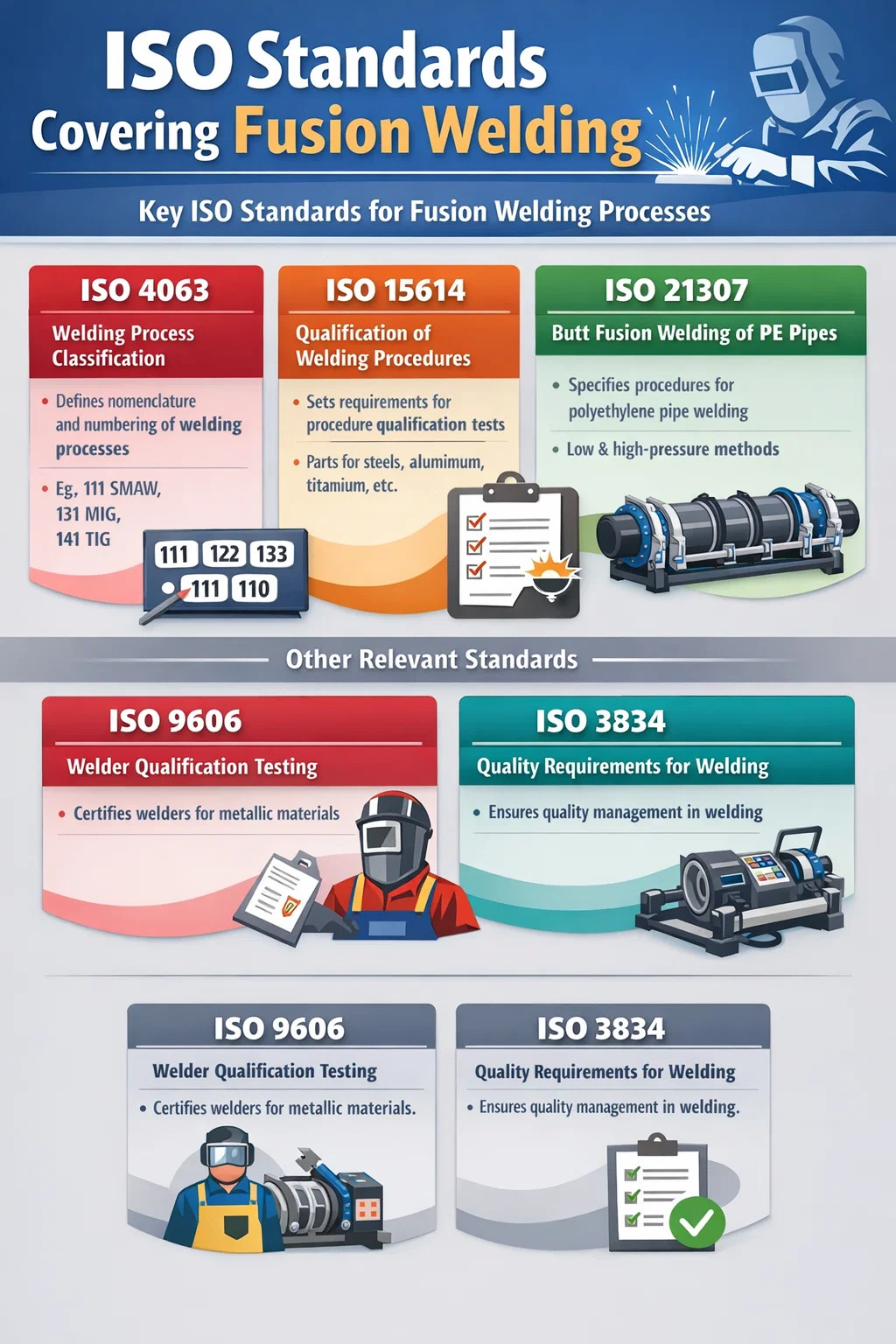
Fusion welding is governed by several ISO standards depending on the material, process, and application. For general fusion welding of metallic materials, ISO 4063 defines the nomenclature and numbering of welding processes, while ISO 15614 (a multi-part series) specifies the qualification of welding procedures. For thermoplastic pipe systems — the domain where butt fusion welding machines operate — ISO 21307 is the primary standard governing butt fusion welding of polyethylene (PE) pipes and fittings. Additionally, ISO 12176 covers the equipment used in these operations, including butt fusion welding machines themselves.
These standards are not interchangeable. A pipeline contractor working with PE100 gas pipes must reference different clauses than a structural steel fabricator. Getting the right standard for your specific fusion welding application is the starting point — not the finish line.
ISO 4063: The Foundation of Welding Process Classification
ISO 4063 establishes a universal numbering system for welding and allied processes. Under this standard, fusion welding processes are assigned reference numbers that appear on welding procedure specifications (WPS), welder qualification records, and inspection documentation worldwide. For example:
- Process 111 — Shielded metal arc welding (SMAW)
- Process 131 — Metal inert gas welding (MIG)
- Process 141 — Tungsten inert gas welding (TIG)
- Process 51 — Electron beam welding
- Process 76 — Electro-slag welding
This classification system underpins the broader ISO welding framework. When a fabrication standard or engineering specification says "use process 311," any qualified professional globally understands exactly which fusion welding technique is intended. This removes ambiguity from procurement specifications, quality assurance plans, and regulatory submissions.
ISO 4063 was last significantly updated in 2009 and continues to serve as the backbone reference document for process identification across all fusion welding standards.
ISO 15614: Qualification of Welding Procedures for Metallic Materials
ISO 15614 is a multi-part standard series that defines how welding procedure specifications (WPS) must be tested and qualified for metallic materials. Different parts address different process types and material groups:
| ISO 15614 Part | Process Covered | Typical Application |
|---|---|---|
| Part 1 | Arc and gas welding of steels; arc welding of nickel alloys | Structural steel fabrication, pressure vessels |
| Part 2 | Arc welding of aluminium and aluminium alloys | Aerospace structures, transport equipment |
| Part 5 | Arc welding of titanium, zirconium, and their alloys | Chemical processing, medical equipment |
| Part 7 | Overlay welding | Corrosion resistant cladding |
| Part 11 | Electron and laser beam welding | Precision manufacturing, automotive |
The qualification process under ISO 15614-1 requires a Welding Procedure Qualification Test (WPQT). This involves welding test pieces under conditions that represent the intended production environment, followed by destructive and non-destructive testing. Typical tests include visual inspection, radiographic or ultrasonic examination, tensile testing, bend testing, impact testing at specified temperatures, and hardness surveys.
A qualified WPS under ISO 15614 is not indefinitely valid without review. Changes to essential variables — such as base material group, filler metal type, heat input range, or joint configuration — can invalidate the existing qualification and require re-testing. Understanding what constitutes an essential variable versus a non-essential variable is a critical operational knowledge point for welding engineers and quality managers.
ISO 21307: The Core Standard for Butt Fusion Welding of Polyethylene Pipes
When it comes to thermoplastic pipeline systems — particularly polyethylene (PE) — ISO 21307:2017 is the defining international standard. It specifies procedures for the butt fusion welding of PE pipes and fittings used in water supply, gas distribution, industrial pipelines, and sewerage systems. This is the standard that directly regulates how butt fusion welding machines must be used in the field.
The standard covers two primary procedures:
- Single low-pressure procedure — Suitable for pipe wall thicknesses up to approximately 70 mm (SDR 17 or better), this method involves four stages: heating, removal of the heater plate, joining under fusion pressure, and cooling under pressure.
- Dual pressure procedure — Designed for thicker-walled pipes, this approach uses a higher initial joining pressure before switching to a lower fusion pressure, helping to manage bead formation on heavy-wall sections.
Key Parameters Regulated by ISO 21307
ISO 21307 specifies precise process parameters that butt fusion welding machines must achieve and maintain. These include:
- Heater plate temperature: Typically between 200°C and 230°C (±10°C tolerance), verified with a calibrated contact thermometer before each welding session.
- Heating time: Calculated based on pipe wall thickness (e in mm), commonly expressed as 10 × e seconds for standard conditions.
- Changeover time: The interval between heater removal and pipe joining must be kept to a minimum — typically less than 5 to 8 seconds for most pipe diameters — to prevent surface cooling and contamination.
- Fusion pressure: Expressed as an interfacial pressure in N/mm², dependent on pipe material designation (PE80, PE100) and machine hydraulic system calibration.
- Cooling time: Pipes must remain under pressure in the butt fusion welding machine until the joint has cooled sufficiently, with cooling times calculated from wall thickness and ambient temperature.
Any deviation from these parameters — even slight — can produce a weld with unacceptable tensile strength, incomplete fusion at the pipe centreline, or voids that will not be visible externally but will fail under hydrostatic pressure testing.
ISO 12176: Standards for Butt Fusion Welding Machines and Equipment
ISO 12176 is the equipment-focused counterpart to ISO 21307. It defines the requirements for the tools and machines used to perform thermoplastic pipe fusion welding. The standard is published in multiple parts:
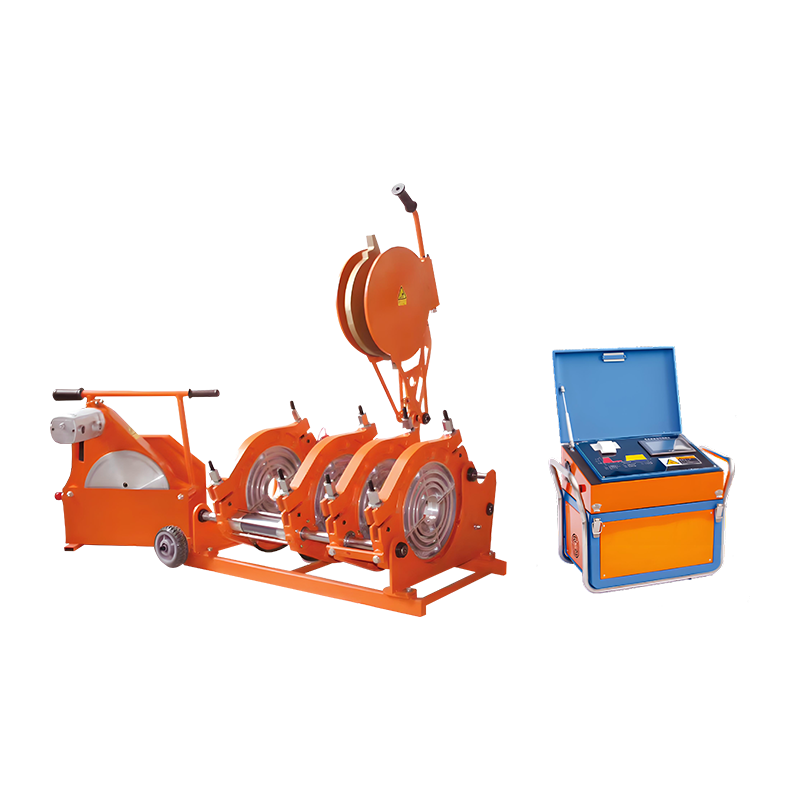
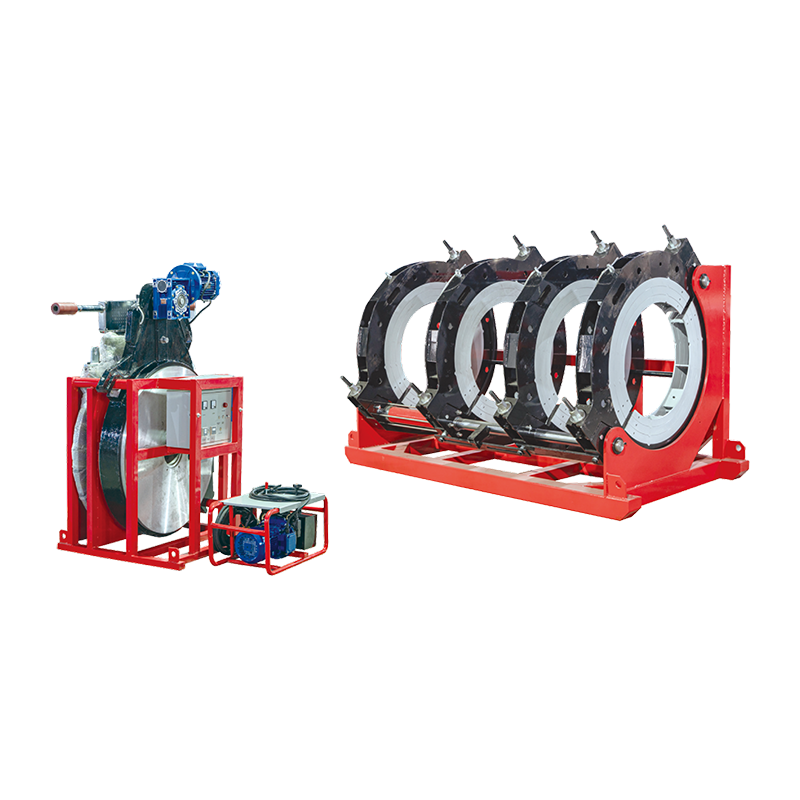
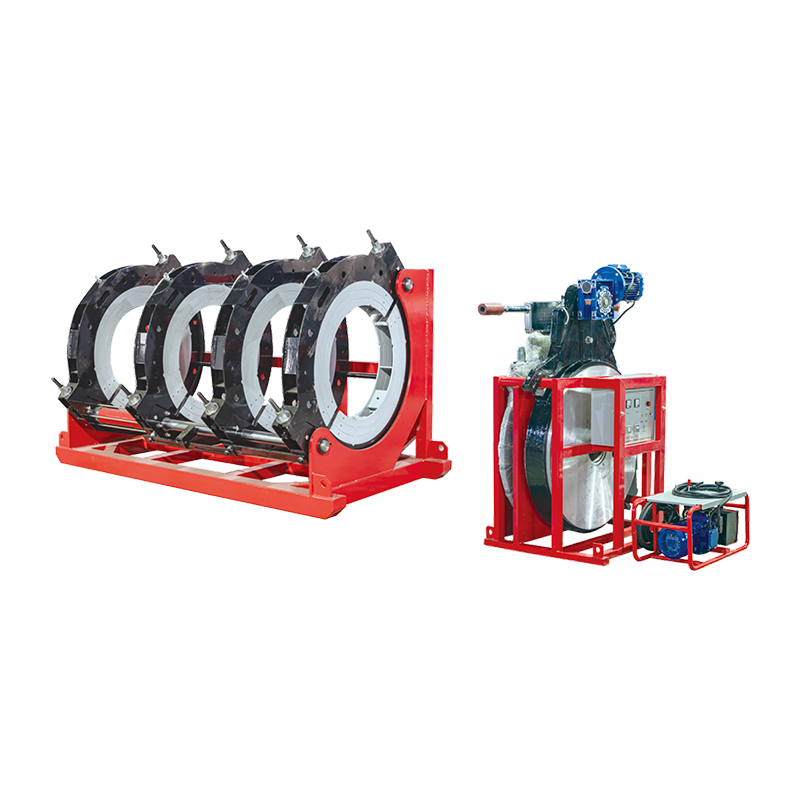
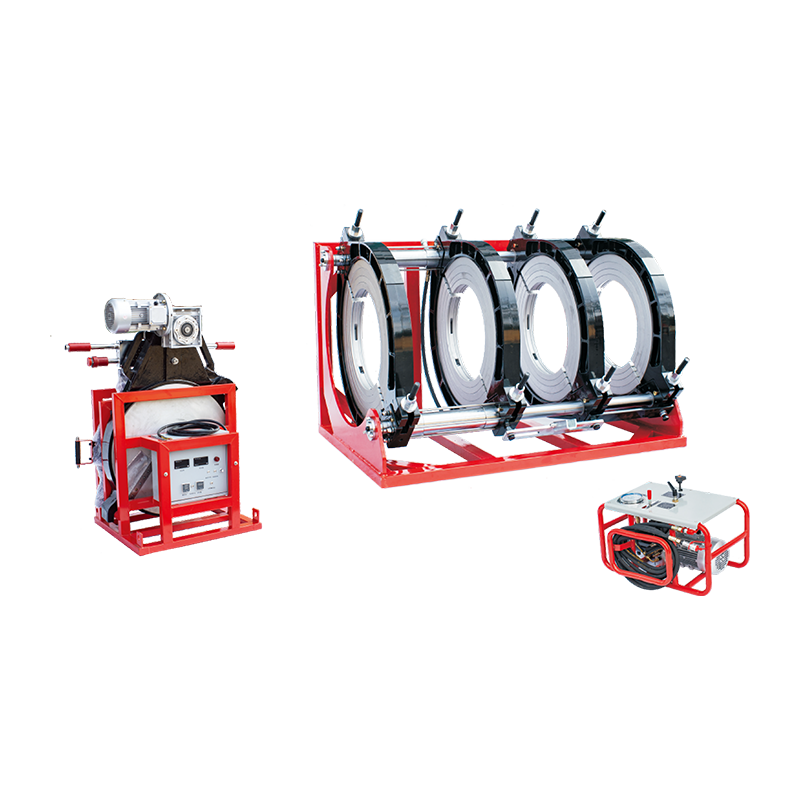
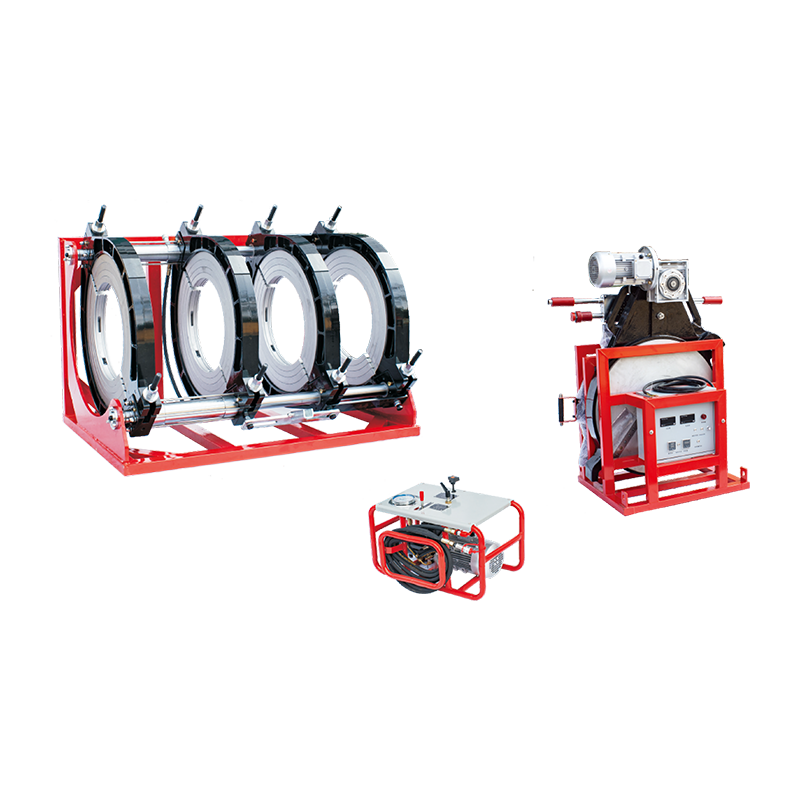
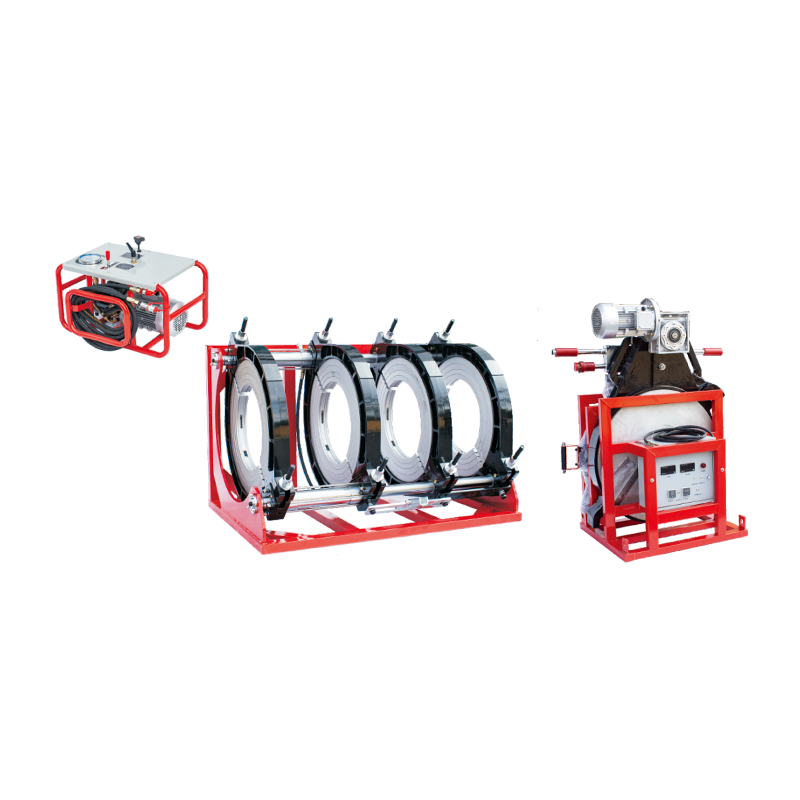
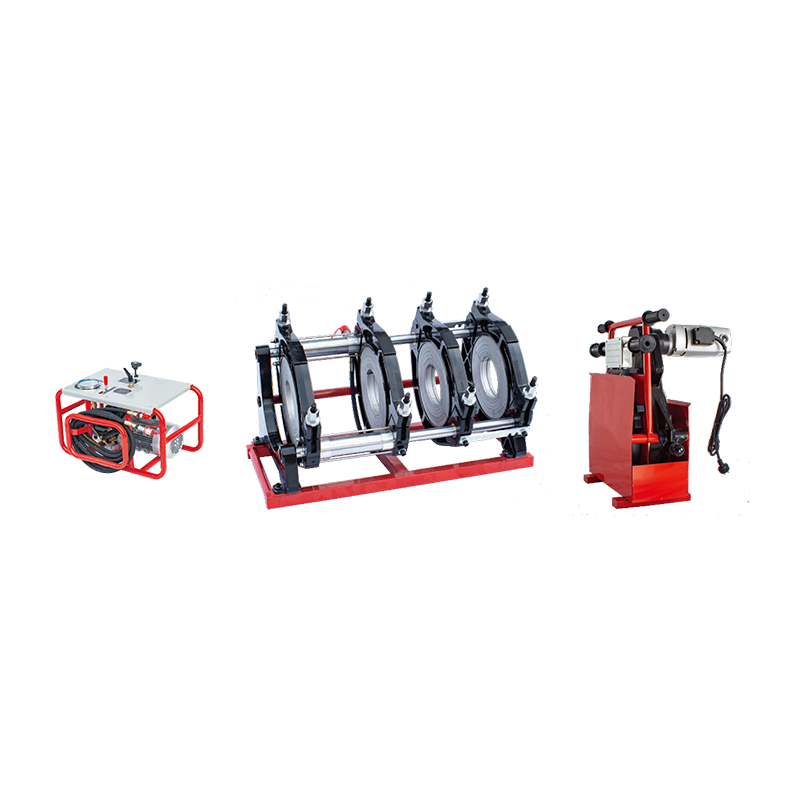
- ISO 12176-1: Equipment for fusion jointing of polyolefin systems — butt fusion machines. This part covers the mechanical, hydraulic, and thermal requirements of butt fusion welding machines, including clamping systems, heating plates, facing tools (planers), and hydraulic drive units.
- ISO 12176-2: Equipment for electrofusion jointing — covers the control units used in electrofusion welding, which is a related but distinct thermoplastic fusion process.
- ISO 12176-3: Operators' badge system — establishes a qualification and identification scheme for fusion welding operators, creating a traceable record of trained personnel.
- ISO 12176-4: Traceability coding — defines the data logging and recording systems that modern butt fusion welding machines must be capable of producing to prove each joint was made under correct conditions.
What ISO 12176-1 Requires from Butt Fusion Welding Machines
Under ISO 12176-1, manufacturers of butt fusion welding machines must demonstrate that their equipment meets defined performance benchmarks. These include:
- The heater plate must maintain a uniform temperature across its entire contact surface within ±10°C of the set point, verified by calibrated thermometry.
- The hydraulic pressure system must be capable of applying and holding the specified fusion pressure consistently throughout the cooling phase without drift exceeding defined limits.
- The facing tool (pipe planer or trimmer) must produce pipe end surfaces that are flat, perpendicular to the pipe axis, and free of contamination.
- Pipe clamping systems must hold the pipe sections in correct axial alignment and resist any tendency for one pipe to rotate relative to the other during joining.
- All pressure gauges, thermometers, and timers on the machine must be calibrated and traceable to national standards, with calibration intervals typically not exceeding 12 months.
In practice, this means a butt fusion welding machine that passes ISO 12176-1 compliance checks is not simply a piece of hydraulic equipment — it is a precision joining instrument whose performance directly determines the structural integrity of buried and pressurised pipelines that may remain in service for 50 years or more.
How Butt Fusion Welding Machine Selection Relates to ISO Compliance
Not all butt fusion welding machines are built to the same specification. Selecting the wrong machine — or using a machine that is out of calibration — is a direct route to non-compliance with ISO 21307 and ISO 12176, regardless of how skilled the operator is. The following machine characteristics have direct ISO compliance implications:
Pipe Diameter Range and Clamping Geometry
Butt fusion welding machines are rated for specific outside diameter (OD) ranges, typically expressed in millimetres. A machine rated for 90–315 mm OD cannot produce a geometrically valid joint on a 450 mm pipe, because the clamp inserts will not maintain the required concentricity and axial alignment. ISO 21307 assumes that the machine geometry is appropriate for the pipe being welded.
Hydraulic System Pressure Range and Controllability
The fusion pressure required by ISO 21307 is expressed as an interfacial pressure — typically 0.15 N/mm² for standard PE pipe butt fusion welding. To convert this to a hydraulic cylinder pressure on a specific machine, the operator must know the machine's drag pressure (the pressure needed to overcome friction with no pipe load), the cylinder bore area, and the total pipe end face area being joined. Butt fusion welding machines that do not provide reliable, stable hydraulic pressure throughout the cooling phase — which can last from 8 minutes for thin-walled DN63 pipe up to 60 minutes or more for heavy-wall DN630 pipe — cannot reliably comply with the standard.
Data Logging Capabilities per ISO 12176-4
Modern project specifications — particularly for gas distribution and water utility applications — increasingly require that butt fusion welding machines produce electronic weld records. ISO 12176-4 specifies the data that must be captured: heater temperature, fusion pressure, heating time, changeover time, cooling time, date, time, operator ID, and pipe/fitting batch numbers. Machines without data logging capability cannot satisfy this traceability requirement, which is not merely an administrative formality but a fundamental part of quality assurance for buried infrastructure.
ISO Standards Relevant to Welder and Operator Qualification in Fusion Welding
Beyond procedure and equipment standards, ISO has established frameworks for qualifying the people who operate fusion welding equipment. This is a separate but equally important dimension of compliance.
ISO 9606: Qualification Testing of Welders — Fusion Welding
ISO 9606 is a multi-part series covering the qualification testing of welders for metallic fusion welding. Part 1 covers steels, Part 2 covers aluminium and aluminium alloys, Parts 3–5 cover copper, nickel, titanium, and zirconium alloys respectively. Under ISO 9606, a welder qualification test involves welding a test piece under supervised conditions, which is then subjected to visual inspection and other NDT/DT methods as specified. A successful qualification certifies the welder to perform specific fusion welding tasks within the scope of that qualification.
Welder qualifications under ISO 9606 are time-limited. They must be confirmed every six months by the responsible welding coordinator or employer (who confirms the welder has been working within the qualified scope), and renewed every three years by a re-examination or by demonstration of satisfactory test records. Letting a qualification lapse — even by a few days — can have significant contractual and legal consequences on certified fabrication projects.
ISO 12176-3: Operators' Badge System for Thermoplastic Pipe Fusion
For butt fusion welding of thermoplastic pipes, ISO 12176-3 establishes an operator identification and qualification badge system. Operators receive a badge that carries a unique identifier linking their personal details, training record, and qualification scope. This badge number must be recorded in the weld data log for every joint made. The system creates a direct, auditable link between a specific weld record and the qualified operator who made it — essential for failure investigation and quality system audits.
Many national bodies and major utilities have adopted and extended this ISO system with their own additional requirements. For example, in the UK, Gas Safe Register requirements for gas pipe fusion welding build on ISO 12176-3 with additional competency assessment elements.
Quality Management in Fusion Welding: ISO 3834 and Its Role
ISO 3834 addresses the quality requirements for fusion welding of metallic materials and exists in four parts representing different quality levels:
- ISO 3834-2: Comprehensive quality requirements — for manufacturers of safety-critical welded products such as pressure equipment, lifting equipment, and structural steelwork in demanding applications.
- ISO 3834-3: Standard quality requirements — for a broad range of industrial fabrication where systematic quality control is required but full traceability to Part 2 level is not mandated.
- ISO 3834-4: Elementary quality requirements — the minimum level, applicable to simple fusion welding operations with limited technical risk.
- ISO 3834-5: Documents with which it is necessary to conform to claim conformity to one of the previous parts.
ISO 3834 is not a product standard — it is a management system standard specifically designed for welding. It requires a manufacturer to demonstrate that they have: appropriate welding procedures (qualified per ISO 15614 or similar), qualified welders (certified per ISO 9606), suitable and calibrated welding equipment, adequate inspection and testing facilities, and a competent welding coordinator (typically a person holding an International Welding Engineer, Technologist, or Specialist qualification from the International Institute of Welding).
Certification to ISO 3834 is increasingly demanded by clients and required by product standards. For example, EN 1090 (for structural steel and aluminium execution) and PED 2014/68/EU (Pressure Equipment Directive) both invoke ISO 3834 as part of their conformity requirements. Without ISO 3834 certification, a fabricator may be legally unable to CE-mark welded products for sale within the European Economic Area.
Common Defects in Fusion Welding That ISO Standards Are Designed to Prevent
Understanding why ISO standards specify such precise parameters is easier when you understand the failure modes they prevent. ISO 6520 classifies weld imperfections in fusion welding of metallic materials into six main groups. In butt fusion welding of thermoplastic pipes, analogous defect categories exist.
| Defect Type | Root Cause | ISO Parameter That Prevents It |
|---|---|---|
| Incomplete fusion (cold weld) | Heater temperature too low; heating time too short; changeover time too long | ISO 21307: heater plate temperature, heating time, and changeover time limits |
| Porosity / voids | Contaminated pipe ends; moisture on heater plate surface | ISO 21307 / ISO 12176-1: pipe end preparation and heater plate condition requirements |
| Misalignment (offset weld) | Inadequate pipe clamping; worn clamp inserts | ISO 12176-1: clamping system alignment requirements; ISO 21307: joint inspection criteria |
| Overheating / degradation | Heater temperature excessive; heating time too long | ISO 21307: upper limits on heater plate temperature and heating duration |
| Insufficient bead formation | Fusion pressure too high during heating phase; wrong procedure for pipe SDR | ISO 21307: heating pressure / drag pressure specification; procedure selection guidance |
| Premature release from machine | Cooling time not observed; operator removes pipe before joint solidified | ISO 21307: minimum cooling time formulae based on wall thickness and ambient temperature |
Each of these defects can be invisible to the naked eye immediately after welding. A joint that appears perfectly formed externally may contain a planar cold fusion defect at the centreline that has zero tensile strength perpendicular to the weld. This is why ISO standards specify the process parameters — not because the bead geometry looks nice, but because compliant parameters are the only proven way to ensure a fusion bond that meets the long-term performance requirements of the pipeline.
Regional and Industry-Specific Standards That Build on ISO Fusion Welding Requirements
ISO standards provide the international baseline, but many sectors and regions apply additional or more restrictive requirements on top of this foundation. Being aware of these is essential for contractors working across multiple markets or sectors.
European Standards (EN) and Their Relationship to ISO
Many ISO fusion welding standards have been adopted as European Standards (EN ISO) with or without national modifications. For example, ISO 15614-1 is published in Europe as EN ISO 15614-1, carrying the same technical content. However, EN 13480 (metallic industrial piping) and EN 13445 (unfired pressure vessels) impose additional requirements for fusion welding quality that go beyond the baseline ISO content — requiring, for instance, specific non-destructive testing coverage percentages, post-weld heat treatment criteria, and documentation packages that must accompany the welded product.
Gas and Water Utility Specifications
Gas and water utilities — the primary users of butt fusion welding machines for PE pipe installation — typically publish their own technical specifications that reference ISO 21307 and ISO 12176 but add operational requirements. These may include:
- Minimum ambient temperature limits for outdoor fusion welding without additional protection (for example, no fusion welding when pipe or heater plate temperature falls below 5°C without a fusion tent)
- Mandatory use of automatic butt fusion welding machines with data logging for all joints in certain pipe sizes or pressure ratings
- Specific bead geometry acceptance criteria — typically the bead width must be uniform around the full pipe circumference and meet minimum and maximum height limits relative to the pipe OD
- Restrictions on joint repair — in some utility specifications, a joint that fails visual inspection cannot be cut back and re-welded; the entire fitting or pipe section must be replaced
ASME and AWS: Parallel Systems for North American Markets
In North America, fusion welding of metals is primarily governed by ASME (American Society of Mechanical Engineers) codes and AWS (American Welding Society) standards rather than ISO. ASME Section IX covers welding and brazing qualifications; AWS D1.1 covers structural steel welding. While these are technically separate from the ISO system, they address equivalent technical needs. Projects that span both ISO and ASME territory — common in global LNG, offshore oil and gas, and petrochemical projects — must carefully manage which standard system applies to each weld joint and ensure there is no accidental mixing of qualification records from incompatible systems.
Practical Checklist for ISO Compliance When Using Butt Fusion Welding Machines
For contractors and project managers who need to implement ISO-compliant fusion welding operations using butt fusion welding machines, the following checklist consolidates the key requirements across the relevant standards:
- Confirm the applicable standard: Identify whether the project specification references ISO 21307 (thermoplastic pipe butt fusion) or ISO 15614 (metallic fusion welding) and obtain the current edition of that standard.
- Verify machine calibration: Check that the butt fusion welding machine has a valid calibration certificate covering heater plate thermometry and hydraulic pressure measurement, dated within the required calibration interval (usually 12 months).
- Confirm machine suitability: Ensure the machine OD range, clamping inserts, and hydraulic capacity are appropriate for the pipe size, wall thickness, and SDR/PN rating being welded.
- Check operator qualifications: Verify operator ISO 12176-3 badge currency (for thermoplastic pipe) or ISO 9606 welder qualification certificate (for metallic fusion welding). Confirm the qualification scope covers the material, process, and position being used.
- Calculate the correct parameters before welding begins: Use the pipe wall thickness, material designation, and machine-specific drag pressure to determine the required heating time, heating pressure, fusion pressure, and minimum cooling time for each welding session.
- Prepare pipe ends correctly: Ensure pipe ends are faced (trimmed) using the machine's facing tool immediately before welding. Wipe with clean, lint-free, dry cloths if required. Do not touch the prepared faces with bare hands.
- Verify heater plate temperature: Measure heater plate temperature with a calibrated contact thermometer at each face before the first weld and periodically throughout the working day, particularly when ambient temperature changes.
- Record all parameters: Use the machine's data logger (if equipped) or a manual weld record sheet to document every parameter for every joint. Retain records for the duration specified in the contract or relevant standard — for buried utility pipelines this is often a minimum of 10 years and sometimes the design life of the pipeline (50+ years).
- Inspect finished joints: Perform visual inspection of every joint immediately after cooling, checking bead geometry against the acceptance criteria in ISO 21307 or the project specification. Reject and replace any joints that show asymmetric beads, notches, overheating discolouration, or surface contamination inclusion.
- Maintain equipment condition: Regularly inspect heater plate coating for damage, scratches, or PTFE degradation; check clamp insert wear; verify hydraulic fluid levels and condition. A machine that meets ISO 12176-1 at the time of purchase can fall out of compliance through neglect or misuse.
The Long-Term Significance of ISO Compliance in Fusion Welding
ISO standards for fusion welding — whether for metallic structures or thermoplastic pipes joined by butt fusion welding machines — exist because the consequences of weld failure are disproportionately severe relative to the cost of compliance. A gas main failure in an urban area caused by a non-compliant butt fusion joint represents an immediate public safety risk, enormous repair costs, regulatory scrutiny, and potentially criminal liability for the responsible contractor. A structural collapse caused by unqualified fusion welds in a building or bridge carries equivalent consequences.
The ISO framework — encompassing procedure qualification (ISO 15614 / ISO 21307), equipment requirements (ISO 12176), operator qualification (ISO 9606 / ISO 12176-3), quality management (ISO 3834), and defect classification (ISO 6520) — is designed as an integrated system, not a menu of optional requirements. Each element supports and validates the others. A fully qualified procedure means nothing if the butt fusion welding machine used to execute it is uncalibrated. Excellent machine calibration means nothing if the operator is unqualified. Qualified operators and compliant machines achieve nothing if the quality management system fails to capture and retain the evidence.
ISO compliance in fusion welding is not a bureaucratic exercise — it is the engineering evidence base that a weld will perform as designed for the service life of the asset. That is why understanding which ISO standards apply, how they interact, and what they require from both equipment and personnel is a foundational competency for anyone involved in specifying, performing, or quality-assuring fusion welding operations.