 English
 中文简体
中文简体 русский
 عربى
عربى

Content
- 1 What Is a PPR Welding Tool and Why Does It Matter
- 2 Socket Fusion vs. Butt Fusion: The Core Distinction
- 3 How a PPR Socket Fusion Tool Works: Step-by-Step
- 4 Types of PPR Welding Tools Available on the Market
- 5 Key Specifications to Evaluate Before Buying
- 6 When to Use Butt Fusion Welding Machines Instead of Socket Fusion Tools
- 7 Operating Parameters: Temperature, Time, and Pressure
- 8 Common Defects and How to Prevent Them
- 9 PPR Welding in Large-Scale Projects: Where Butt Fusion Welding Machines Take Over
- 10 Maintenance and Care of PPR Welding Tools
- 11 Selecting the Right PPR Welding Tool for Your Specific Application
- 12 Safety Practices Every PPR Welding Tool User Must Follow
What Is a PPR Welding Tool and Why Does It Matter
A PPR welding tool is a heat-based device used to fuse polypropylene random copolymer (PPR) pipes and fittings into leak-proof, monolithic joints. The conclusion is straightforward: when you need durable, chemical-resistant piping for hot and cold water systems, the right PPR welding tool determines whether your installation lasts two years or twenty. A poor-quality tool or wrong technique will produce joints that crack under thermal cycling, while a properly selected and operated tool delivers connections that routinely exceed the pipe's own rated pressure.
PPR pipe has become the dominant material for domestic and light commercial plumbing across Europe, Asia, and increasingly North America because it handles continuous temperatures up to 95 °C, resists scaling, and requires no solvents or glues. The welding tool is the single piece of equipment that makes all those advantages accessible. Without it, PPR is just a pile of plastic tube. With the right one, an installer can complete a full bathroom rough-in in under two hours and expect the joints to outlast the building's plumbing cycle.
This article explains how PPR welding tools work, how they differ from Butt Fusion Welding Machines, which type suits which application, and what every buyer and installer needs to know before committing to a tool or a technique.
Socket Fusion vs. Butt Fusion: The Core Distinction
The term "PPR welding tool" most commonly refers to a socket fusion iron — a flat, heated plate with interchangeable male and female dies that correspond to standard pipe diameters (20 mm, 25 mm, 32 mm, 40 mm, 50 mm, 63 mm, and sometimes up to 110 mm). The pipe end and fitting socket are pushed simultaneously onto the heated dies, held for a specified dwell time, then removed and pressed together before the melt cools. The result is a fully fused joint with no mechanical fastening.
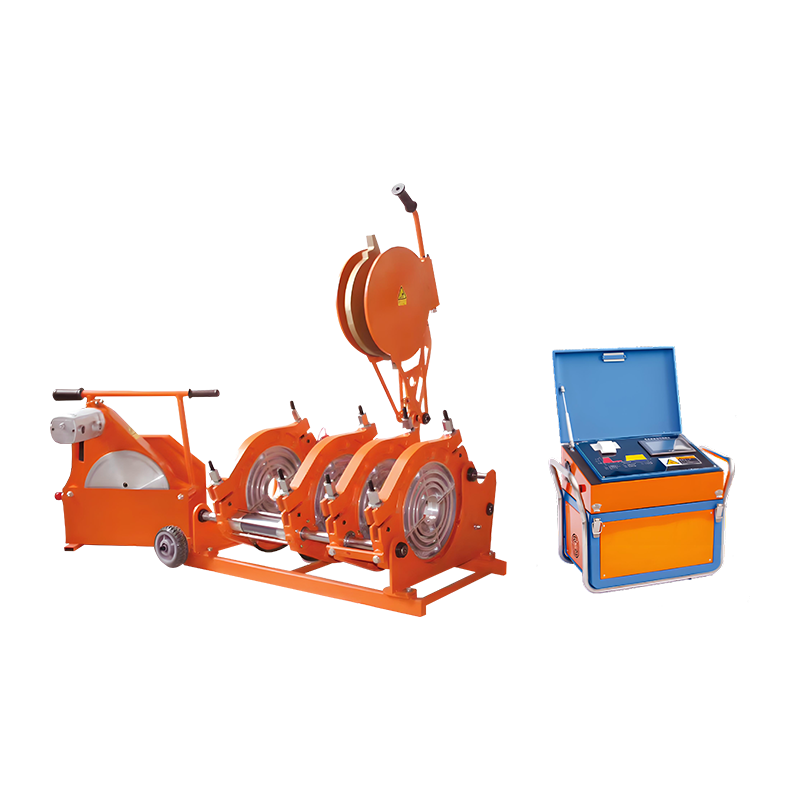
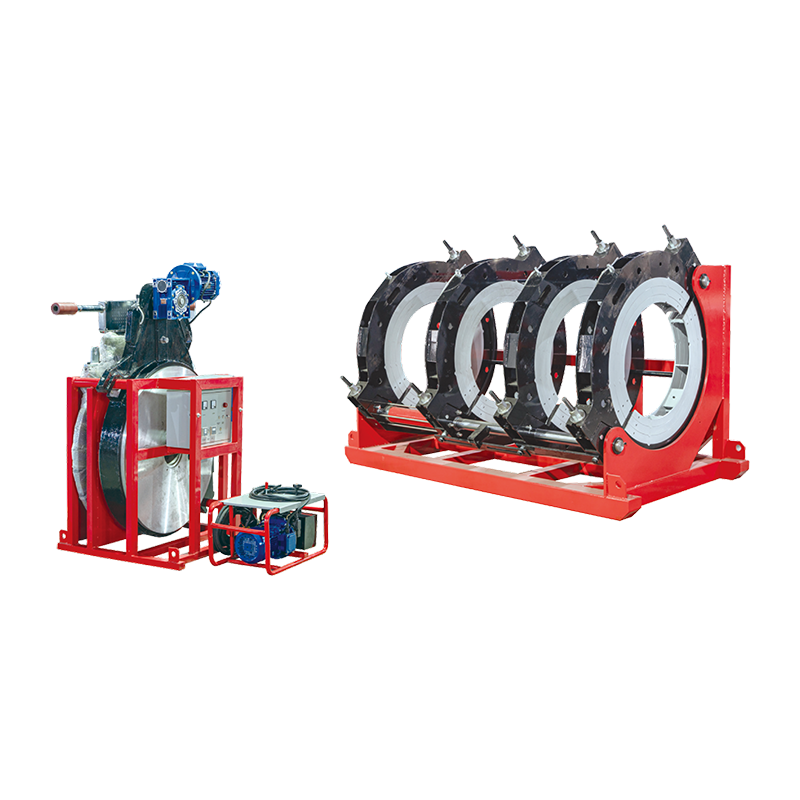
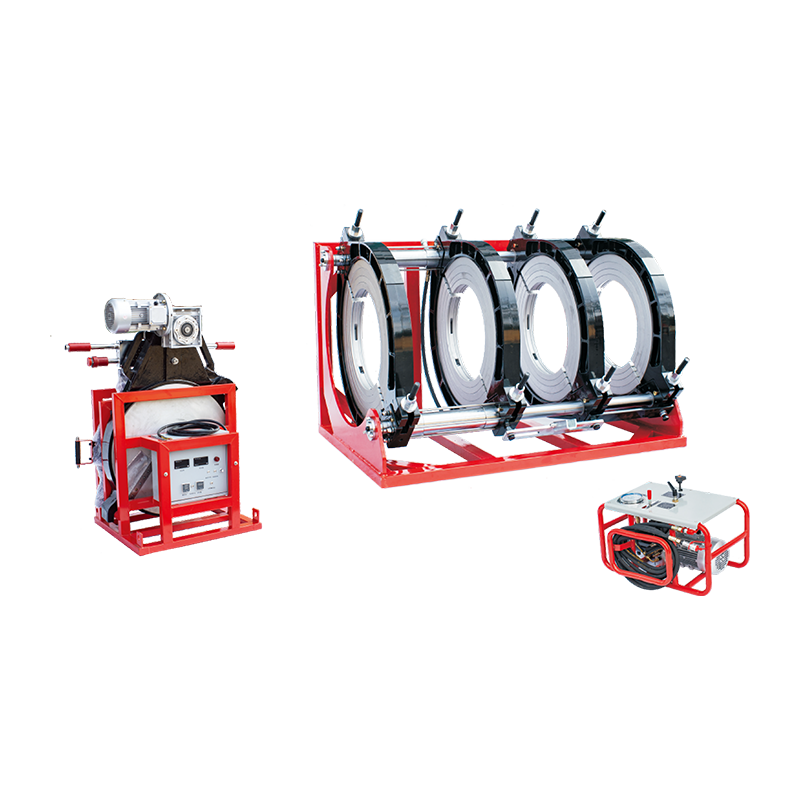
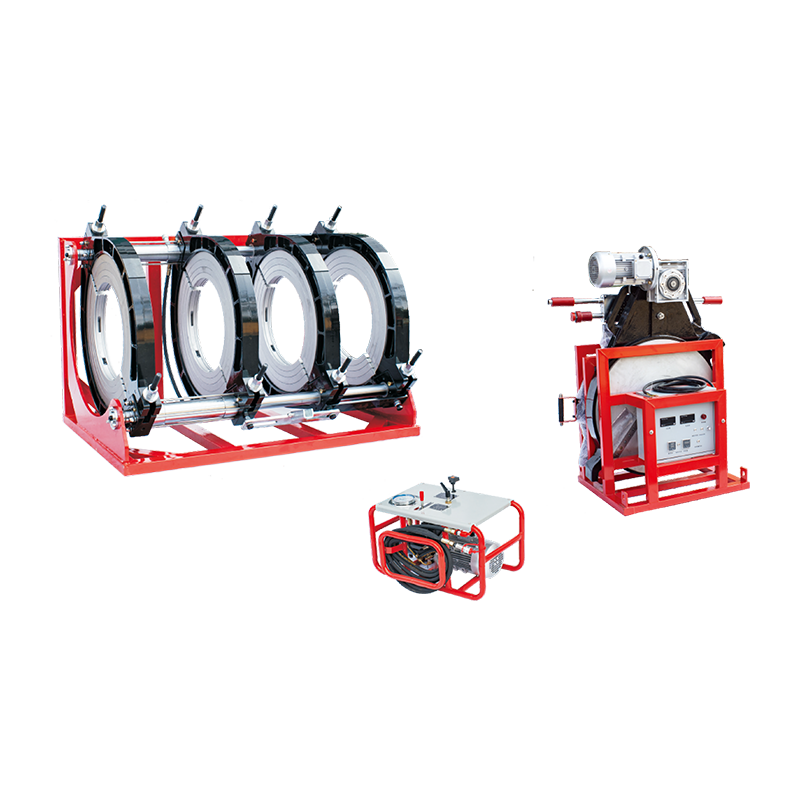
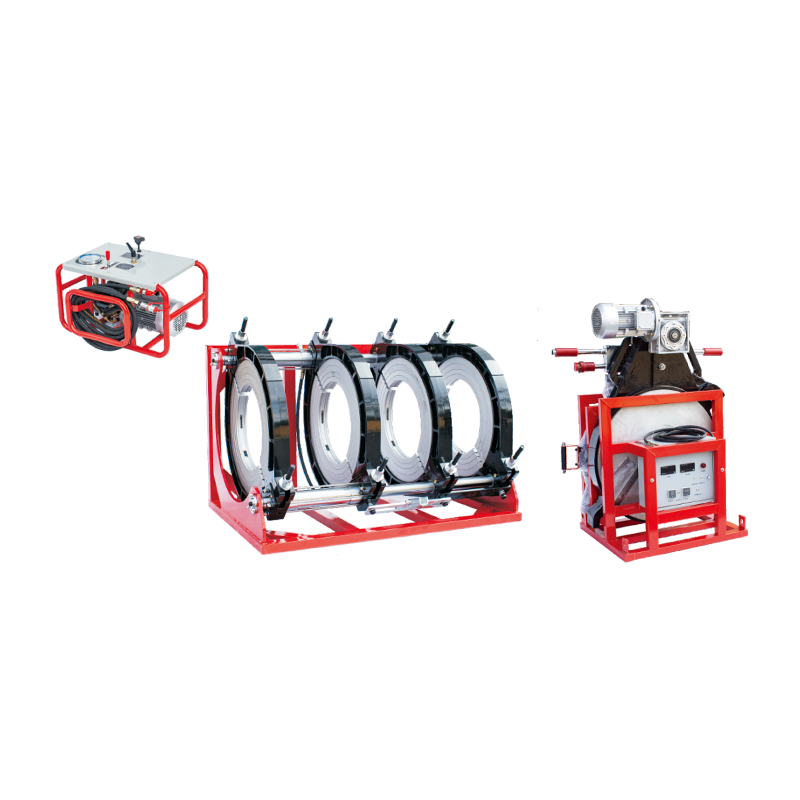
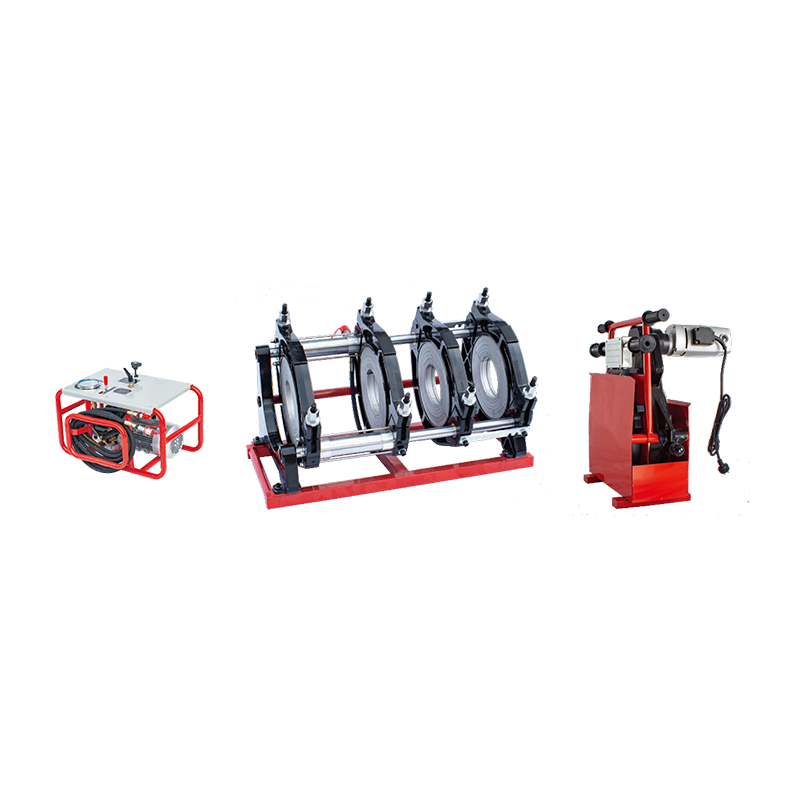
Butt Fusion Welding Machines, by contrast, heat the flat, squared-off ends of two pipe sections or fittings and then press those heated faces together end-to-end under controlled pressure. Butt fusion is generally reserved for larger-diameter thermoplastic pipes — typically 63 mm and above — and is the standard method for HDPE water mains, gas distribution lines, and industrial pipework. However, butt fusion equipment is also used for larger-diameter PPR installations, particularly in district heating and commercial HVAC projects where pipe diameters reach 110 mm, 160 mm, or beyond.
Understanding this distinction matters practically. A plumber fitting 20 mm PPR hot-water lines in an apartment block needs a socket fusion iron costing $40–$150. A contractor installing 160 mm PPR district-heating mains needs a manual or hydraulic butt fusion welding machine, which can cost $700–$8,000 or more depending on size and automation level. Choosing the wrong category is not just wasteful — it produces joints that fail.
| Parameter | Socket Fusion (PPR Welding Tool) | Butt Fusion Welding Machine |
|---|---|---|
| Typical diameter range | 20 mm – 63 mm | 63 mm – 630 mm+ |
| Required welding temperature | 260–270 °C | 200–230 °C (material-dependent) |
| Joint type | Socket overlap | End-to-end (butt) |
| Equipment cost (entry level) | $40 – $150 | $300 – $1,500+ |
| Typical application | Residential plumbing, HVAC | Industrial, municipal, large HVAC |
| Skill level required | Low to moderate | Moderate to high |

How a PPR Socket Fusion Tool Works: Step-by-Step
The physics behind socket fusion is simple but the execution requires discipline. PPR begins to soften at approximately 150 °C and reaches workable melt at 260–270 °C. The welding iron holds this temperature through a thermostat, and the aluminium alloy dies transfer that heat to the pipe and fitting surfaces within seconds.
Here is the standard operating sequence for a PPR welding tool:
- Allow the iron to reach set temperature — most digital models indicate readiness; analogue models typically need 6–8 minutes of warm-up at ambient temperature.
- Mark the insertion depth on the pipe end using the depth gauge included in most kits, or reference the manufacturer's insertion depth chart for the specific diameter.
- Simultaneously push the pipe end onto the spigot die and the fitting socket onto the socket die, applying steady pressure without twisting.
- Hold for the manufacturer-specified heating time — for 20 mm pipe this is typically 5 seconds; for 63 mm it extends to 12–18 seconds depending on wall thickness and ambient temperature.
- Remove both parts from the dies and immediately push them together straight, to the marked depth, within the allowable joining time (approximately 4 seconds for 20 mm, up to 8 seconds for 63 mm).
- Hold the assembled joint stationary for the cooling time — at minimum 20–30 seconds for small diameters, up to 2 minutes for 63 mm — before allowing any bending or pressure.
- Inspect the bead. A uniform ring of melt material extruded at the face of the fitting indicates a good joint. An uneven or absent bead points to insufficient heat time or contaminated surfaces.
The most common errors — and the ones that cause field failures — are rushing the heating time, working in cold ambient conditions without adjusting dwell times, leaving moisture on pipe surfaces, and twisting the joint during assembly. Cold ambient temperatures below 5 °C require heating times to be extended by 50% or more according to standard ISO 15494 guidance, a fact many installers ignore.
Types of PPR Welding Tools Available on the Market
Not every PPR welding tool is built for the same job. Choosing within the category matters as much as choosing between socket and butt fusion methods.
Basic Analogue Socket Fusion Irons
These are the iron plates with a rotary thermostat dial, typically rated at 800–1,200 watts, and supplied with two or three pairs of dies in common sizes (20/25/32 mm). They cost $40–$80 and are appropriate for occasional residential use. Temperature accuracy depends entirely on thermostat calibration — cheap models may run 15–20 °C above or below the set point, which affects joint quality. For production plumbing work, invest in a unit with a verified thermostat.
Digital Thermostat Socket Fusion Tools
These tools display actual plate temperature on an LED or LCD readout and hold the set point within ±5 °C. They typically include a ready indicator light or audible alert. A quality digital iron in the 800–1,500 watt range costs $80–$200 and is the appropriate standard for any professional installer working full time with PPR. The temperature accuracy directly reduces weld failures: internal tests by multiple manufacturers show that maintaining 260–270 °C ±5 °C produces joint strengths that meet or exceed the pipe's own pressure rating.
Bench-Mounted Socket Fusion Machines
For workshop prefabrication of PPR assemblies, bench-mounted tools hold the iron in a fixed position with guided die arms that ensure alignment and controlled insertion depth. These units eliminate the hand-steadiness variable and produce highly consistent joints. They are standard equipment in pipe fabrication shops producing pre-assembled plumbing loops for modular construction.
Manual Butt Fusion Welding Machines for PPR
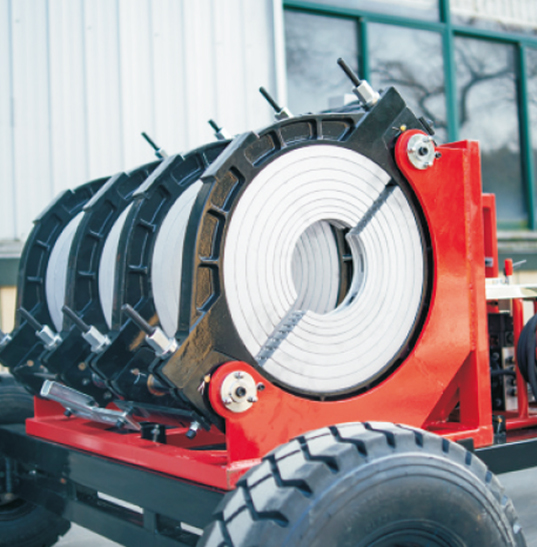
When PPR pipe diameters reach 63 mm and above — common in district heating, commercial building risers, and industrial process lines — manual Butt Fusion Welding Machines become the correct tool. A manual butt fusion machine typically consists of a clamping frame, a facing tool (rotary planer) that squares the pipe ends, a heating plate that contacts both ends simultaneously, and a pressing mechanism that applies controlled force during fusion and cooling. Entry-level manual butt fusion machines for 63–160 mm PPR pipe cost $300–$800; commercial-grade units for the same range run $1,000–$2,500.
Hydraulic Butt Fusion Welding Machines
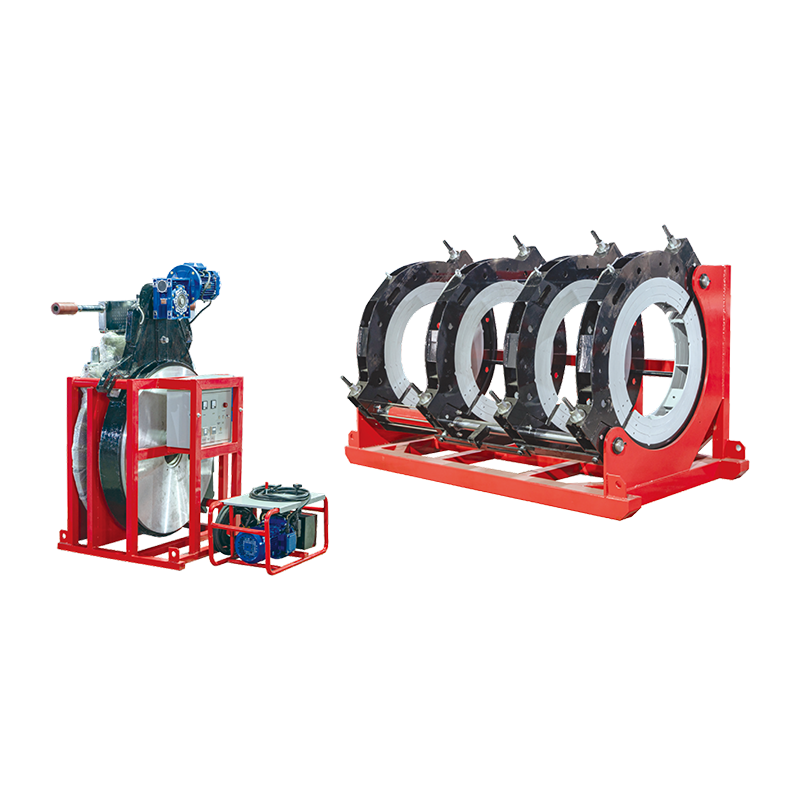
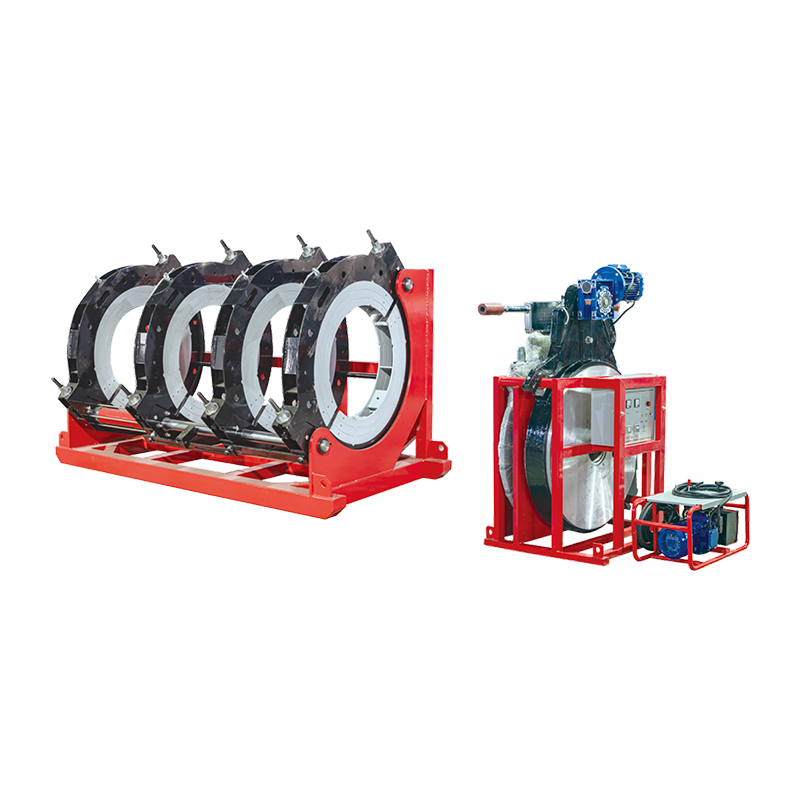
Hydraulic butt fusion welding machines replace the manual screw mechanism with a hydraulic ram, allowing the operator to apply precise, measurable pressure during both the heating and fusion phases. This is critical for large diameters (200 mm and above) where manual force is insufficient and inconsistent. Hydraulic machines are often used for large-diameter PPR in municipal heating networks, and they are the standard tool when ISO 21307 or DVS 2207 welding protocols mandate specific fusion pressure values recorded in a weld log.
Key Specifications to Evaluate Before Buying
Specifications on a PPR welding tool data sheet are not marketing numbers — they translate directly into weld quality and tool longevity. Here is what to look for:
- Power rating: 800–1,200 watts is the practical range for socket fusion tools handling up to 63 mm pipe. Underpowered irons take too long to recover temperature between welds on a busy installation site, slowing output significantly.
- Temperature range: The tool should reach and hold 260–270 °C reliably. A range quoted as "up to 300 °C" is fine — the practical operating point is still 260–270 °C for PPR. Tools with a maximum of only 250 °C may undershoot with worn thermostats.
- Non-stick coating quality: Dies are typically coated with PTFE or similar non-stick material. Cheap coatings degrade within months, causing molten PPR to adhere to the die and ruin the joint surface. Premium dies have harder, thicker coatings rated for 5,000+ weld cycles.
- Die compatibility and availability: Confirm that replacement dies are available in all sizes you need, and that the die mounting thread or bayonet system is a common standard. Proprietary die systems can leave you unable to source replacements if the brand exits the market.
- Voltage and frequency: Most professional tools come in 220–240 V / 50 Hz (European/Asian standard) and 110–120 V / 60 Hz (North American standard) versions. Using the wrong voltage permanently damages the heating element.
- Carrying case and accessory count: A complete kit should include the iron body, a minimum of three die sizes, the stand or holder, a depth gauge, a pipe cutter, and a cleaning cloth. Kits assembled with fewer accessories typically source lower-grade iron bodies.
When to Use Butt Fusion Welding Machines Instead of Socket Fusion Tools
The decision point between a socket fusion PPR welding tool and a butt fusion welding machine is primarily driven by pipe diameter, but other project factors also play a role.
Diameter is the primary driver. For PPR pipes from 20 mm to 50 mm, socket fusion is always used — this is both the industry standard and the most practical approach given that fittings for socket fusion are universally available in this range. For 63 mm, both methods are technically feasible; many contractors default to socket fusion for this size due to fitting availability, while others prefer butt fusion for the larger melt bead and greater joint area. Above 63 mm, Butt Fusion Welding Machines are the industry standard because PPR socket fittings in large diameters are expensive, harder to source, and add significant weight to the system.
Project scale matters too. On a project involving hundreds of joints of the same diameter — a large apartment building's riser system or an industrial process line — butt fusion welding machines deliver greater consistency because each weld follows a fixed mechanical process with defined pressures and timings. Human variation in a socket fusion process becomes statistically significant across hundreds of joints.
Material wall thickness (SDR rating) also factors in. Thick-wall PPR pipes (SDR 6 or SDR 7.4) in larger diameters require fusion pressures that exceed what socket fusion can deliver, making butt fusion welding machines the only viable option for structural integrity at rated operating pressures above 10 bar.
Operating Parameters: Temperature, Time, and Pressure
Every PPR welding operation — whether socket fusion or butt fusion — involves three critical variables: temperature, heating time, and joining force. Getting these right is what separates a sound weld from a latent defect that will fail under thermal cycling or pressure surge.
Temperature
For socket fusion of PPR, the standard plate temperature is 260–270 °C. Below 250 °C, the melt depth is insufficient for full molecular interdiffusion and the joint will be weak. Above 280 °C, the polypropylene degrades, producing a discoloured, brittle joint that passes visual inspection but fails under fatigue. This 20 °C working window is narrower than many installers appreciate.
For butt fusion welding machines used on PPR, the heating plate temperature is typically set between 200–230 °C, lower than socket fusion because the contact area is larger and the heating time is longer. Each pipe manufacturer publishes a welding parameter table for their specific PPR compound; following the pipe supplier's data rather than generic industry guidance is best practice.
Heating Time
Heating time scales with pipe wall thickness and ambient temperature. The following values are representative for socket fusion at 260 °C and ambient temperature 20–23 °C:
| Pipe OD (mm) | Heating Time (s) | Max Joining Time (s) | Cooling Time (min) |
|---|---|---|---|
| 20 | 5 | 4 | 2 |
| 25 | 7 | 4 | 2 |
| 32 | 8 | 6 | 4 |
| 40 | 12 | 6 | 4 |
| 50 | 18 | 6 | 4 |
| 63 | 24 | 8 | 6 |
Joining Force and Cooling Under Load
For socket fusion, no measured joining force is specified — the installer pushes firmly to the marked depth and holds. For butt fusion welding machines, fusion pressure is a defined parameter, typically expressed in bar or N/mm² of pipe cross-section, and is calculated from the pipe's outside diameter and wall thickness. Hydraulic butt fusion welding machines include a pressure gauge precisely for this reason: holding the correct pressure during the cooling phase prevents the joint faces from separating or developing a central void.

Common Defects and How to Prevent Them
Understanding failure modes is as useful as understanding the welding process itself. Most PPR joint failures in service trace back to a small number of avoidable errors during installation.
- Cold joint (insufficient heat): The most common defect. The pipe surface appears fused but molecular interdiffusion is shallow. The joint may hold initial hydraulic test pressure but fails within months under thermal cycling. Prevented by strict adherence to heating time tables and confirming tool temperature before each shift.
- Burnt joint (excessive heat or time): The polypropylene degrades to a darker, more brittle material at the joint face. Visible as discolouration or a powdery texture on the melt bead. Prevented by using a calibrated tool and not exceeding the heating time.
- Twisted joint: Rotation during the joining phase disrupts the melt boundary and introduces stress concentrations. Prevented by training installers to keep both parts on a single axis during assembly and the cooling hold period.
- Contaminated joint: Oil, moisture, pipe shavings, or dust on either surface prevent full fusion. Any contact with the melt surface after it leaves the die should be treated as a spoiled joint requiring recut and reweld. A clean cloth for wiping dies between welds is not optional.
- Under-insertion: The pipe is not pushed to the marked depth, leaving an unfused annular zone at the joint shoulder. The bead will look acceptable from outside but strength is reduced. Precise depth marking on every pipe end before welding eliminates this defect.
- Die adhesion damage: Worn or damaged non-stick coating causes PPR to bond to the die, tearing away material from the joint surface when separated. Inspect dies before each day's work and replace at the first sign of coating degradation.
PPR Welding in Large-Scale Projects: Where Butt Fusion Welding Machines Take Over
Large infrastructure projects — district heating networks, municipal water supply upgrades, industrial chemical lines — routinely specify PPR or its high-temperature variant PP-R-CT for main distribution pipework. At diameters of 110 mm, 160 mm, 200 mm, and above, butt fusion welding machines are the only practical tool.
In a typical district heating project using 160 mm PPR pipe, a hydraulic butt fusion welding machine will be set up on rollers alongside the open trench. The pipe ends are faced with a rotary planer until shavings fall continuously from both sides, confirming perpendicular, clean surfaces. The heating plate is inserted, pressure is applied to achieve initial contact, then reduced to a holding pressure for the full heating dwell (typically 80–100 seconds for 160 mm). The plate is withdrawn, the pipe ends are brought together within a maximum removal time of around 10 seconds, and fusion pressure is applied and held for the full cooling period — often 8–12 minutes depending on ambient temperature and pipe wall thickness.
Fully automatic butt fusion welding machines go further by controlling each phase electronically, recording temperature, pressure, and timing for every weld in a data log that can be reviewed by project engineers and inspectors. This documentation is increasingly required by specification on public infrastructure projects in Europe and increasingly demanded by industrial clients globally. The cost premium for automatic machines — typically $4,000–$15,000 over manual units — is justified on projects where weld documentation is a contractual requirement.
For projects that cannot interrupt flow or work in confined spaces, saddle fusion welding machines allow a branch fitting to be fused directly to the wall of a live PPR main. This technique uses a concave heating tool that matches the pipe OD and heats both the saddle base and the pipe wall simultaneously — a specialized application outside the scope of standard socket fusion tools and conventional butt fusion welding machines.
Maintenance and Care of PPR Welding Tools
A well-maintained PPR welding tool will produce consistent joints for years. A neglected one will silently produce defective welds that pass initial pressure tests but fail in service. The maintenance requirements are simple but non-negotiable.
- Die cleaning: After every welding session, wipe all die surfaces with a clean, dry cloth while the tool is still warm (but not at full welding temperature — allow to cool to around 80–100 °C for safe handling). Never use metal scrapers, which damage the non-stick coating. Accumulated PPR residue increases with each weld and eventually causes adhesion to the die surface.
- Temperature calibration: For professional use, verify actual plate temperature with a contact thermometer or thermocouple at least monthly, or whenever welds show unexplained quality variation. Thermostat drift of 10–15 °C is common in budget tools after 12–18 months of use.
- Die inspection and replacement: Inspect the non-stick coating visually before each day's work. Flaking, pitting, or discolouration in the contact zone is cause for immediate replacement. Most die sets cost $15–$50 for common sizes — a trivial cost compared to a failed weld that requires pipe replacement.
- Cable and plug integrity: Tools operate at 220–240 V and high wattage. Inspect the power cable for cuts or abrasion before each use. A damaged cable on a metallic tool body is a shock hazard.
- Storage: Store the tool in its case with dies mounted or wrapped separately to prevent damage to coating. Avoid storing in environments with chemical vapours that can attack the thermostat components or PTFE coating.
For butt fusion welding machines, maintenance is more involved: the facing tool blades need regular inspection and replacement, hydraulic fluid levels and condition need periodic checks, and clamping jaw inserts must be matched precisely to the pipe OD being welded. Running a butt fusion welding machine with worn jaw inserts produces misaligned welds that are virtually undetectable by visual inspection but dramatically weaken the joint.
Selecting the Right PPR Welding Tool for Your Specific Application
The market offers everything from $40 plastic-bodied irons to $15,000 CNC-controlled butt fusion welding machines. Navigating the selection correctly depends on an honest assessment of your work volume, diameter range, and quality requirements.
For a residential plumber doing occasional PPR work on domestic installations up to 32 mm, a mid-range digital socket fusion iron with a four- or five-die kit is the right choice. Expect to spend $80–$150 for a tool that will last several years with proper care. Buying a $40 analogue tool for regular professional use is a false economy — the temperature inaccuracy increases rework frequency.
For a mechanical contractor doing multi-unit residential or commercial projects regularly up to 63 mm, invest in a quality iron with digital temperature display, at minimum a six-die kit covering 20–63 mm, and a stand that holds the iron stable while both hands manage the pipe and fitting. Budget $150–$300 for the iron, and keep a spare set of dies.
For industrial or infrastructure contractors handling PPR from 63 mm to 250 mm, a manual butt fusion welding machine in the $800–$2,500 range is the baseline requirement. If the project involves more than a few hundred joints in a given diameter, consider a hydraulic machine for consistent pressure control. If the client or specification requires weld documentation, a semi-automatic or fully automatic machine with data logging is non-negotiable.
One point applies at every budget level: buy a tool for which local spare parts and dies are available. A tool that cannot be serviced is a single-point-of-failure for a project. Confirm die availability and after-sales support before purchase, not after.
Safety Practices Every PPR Welding Tool User Must Follow
PPR welding tools operate at temperatures high enough to cause severe contact burns in a fraction of a second. The molten PPR that extrudes at the joint bead is also a burn hazard. These risks are routine and manageable, but they require consistent practice rather than occasional caution.
- Always use heat-resistant gloves when handling heated dies or removing the iron from between pipe and fitting.
- Use the iron stand whenever the tool is not actively in use during a welding session. A 260 °C iron resting on a surface or dropping to the floor causes burns, fire, and tool damage.
- Allow the tool to cool to under 50 °C before placing it in its carry case. Storing a hot tool in a plastic case melts the case and creates a fire risk.
- Do not leave a heated iron unattended near flammable materials. PPR fumes at welding temperature are not acutely toxic at normal ventilation, but prolonged exposure in confined spaces warrants basic respiratory protection.
- On butt fusion welding machines, confirm that pipe clamps are fully tightened before energising the facing tool. A pipe released from a clamp under facing pressure can cause hand and face injuries.
- Check that the voltage setting on the tool matches the site supply before connecting power. A 220 V tool connected to a 110 V supply will produce insufficient heat; the reverse will destroy the heating element and potentially start a fire.