 English
 中文简体
中文简体 русский
 عربى
عربى

Content
- 1 What a PPR Welding Device Actually Does — and Why It Matters
- 2 How Butt Fusion Welding Machines Work: The Step-by-Step Process
- 3 Key Parameters at a Glance: PPR Butt Fusion by Pipe Size
- 4 Types of PPR Welding Devices: Choosing the Right Machine for the Job
- 5 Critical Specifications to Check Before Buying or Renting a Butt Fusion Welding Machine
- 6 Common Weld Defects and How to Prevent Them
- 7 How Ambient Temperature Affects Your PPR Welding Device Performance
- 8 Maintenance Schedule for Butt Fusion Welding Machines: Keeping Equipment Reliable
- 9 Standards and Certifications That Govern PPR Butt Fusion Welding
- 10 PPR Butt Fusion vs Socket Fusion: When to Use Each
- 11 Practical Tips for Getting Consistent Results from Your PPR Welding Device
- 12 Testing and Quality Assurance for PPR Butt Fusion Joints
What a PPR Welding Device Actually Does — and Why It Matters
A PPR welding device melts the mating surfaces of polypropylene random copolymer pipes and fittings so they fuse into a single, homogeneous joint with no mechanical connectors, no sealants, and no weak points. When the process is done correctly, the joint is chemically identical to the parent pipe, meaning burst pressure at the joint equals or exceeds burst pressure of the pipe wall itself. That is the fundamental reason contractors and plant engineers choose heat-fusion technology over threaded or push-fit alternatives for potable water, heating circuits, and chemical lines.
There are two main heat-fusion categories used with PPR: socket fusion (for smaller diameters, typically up to 63 mm) and butt fusion welding. Butt fusion welding machines dominate installations from DN 63 upward and are mandatory on industrial projects where pipe diameters reach 400 mm or beyond. Understanding the difference between these two approaches — and knowing which PPR welding device to deploy on a given job — saves time, reduces waste, and keeps long-term leak rates near zero.
How Butt Fusion Welding Machines Work: The Step-by-Step Process
Butt fusion is a four-stage thermal cycle. Each stage has defined parameters that vary by pipe outside diameter, wall thickness (SDR rating), and ambient temperature. Skipping or shortcutting any stage produces a cold joint, a contaminated interface, or an over-heated bead that looks acceptable but fails under sustained pressure. Here is what happens inside a butt fusion welding machine during a standard weld:
Stage 1 — Facing (Trimming)
A rotating planer or facing tool is clamped between the pipe ends. The machine drives both pipe ends against the cutter simultaneously under a calculated drag pressure. Facing continues until continuous, unbroken shavings appear from both pipe ends, confirming that surfaces are perpendicular, parallel, and free of oxidised or contaminated material. The gap between faced ends must be ≤ 0.5 mm for pipes up to 250 mm OD and ≤ 1.0 mm for larger diameters per ISO 21307.
Stage 2 — Heating
A PTFE-coated heating plate, set to 200–230 °C for PPR (most fabricators use 210 °C as the default), is inserted between the pipe ends. Both ends are pushed against the plate under a calculated heat-soak pressure, then the pressure is reduced to near zero (drag pressure only) for the remainder of the heating time. The goal is to melt a specific bead depth — typically 0.5 + 0.1 × e mm, where e is the wall thickness — without overheating the bulk polymer.
Stage 3 — Plate Removal (Changeover)
The heating plate is removed as fast as possible. ISO 21307 specifies maximum changeover times ranging from 5 seconds for pipes ≤ 90 mm OD up to 20 seconds for pipes 1000 mm OD. Any delay beyond these limits allows the melt surface to cool below the fusion temperature, resulting in a weak, unbonded interface. Modern hydraulic butt fusion welding machines execute plate removal in under 3 seconds on most pipe sizes.
Stage 4 — Fusion and Cooling
The machine drives both melted pipe ends together under fusion pressure and holds them clamped for the full cooling time. Cooling time is typically calculated as e × 1.5 minutes (where e is wall thickness in mm) but always a minimum of 10 minutes for PPR regardless of wall thickness. Releasing the clamps early — even by 2–3 minutes on a 200 mm pipe — can reduce joint strength by 30% or more because the crystalline structure has not fully re-formed under pressure.

Key Parameters at a Glance: PPR Butt Fusion by Pipe Size
The table below summarises typical process parameters for PPR-R pipe (SDR 11) based on ISO 21307 guidance and common manufacturer data. Actual values should always be confirmed against the pipe manufacturer's technical sheet and site-specific ambient conditions.
| OD (mm) | Wall (SDR 11, mm) | Heating Time (s) | Max Changeover (s) | Min Cooling (min) | Fusion Pressure (bar)* |
|---|---|---|---|---|---|
| 63 | 5.8 | 55 | 5 | 10 | varies by clamp |
| 110 | 10.0 | 100 | 8 | 15 | varies by clamp |
| 160 | 14.6 | 145 | 10 | 22 | varies by clamp |
| 250 | 22.7 | 225 | 12 | 34 | varies by clamp |
| 400 | 36.4 | 360 | 16 | 55 | varies by clamp |
Types of PPR Welding Devices: Choosing the Right Machine for the Job
Not every PPR welding device fits every application. The pipe diameter range, required output (joints per day), site portability constraints, and budget all drive the selection. Below are the main categories you will encounter.
Manual Socket Fusion Tools
These are compact, low-cost welding irons used for pipe diameters from 20 mm to 63 mm. The operator heats socket and pipe spigot simultaneously on the tool's mandrel and socket dies, then pushes them together by hand. Output is fast — an experienced plumber can complete 60–80 joints per hour on 20–32 mm pipe — but joint quality depends heavily on operator skill and consistent timing. Socket fusion tools are the standard PPR welding device for residential plumbing and light commercial installations.
Manual Butt Fusion Welding Machines
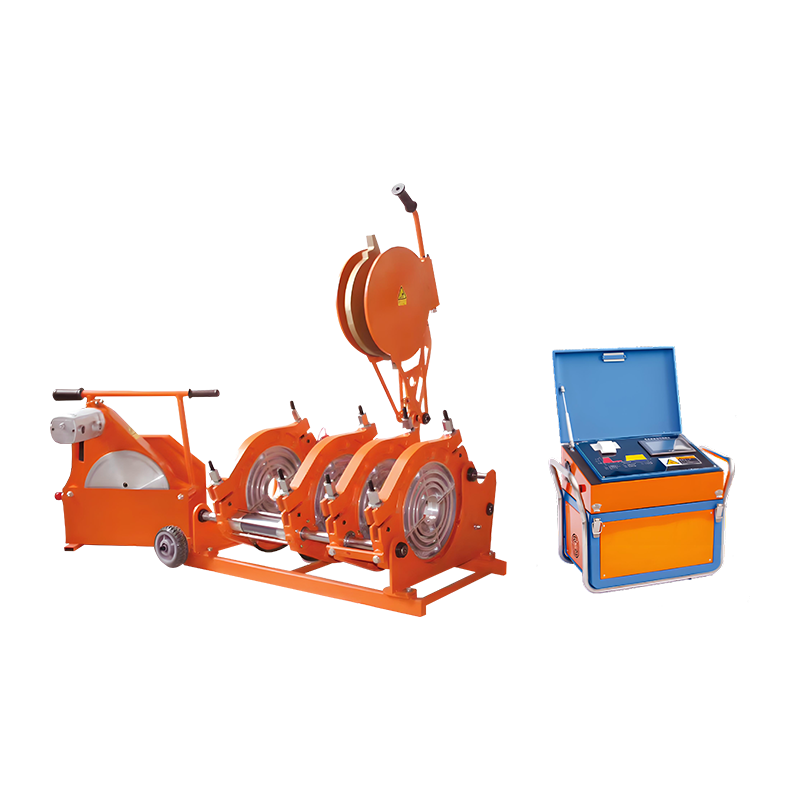
Manual butt fusion welding machines use a bench-mounted frame with hand-operated clamping and a manually controlled hydraulic or screw-feed mechanism. They are practical for pipe diameters from 63 mm to around 250 mm, and their lower cost makes them attractive for small contractors. The downside is that applying and releasing pressure by hand introduces variability — operators must watch pressure gauges and time stages manually, which increases the risk of parameter drift on long working days.
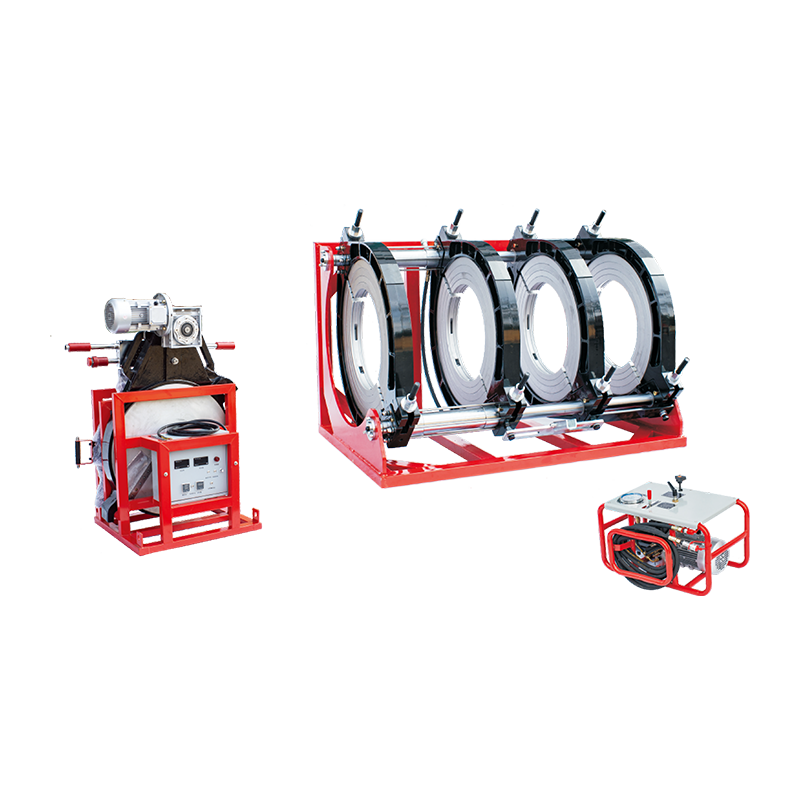
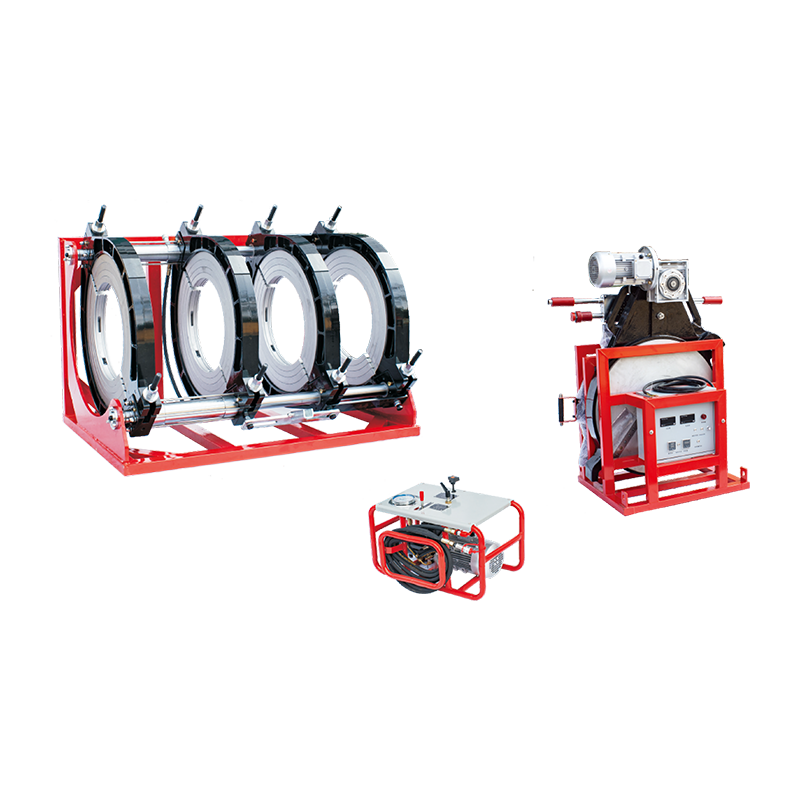
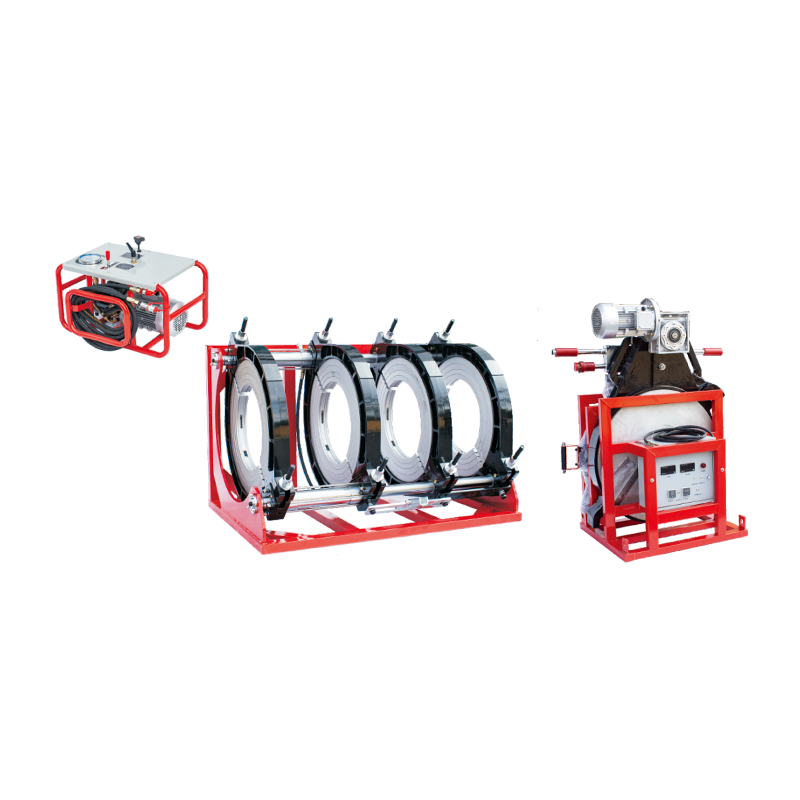
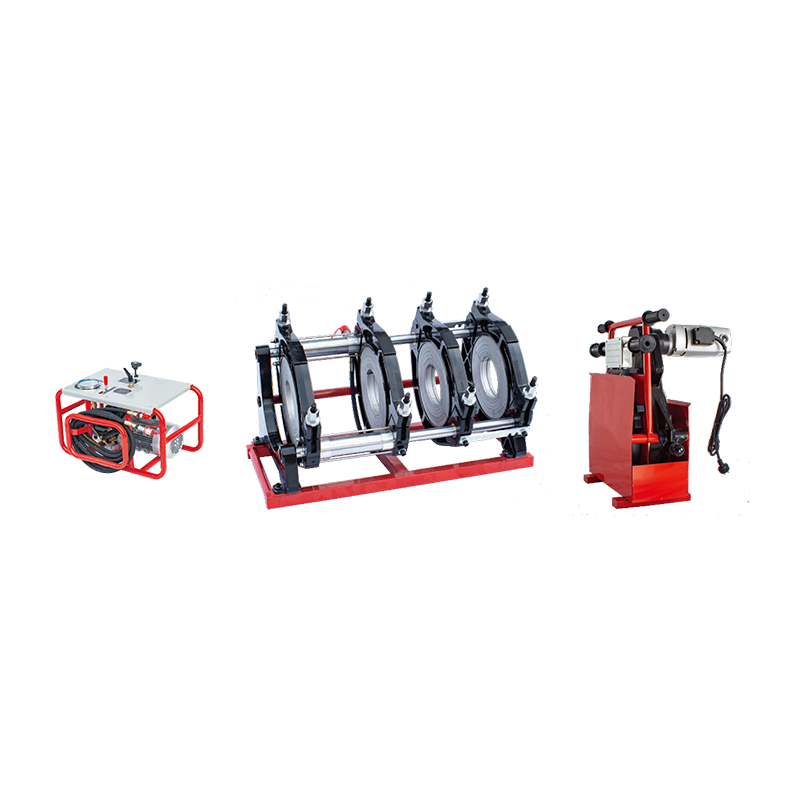
Hydraulic Butt Fusion Welding Machines
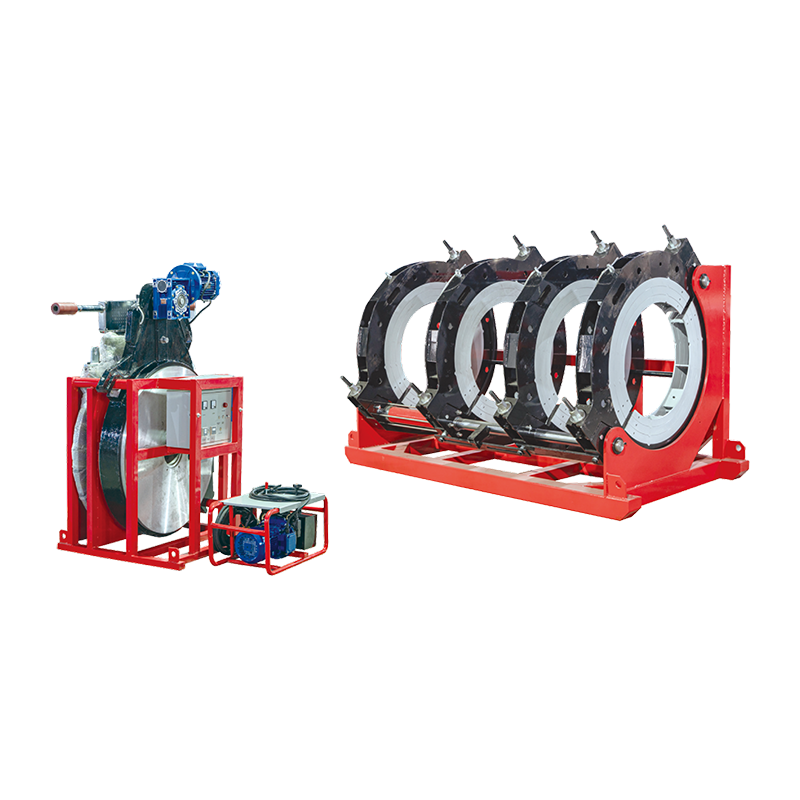
Hydraulic butt fusion welding machines replace manual force with a motorised hydraulic power pack. The operator sets target pressures on a control panel; the machine applies and holds them automatically. Hydraulic machines cover diameters from 63 mm up to 1200 mm or beyond and are the standard equipment on municipal water supply, district heating, and industrial pipework projects. Models from leading manufacturers (Rothenberger, McElroy, Georg Fischer, Widos) include digital data loggers that record every parameter for each weld — essential for quality-assurance documentation on certified installations.
CNC and Automated Butt Fusion Systems
At the top of the range, fully automated butt fusion welding machines read the pipe barcode or operator-entered parameters, calculate all pressures and times automatically, execute the weld cycle without manual intervention, and save a traceable weld record to an internal database or cloud platform. These systems reduce operator-dependent variation to near zero and are increasingly specified on projects where 100% weld traceability is contractually required, such as gas distribution networks and pharmaceutical process piping.
Critical Specifications to Check Before Buying or Renting a Butt Fusion Welding Machine
Purchasing or renting the wrong butt fusion welding machine costs money twice: once at acquisition and again when joints fail inspection or the machine cannot handle site pipe sizes. Evaluate these specifications before committing.
- Diameter range: Confirm the machine's minimum and maximum pipe OD matches your project scope. Most hydraulic butt fusion welding machines are sold for specific diameter bands (e.g., 63–250 mm, 160–630 mm). Reduction inserts can extend range downward but never upward.
- Clamping force and hydraulic pressure range: The machine must generate enough force to achieve the correct jointing stress (0.15 MPa on the pipe annular area) for the largest pipe in your range, with headroom to spare. Verify the manufacturer's pressure-to-force conversion chart.
- Heater plate temperature accuracy: The plate should hold ±5 °C of setpoint across its full surface. Cheap plates with poorly distributed heating elements create hot and cold zones that produce inconsistent bead formation.
- Facing tool capacity: The integrated planer or facing tool must match the pipe diameter. Many hydraulic machines ship with a standard facing tool and require optional inserts for larger or smaller diameters.
- Data logging: For certified projects, verify that the machine produces a weld report containing at minimum: date, time, operator ID, pipe OD, SDR, plate temperature, heat soak pressure, fusion pressure, and cooling time.
- Power supply requirements: Most hydraulic butt fusion welding machines require 230 V single-phase or 400 V three-phase supply. Check whether a generator is needed on site and whether the machine's startup current draw is compatible with available generator capacity.
- Frame weight and portability: A machine for 630 mm pipe can weigh 400–600 kg and requires a forklift or crane for repositioning. If the project involves multiple weld locations across a large site, factor in mobility infrastructure costs.
Common Weld Defects and How to Prevent Them
Most PPR butt fusion joint failures trace back to a handful of controllable root causes. Knowing what to look for — both visually and in post-weld testing — prevents rejects before they become buried failures.
Cold Weld (Insufficient Heating)
Appearance: bead is present but the joint separates cleanly at the interface under bend testing, showing no tearing of the parent material. Cause: heating time too short, plate temperature below setpoint, or pipe ends not fully contacting the plate. Prevention: calibrate plate temperature before every shift, verify full contact during heat soak, and never rush the heating stage to save time.
Overheated / Burnt Joint
Appearance: dark discolouration at bead root, excessive bead rollover, or charring visible on bead surface. Cause: plate temperature too high (above 230 °C for PPR), heating time excessive, or pipe left against plate after heat soak phase. Degraded PPR loses up to 40% of its tensile strength at the joint even when the external bead looks large and symmetric. Prevention: use calibrated temperature sensors and replace PTFE plate coating when it shows wear or discolouration.
Contaminated Interface
Appearance: joint passes visual inspection but fails pressure test or shows internal voids on ultrasonic inspection. Cause: oil, dust, moisture, or release agent from a damaged PTFE coating on the heater plate transferred to the melt surface. Prevention: clean pipe ends with isopropyl alcohol before facing, inspect PTFE coating before each session, and never use release sprays on butt fusion plates.
Misalignment
Appearance: bead is offset to one side, or pipe centrelines do not align. Cause: worn clamp inserts, incorrect insert size for pipe OD, or pipe not seated fully in clamps before facing. Misalignment of more than 10% of wall thickness is considered a rejection criterion under most pipeline standards. Prevention: inspect clamp inserts for wear regularly, use the correct insert set for each pipe OD, and confirm alignment visually before heating.
Premature Pressure Release During Cooling
Appearance: joint looks normal externally but fails hydrostatic testing at the interface. Cause: operator opened clamps before cooling time elapsed, or hydraulic system leaked pressure during cooling hold. Prevention: use a machine with automatic pressure hold and audible/visual cooling-complete alerts. Never open clamps manually based on feel or visual inspection alone.
How Ambient Temperature Affects Your PPR Welding Device Performance
PPR pipe is thermally sensitive during the fusion window. Ambient temperature affects how fast the melt surface cools between plate removal and joint closure (the changeover stage) and how uniformly the pipe heats during the soak phase. ISO 21307 defines parameters at +23 °C as the baseline, and most pipe manufacturers publish correction tables for temperatures outside the +10 °C to +40 °C range.
- Below +5 °C: Welding outdoors without enclosure is not recommended. The pipe material itself becomes stiffer, requiring higher drag pressure during facing, and the melt surface cools faster during changeover. If welding must proceed, enclose the work area, increase heating time by 10–20 seconds per 10 °C below +10 °C, and extend cooling time accordingly.
- +5 °C to +10 °C: Increase heating time by approximately 10 seconds per 10 °C below baseline. Protect the pipe ends from wind chill, which can cause localised surface cooling even when air temperature is above threshold.
- Above +40 °C: High ambient temperature is less often discussed but still matters. In desert or tropical environments, the pipe may arrive on site above 40 °C. Pre-cool stored pipe to below 40 °C before welding, and ensure the butt fusion welding machine's hydraulic fluid remains within its operating viscosity range — overheated hydraulic systems produce inconsistent pressure delivery.
- Wind and rain: Even at moderate ambient temperatures, wind speeds above 3 m/s can cool the melt surface during changeover to below the fusion temperature. Always use a windbreak tent or enclosure when welding in exposed outdoor locations.

Maintenance Schedule for Butt Fusion Welding Machines: Keeping Equipment Reliable
A butt fusion welding machine is a precision pressure tool. Neglecting maintenance does not just shorten equipment life — it produces joints that fail inspection or, worse, fail in service years later. The following maintenance schedule reflects best practice for hydraulic butt fusion welding machines in regular use.
| Interval | Task | Why It Matters |
|---|---|---|
| Before each shift | Verify heater plate temperature with calibrated pyrometer | Thermostat drift causes cold or overheated joints |
| Before each shift | Inspect PTFE plate coating for scratches, peeling, or contamination | Damaged coating contaminates melt surface |
| Weekly | Check hydraulic fluid level and colour | Low or degraded fluid causes pressure inconsistency |
| Weekly | Inspect clamp inserts for wear and correct seating | Worn inserts cause misalignment |
| Monthly | Calibrate pressure gauges against certified reference gauge | Gauge drift produces wrong fusion pressure |
| Monthly | Sharpen or replace facing tool blades | Dull blades leave scored or uneven pipe face |
| Annually | Full hydraulic system service and fluid change | Contaminated fluid degrades seals and pump performance |
| Annually | Third-party calibration certification | Required for ISO 21307 and most project QA documentation |
Standards and Certifications That Govern PPR Butt Fusion Welding
Butt fusion welding on pressure pipelines is not a free-for-all. Multiple international and regional standards define process parameters, operator qualification, equipment requirements, and inspection criteria. Knowing which standards apply to your project protects you contractually and ensures the installation performs as designed.
- ISO 21307: The primary international standard for butt fusion welding of polyolefin pipes. Covers process parameters, machine requirements, weld quality criteria, and test methods. This is the reference document for PPR and PE butt fusion worldwide.
- EN 12201 / EN 1555: European product standards for PE water supply and gas distribution pipes. These reference butt fusion joining requirements and define acceptance criteria for jointed assemblies.
- DVS 2207-1 (Germany): The German welding society guideline for butt fusion welding of thermoplastic pipes. Widely referenced across Europe as a detailed technical guideline even for projects outside Germany.
- ASTM F2620 (USA): Standard practice for heat fusion joining of polyethylene pipe and fittings, used across North American infrastructure projects.
- Operator qualification: Most standards and many project specifications require welders to hold a valid qualification certificate demonstrating competency on the specific pipe material, diameter range, and welding process. Certificates typically expire after 2–3 years and must be renewed by practical examination and test joint evaluation.
PPR Butt Fusion vs Socket Fusion: When to Use Each
The choice between butt fusion and socket fusion is not purely a diameter question, though diameter is the dominant factor. Consider the full picture when selecting your PPR welding device approach.
| Factor | Socket Fusion | Butt Fusion Welding Machines |
|---|---|---|
| Typical diameter range | 20–63 mm | 63 mm and above |
| Equipment cost | Low (€200–€800 for a tool set) | Moderate to high (€2,000–€80,000+) |
| Joints per hour (experienced operator) | 40–80 (small diameters) | 4–12 depending on size and cooling time |
| Fittings required | Yes (socket fittings) | Minimal — pipe-to-pipe without fittings possible |
| Operator skill dependency | High | Moderate (lower with automated machines) |
| Weld data logging | Not standard | Available on hydraulic and automated machines |
| Best application | Residential plumbing, light commercial | Industrial, municipal, HVAC, district heating |
Practical Tips for Getting Consistent Results from Your PPR Welding Device
Beyond following the standard parameters, experienced welders use a set of practical habits that separate consistently high-quality joints from occasional rejects. These are not found in the instruction manual but come from working with butt fusion welding machines across varied site conditions.
- Always allow the heater plate to reach setpoint and stabilise for at least 20 minutes before the first weld of the day. Cold starts where the plate reads setpoint on the display but has not reached thermal equilibrium internally produce lower-than-expected melt depth on the first few joints.
- Mark the heating time on a dedicated timer, not your phone. Phone timers get interrupted by calls or lock-screen pauses. A dedicated stopwatch or the machine's built-in timer removes this distraction.
- After facing, do not touch the pipe faces with bare hands. Skin oils transfer contamination. If accidental contact occurs, wipe the pipe face with a clean, lint-free cloth dampened with isopropyl alcohol and allow to dry before heating.
- Record the ambient temperature at the start of each welding session. If temperature changes significantly during the day — for example, a site that warms from +8 °C to +25 °C between morning and afternoon — recalculate and adjust heating times accordingly.
- Perform a visual bead check on every joint before unclamping. A correctly fused PPR butt weld produces a double bead (two symmetric rolls) of uniform height around the full pipe circumference. A single bead, an asymmetric bead, or missing bead sections indicate process problems that require investigation before continuing.
- On long pipe runs, stagger rest breaks so that a joint is never left in the heated stage unattended. If the operator must stop mid-cycle, discard the heat-soaked pipe ends, re-face, and start the cycle again rather than guessing the remaining heating time.
- Keep a written weld log even when the machine has a digital data logger. The log provides a backup and allows the site supervisor to cross-check the log against physical weld numbers marked on pipe joints without accessing the machine's data system.

Testing and Quality Assurance for PPR Butt Fusion Joints
No amount of careful welding eliminates the need for post-weld quality assurance. Depending on the application, inspection may be visual only, hydrostatic, destructive (on test joints made alongside production welds), or non-destructive using ultrasonic phased array or X-ray techniques.
Visual Bead Inspection
Every butt fusion joint should be visually inspected before unclamping and again after the pipe run is complete. Acceptance criteria under ISO 21307 and DVS 2207-1 include bead symmetry, minimum and maximum bead height (calculated from wall thickness), and absence of notches or cold lap at the bead root. Visual inspection alone is not sufficient for pressure-critical applications but catches gross process errors immediately.
Hydrostatic Pressure Testing
The assembled pipe system is pressurised to typically 1.5 × design operating pressure for a minimum hold period (often 1–4 hours depending on specification). This test detects gross joint failures and gross leaks but does not reliably detect subsurface defects or localised weak zones that might fail under long-term sustained pressure.
Destructive Testing of Qualification and Witness Joints
On critical installations, a specified number of test joints are made alongside production welds using the same PPR welding device settings, pipe material, and operator. These test joints are cut into specimens and subjected to tensile testing, bend testing, and sometimes elevated-temperature creep testing. A conforming butt fusion joint in tensile testing should fail in the pipe body, not at the weld interface. Interface failure at any load below parent pipe strength is a rejection result.
Ultrasonic Testing (UT)
Phased array ultrasonic testing (PAUT) is increasingly used for 100% non-destructive inspection of butt fusion joints on high-value or safety-critical installations. Automated scanners travel around the pipe circumference, generating cross-sectional images of the weld zone that reveal voids, cold welds, and contaminated interfaces without cutting into the joint. While more expensive than visual or hydrostatic testing alone, PAUT adds a level of confidence that is difficult to achieve through any other non-destructive method on thermoplastic butt fusion welds.