 English
 中文简体
中文简体 русский
 عربى
عربى

Content
- 1 Heat, Pressure And Alignment Decide Joint Quality
- 2 What Sits Inside A Butt Fusion HDPE Pipe Welder
- 3 Manual, Semi-Automatic And Fully Automatic Welders Compared
- 4 The Welding Machine Pipe Clamp: Alignment Is Half The Joint
- 5 Fusion Temperature, Pressure And Timing By Pipe Diameter
- 6 The Eight-Step Fusion Sequence
- 7 Defects That Trace Back To The Welder Or The Clamp
- 8 Routine Checks That Keep An HDPE Pipe Welder In Calibration
- 9 Matching Machine Size To Your Project's Diameter Range
- 10 Before The First Joint Of The Day
Heat, Pressure And Alignment Decide Joint Quality
An HDPE pipe welder produces a sound butt fusion joint only when three variables stay inside narrow working bands at the same time: heater plate surface temperature, interfacial fusion pressure, and pipe-end alignment held by the welding machine pipe clamp. For most polyethylene pressure pipe the heater plate surface should sit between 200°C and 220°C, with 210°C commonly used as the working target on PE100 material. Fusion pressure during the bead-up and soak phases is generally set with reference to the guidance in DVS 2207-1 and ISO 21307, which point operators toward an interfacial pressure on the order of 0.10 to 0.15 N/mm² of pipe cross-sectional area, adjusted for SDR and wall thickness. Alignment is entirely a function of the clamp: pipe ends should sit within roughly 10 percent of wall thickness of each other around the full circumference before the facing tool ever touches the pipe.
When all three line up, the fusion bead forms as two roughly symmetrical rolls on either side of the joint line, the interface disappears as polymer chains re-entangle during cooling under pressure, and a properly cooled joint can be pressure-tested to the same rating as the parent pipe. When one variable drifts - a heater plate that has lost five or six degrees of calibration, a hydraulic pump that bleeds pressure during the soak phase, or a clamp that lets one pipe end sag by a few millimetres - the defect is rarely visible from the outside. It tends to show up later as a cold weld, a lip-and-groove gap at the root of the bead, or a joint that fails a hydrostatic test months after installation. Everything below works back from these three numbers.
What Sits Inside A Butt Fusion HDPE Pipe Welder
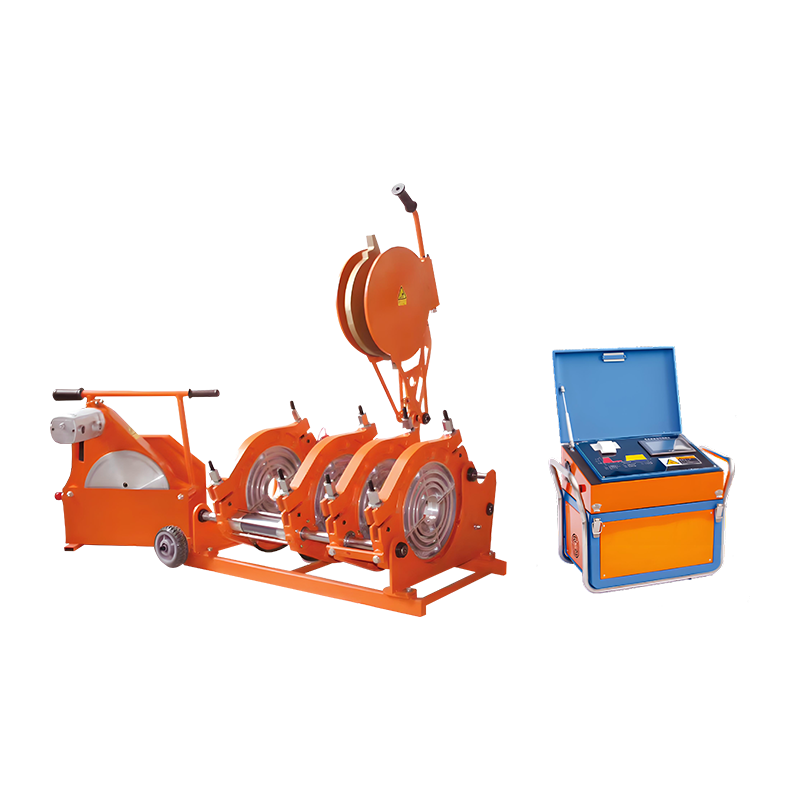
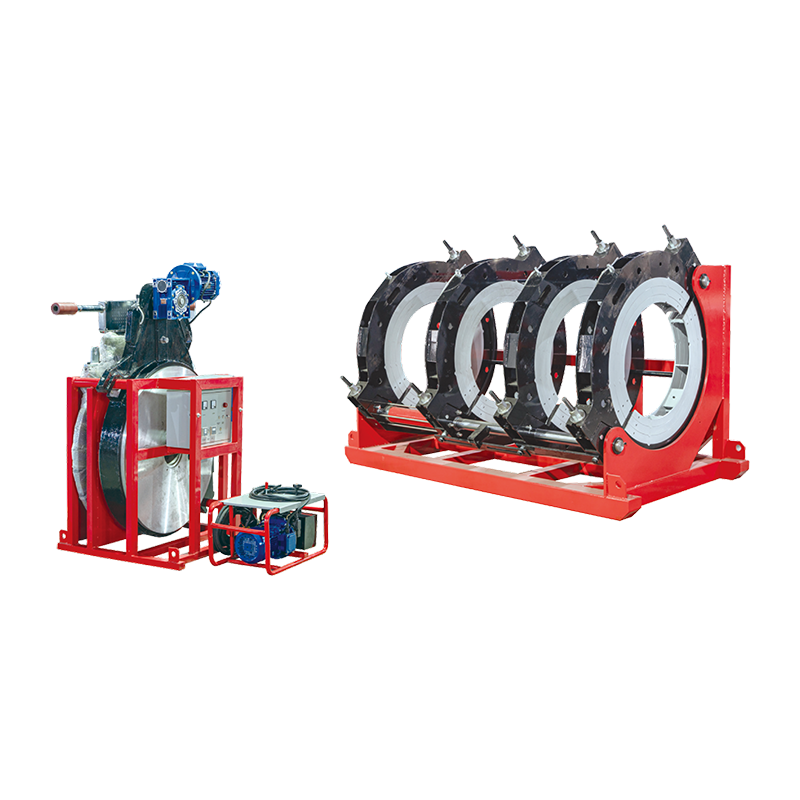
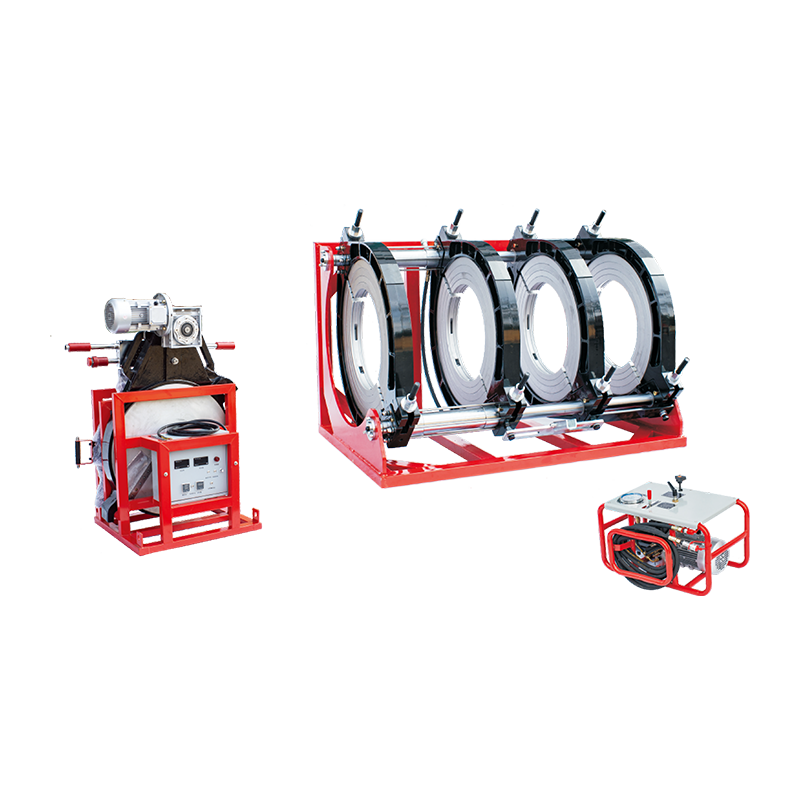
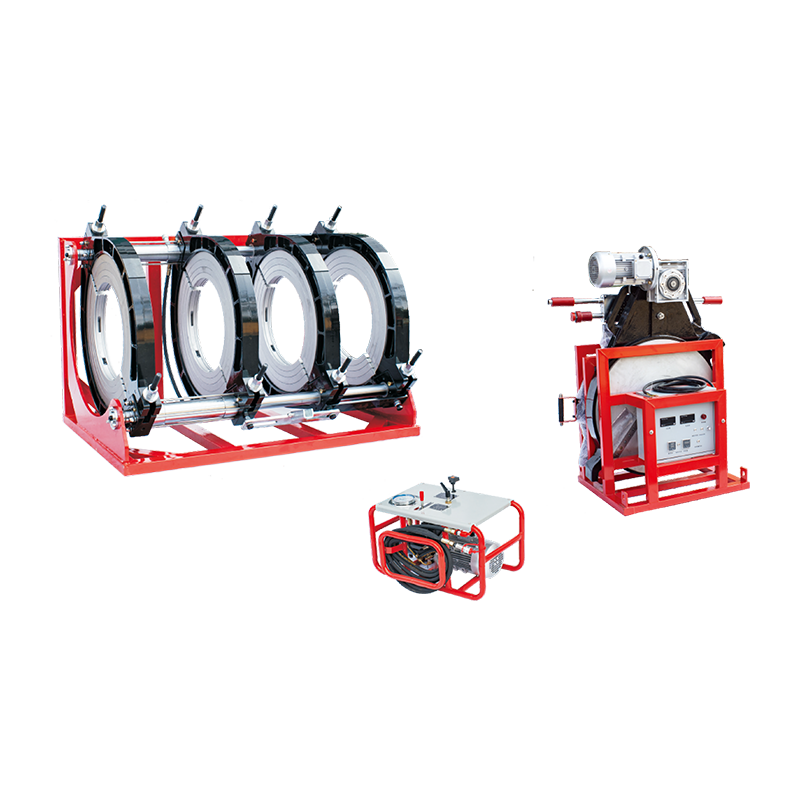
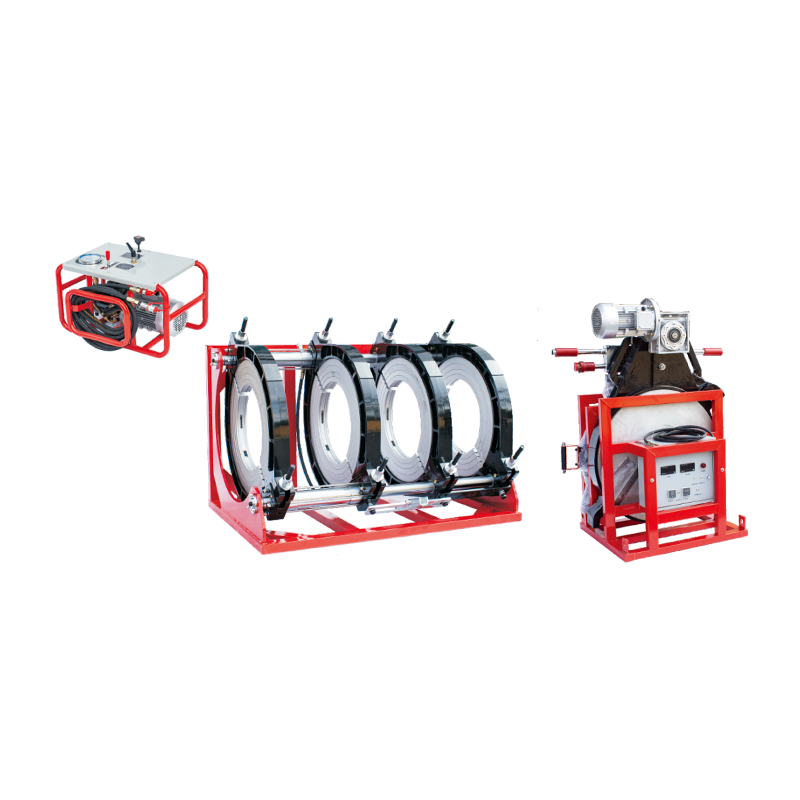
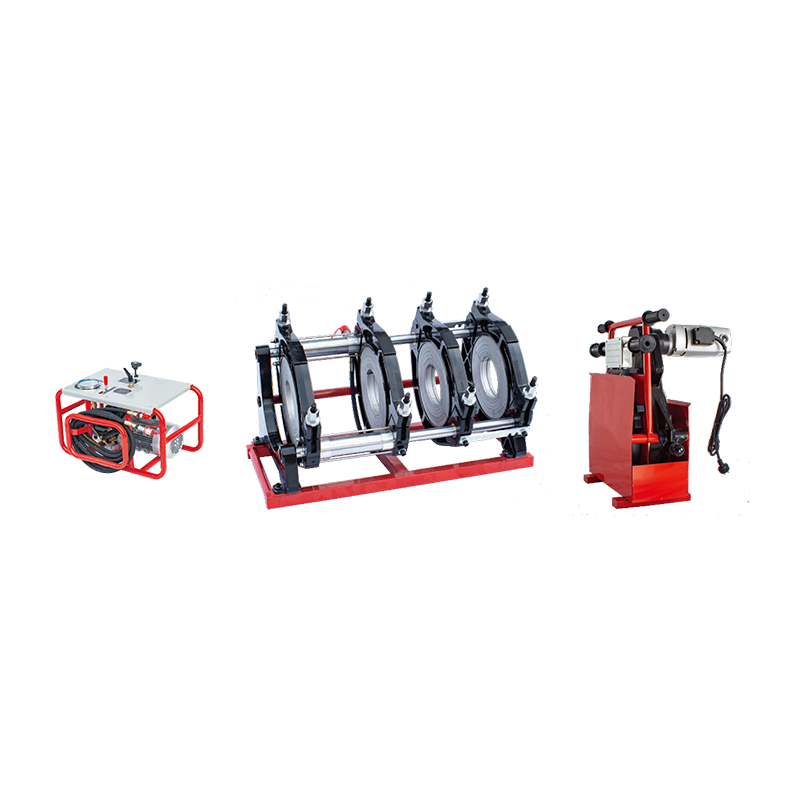
A butt fusion machine is built around a steel frame carrying two or more pipe clamps on guide rails, a hydraulic or pneumatic power unit that moves one clamp carriage toward the other, and tooling heads that are swapped in and out during the joint cycle - a rotating facing tool (planer), a heater plate, and finally the open clamp faces themselves once both tools are removed and the pipe ends are brought together under pressure.
The Heater Plate Surface Matters More Than Its Power Rating
The heater plate is a flat, electrically heated disc coated in PTFE so molten polyethylene does not stick to it. What matters for joint quality is not how many watts the element draws but how evenly the surface holds temperature across its diameter. A plate with a 10°C variation from centre to edge will produce an uneven bead even when the digital readout shows the correct setpoint. Surface temperature should be checked with a contact or infrared probe at several points before each shift rather than trusted to the display alone, because thermocouples drift and PTFE coatings wear thin in the centre where pipe contact is heaviest.
The Hydraulic Carriage And The Welding Machine Pipe Clamp Inserts
The carriage applies and holds fusion pressure, but it can only do that accurately if the pipe is gripped without slipping. That is the job of the welding machine pipe clamp - a set of jaw inserts sized to the outside diameter of the pipe being welded, bolted or pinned into the clamp body. Worn or mismatched inserts let the pipe rotate slightly under pressure, which is one of the most common causes of an offset bead picked up during visual inspection after the joint has cooled.

Manual, Semi-Automatic And Fully Automatic Welders Compared
Most fabricators choose between three broad categories of HDPE pipe welder, and the choice usually comes down to diameter range, joint count, and how much traceability the project specification demands.
| Machine Type | Pressure Control | Data Logging | Typical Diameter Range | Best Suited For |
|---|---|---|---|---|
| Manual hydraulic | Operator reads gauge and pumps lever to hold pressure | None, or optional clip-on printer | 20 - 250 mm | Site repairs, short runs, low joint counts |
| Semi-automatic | Pump runs automatically, operator confirms each phase | Optional logger records temperature, pressure, time | 90 - 630 mm | Municipal mains, contractors needing traceability |
| Fully automatic | Pressure and timing controlled by onboard computer | Standard, joint records exported per ISO 12176 format | 110 - 1200 mm | Large transmission pipelines, joint-by-joint records |
The Welding Machine Pipe Clamp: Alignment Is Half The Joint
A heater plate that is perfectly calibrated cannot fix a joint where the two pipe ends meet out of line. The welding machine pipe clamp does two jobs at once - it holds the pipe still against the force of the hydraulic ram, and it corrects ovality so the two faces meet as true circles rather than ellipses.
Chain Clamps For Small And Medium Diameter Pipe
Chain-style clamps wrap around the pipe and tighten with a ratchet or hydraulic chain tensioner. They are common on portable units covering roughly 20 to 355 mm, where speed of setup matters more than absolute rigidity. A worn chain link or a tensioner that has lost a few turns of preload is enough to let the pipe creep sideways during the bead-up phase, which is why operators are trained to re-check chain tension immediately before facing.
Hydraulic Round Clamps And Carriage Inserts For Larger Diameter
Above roughly 315 mm, pipe arrives on site with enough residual ovality from coiling or storage that a simple chain wrap is not enough. Hydraulic round clamps use segmented jaws that close evenly around the circumference, gradually pulling the pipe back toward a true circle before the facing tool runs. Many contractor specifications cap pre-fusion ovality at around 1.5 percent of mean outside diameter; beyond that figure the clamp segments cannot fully correct roundness in one closing motion, and a second pass or a longer dwell under clamp pressure is needed before facing begins.
Fusion Temperature, Pressure And Timing By Pipe Diameter
Two rules of thumb, both rooted in the timing guidance of DVS 2207-1, cover most of the planning work for a fusion joint: heat soak time runs at roughly 10 seconds per millimetre of wall thickness, and cooling time under fusion pressure runs at roughly 1 minute per millimetre of wall thickness. Changeover time - the gap between withdrawing the heater plate and reaching full fusion pressure - is the most time-critical step, and it gets shorter, not longer, as wall thickness increases.
| Nominal Diameter | Wall Thickness (SDR11) | Heat Soak Time | Max Changeover Time | Cooling Under Pressure |
|---|---|---|---|---|
| 63 - 110 mm | 5.7 - 10.0 mm | 60 - 100 s | 5 - 6 s | 6 - 10 min |
| 110 - 250 mm | 10.0 - 22.7 mm | 100 - 230 s | 6 - 8 s | 10 - 23 min |
| 250 - 450 mm | 22.7 - 40.9 mm | 230 - 410 s | 8 - 10 s | 23 - 41 min |
| 450 - 630 mm | 40.9 - 57.3 mm | 410 - 570 s | 10 - 12 s | 41 - 57 min |
The Eight-Step Fusion Sequence
Regardless of machine size, every butt fusion joint follows the same sequence. Skipping or rushing any one of these steps is the most common root cause of field-reported defects.
- Load both pipe ends into the clamps with adequate support behind each clamp so the pipe cannot sag once released.
- Face both ends with the rotating planer until continuous, unbroken shavings come off the full circumference of both faces.
- Remove the planer, bring the faces together, and check that offset stays within roughly 10 percent of wall thickness and the gap is within the machine's stated limit; clean both faces with a lint-free cloth.
- Verify heater plate surface temperature at the centre and at the edge with a calibrated surface probe before insertion.
- Insert the heater plate and apply bead-up pressure until the initial bead reaches the size specified for that wall thickness on both pipe ends.
- Reduce to soak pressure and hold for the calculated heat soak time without moving the carriage.
- Withdraw the heater plate quickly and bring the faces together within the maximum allowed changeover time, ramping smoothly up to fusion pressure.
- Hold fusion pressure for the full cooling time before releasing the clamps, then inspect the bead for a symmetrical, uniform roll-over on both sides of the joint line.

Defects That Trace Back To The Welder Or The Clamp
A visual inspection after cooling tells an experienced operator a great deal about how the machine performed during the cycle, not just how the pipe behaved.
| Visible Symptom | Most Likely Equipment Cause | What To Check |
|---|---|---|
| Flat, narrow bead with little roll-over | Heater plate running below set temperature | Surface probe reading at plate centre and edge |
| Bead larger on one side than the other | Misalignment or uneven clamp grip | Offset measurement, clamp insert wear |
| Visible groove or kissing line at the bead root | Insufficient fusion pressure during cooling | Hydraulic seal condition, gauge calibration |
| Out-of-round joint, ovality at fusion line | Pipe not re-rounded before facing | Round clamp segments, OD measurement before clamping |
| Passes visual check but fails pressure test | Contamination during changeover, slow changeover | Changeover time log, cleanliness of facing area |
Routine Checks That Keep An HDPE Pipe Welder In Calibration
Heater Plate Surface
Clean the plate while it is warm using a non-abrasive cloth. Never scrape it with metal tools, since exposed base metal under a worn PTFE coating will stick to molten polyethylene and tear the bead surface on withdrawal. Once bare metal becomes visible at the centre of the plate, recoating or replacement is needed before the next joint.
Facing Tool Blades
Dull or chipped blades leave a rough or wavy face that will not form a continuous bead even with correct temperature and pressure. Shavings should come off as continuous ribbons; once they turn powdery or break into short chips, the blades should be rotated or replaced before facing the next joint.
Clamp Jaw Liners And Hydraulic Seals
Liners wear fastest on machines used across a wide diameter range with frequent insert changes. After a joint, check for slip marks on the pipe surface where the jaws gripped, and replace liners once the pipe can be twisted by hand inside a closed clamp. Hydraulic seal wear shows up as a gradual pressure loss during the soak phase - logging pressure at the start and end of soak and comparing against the previous month's readings catches this before it becomes a quality issue.
Pressure Gauge And Thermocouple Calibration
Have the pressure gauge and plate thermocouple checked against a calibrated reference at intervals set by the project specification. Many municipal contracts call for this at the start of each project mobilisation, and again if the machine is dropped, serviced, or its readings drift from a sister unit working on the same site.
Matching Machine Size To Your Project's Diameter Range
Choosing the right HDPE pipe welder for a project starts with the diameter range that will be welded most often, not the largest pipe that might appear once on the job.
| Machine Class | Diameter Range | Clamp Configuration | Power Source | Typical Application |
|---|---|---|---|---|
| Compact / Portable | 20 - 160 mm | Two-jaw chain or bolt-on clamps | Hand pump or small electric power pack | Service connections, gas distribution, repairs |
| Medium | 90 - 355 mm | Hydraulic round clamps, four-jaw | Electric hydraulic power unit | Water and gas distribution mains |
| Large | 250 - 630 mm | Hydraulic carriage with split clamp segments | Diesel or high-flow electric power unit | Transmission mains, industrial process lines |
| Extra-Large | 630 - 1600 mm | Multi-segment hydraulic clamps, crane-assisted loading | Trailer-mounted high-flow hydraulic unit | Large transmission pipelines, marine outfalls |
Before The First Joint Of The Day
A short equipment check before the first weld of a shift catches most problems that would otherwise show up as a failed joint hours later.
- Heater plate surface temperature checked at the centre and edge against the project's joint procedure.
- Welding machine pipe clamp inserts matched to the pipe outside diameter with no visible wear on the gripping face.
- Pipe ends re-rounded if ovality exceeds the clamp's correction range before facing begins.
- Facing tool produces continuous, unbroken shavings across the full face of both pipe ends.
- Hydraulic pressure gauge reading checked against the calculated fusion pressure for the pipe's wall thickness and SDR.
- Changeover time from heater withdrawal to full fusion pressure measured and recorded against the maximum allowed for that wall thickness.