 English
 中文简体
中文简体 русский
 عربى
عربى

Content
- 1 The Core Conditions That Call for Fusion Welding
- 2 Specific Industries and Situations Where Fusion Welding Is the Standard
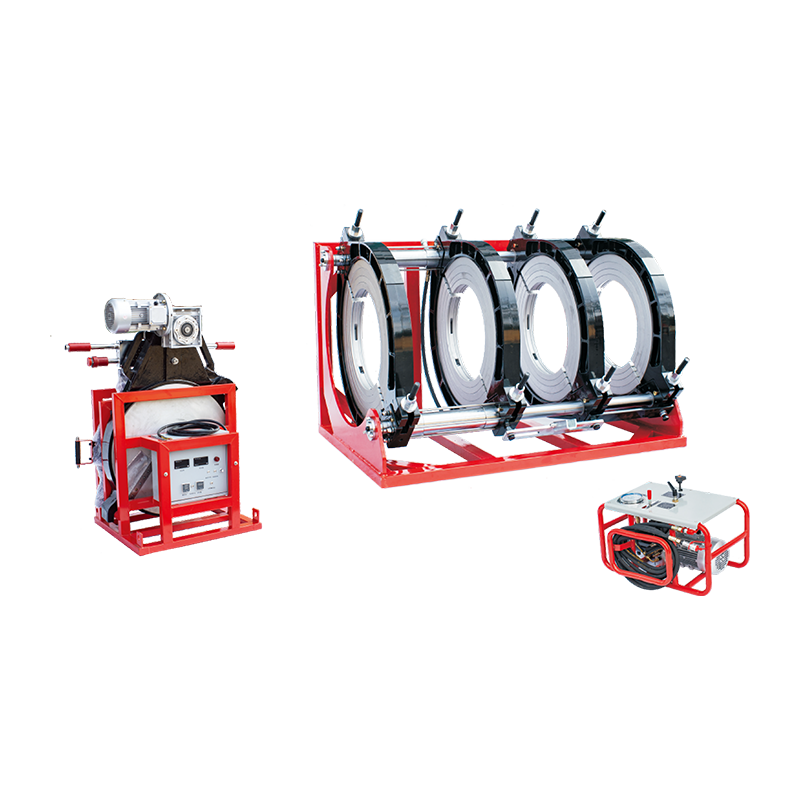
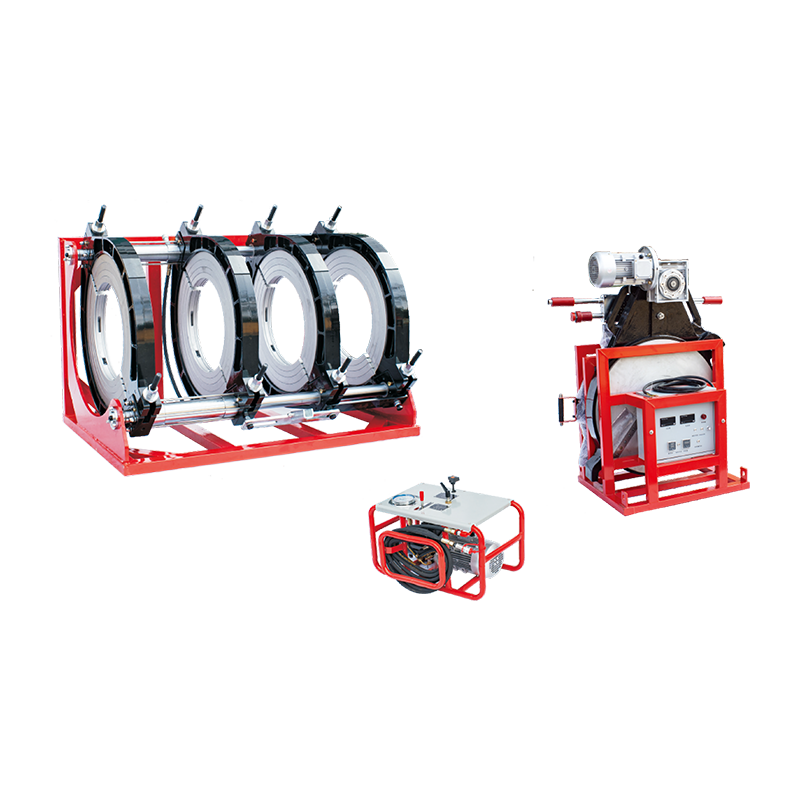
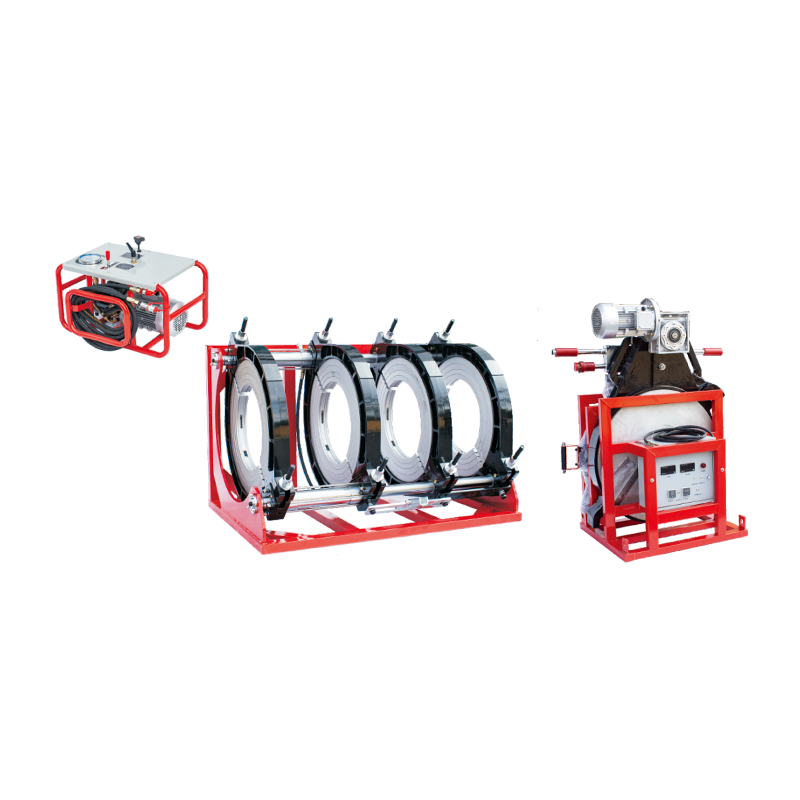
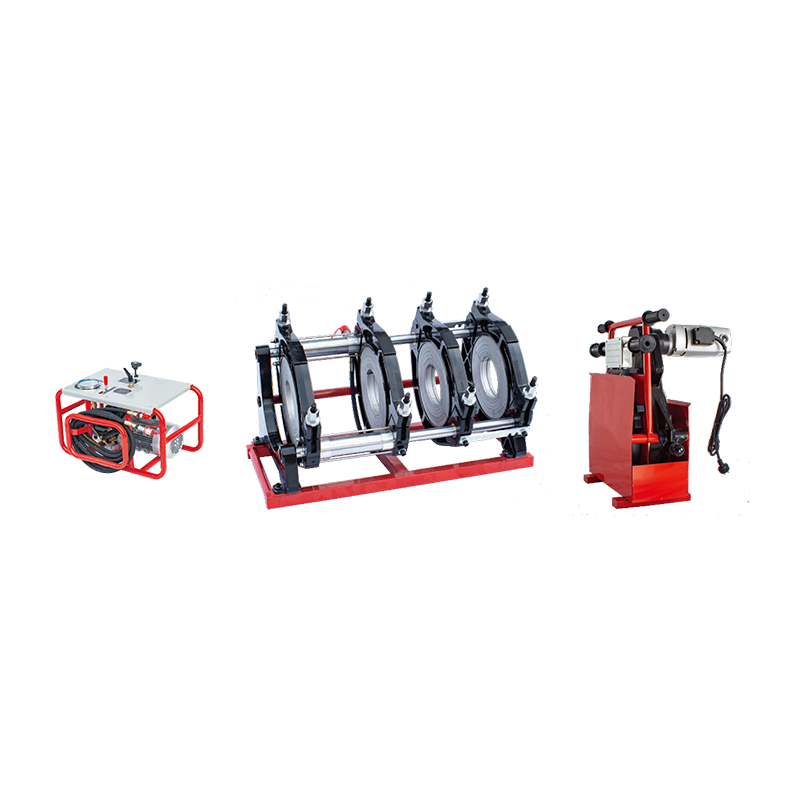
- 3 When Butt Fusion Welding Machines Are the Right Equipment Choice
- 4 Decision Framework: Fusion Welding vs. Alternative Joining Methods
- 5 Temperature, Pressure, and Environmental Conditions That Favor Fusion Welding
- 6 Pipe Diameter Ranges and Machine Selection for Different Project Scales
- 7 When Fusion Welding Is Not the Right Choice
- 8 Regulatory and Standards Context: When Fusion Welding Is Mandated
- 9 Cost Considerations: When the Economics Support Fusion Welding
- 10 Practical Checklist Before Committing to Fusion Welding on a Project
Fusion welding should be used whenever a pipe joint must be permanently leak-free, structurally continuous, and capable of matching the full pressure rating and service life of the pipe itself. More specifically, butt fusion welding machines are the right choice when joining thermoplastic pipes — primarily HDPE, PP, and PVDF — in buried infrastructure, pressurized fluid systems, gas distribution networks, and industrial piping where mechanical joints introduce unacceptable long-term risk. If the consequences of joint failure are high, or if re-excavation and repair would be prohibitively expensive, fusion welding is not just preferable — it is the correct engineering decision.
The Core Conditions That Call for Fusion Welding
Fusion welding is not the universal solution for every pipe connection. It excels in a defined set of conditions, and understanding those conditions is what separates correct engineering specification from arbitrary material selection. The following are the primary technical and operational situations that make fusion welding — and specifically butt fusion welding with a dedicated machine — the appropriate joining method.
When the joint must be fully monolithic
Every mechanical joint — compression fittings, flanges, rubber ring push-fit systems — relies on a seal element that can degrade, shift, or fail over time. A properly executed butt fusion joint contains no gasket, no adhesive, no O-ring, and no mechanical fastener. The two pipe ends are heated to a controlled melt state and joined under pressure, creating a bond at the molecular level. The result is a joint that is chemically and structurally indistinguishable from the parent pipe material. When a system must function leak-free for 50 years or more without opportunity for re-inspection, only fusion welding delivers that guarantee.
When the pipe will be buried and inaccessible
Buried piping is perhaps the single most compelling argument for fusion welding. Once a pipe is backfilled and covered with pavement, landscaping, or building structure, repair access is enormously expensive. A single mechanical joint failure in a 600mm water main running under a city street can cost hundreds of thousands of dollars in excavation, traffic management, and service disruption — before the repair itself even begins. Using butt fusion welding machines to produce monolithic pipe strings eliminates the joint as a failure point entirely. This is why virtually every modern water utility specification for buried HDPE pipe requires butt fusion joining as the default method.
When operating pressure demands full joint strength
Mechanical joints are typically rated at a lower pressure than the pipe body itself. In contrast, a correctly made butt fusion joint achieves 100% of the pipe's rated pressure capacity. For systems operating close to the maximum allowable operating pressure — gas transmission lines, high-pressure water mains, industrial process piping — this matters enormously. A joint that is the weakest link in the system is an engineering liability. Fusion welding removes that liability by ensuring the joint is never the limiting factor.
When the fluid is hazardous, toxic, or highly regulated
Natural gas, liquefied petroleum gas, industrial chemicals, and contaminated groundwater leachate are all examples of fluids where even a minor joint leak has consequences far beyond simple water loss. Regulatory frameworks governing these fluids — such as 49 CFR Part 192 for gas distribution in the United States, or EN 12007 series standards in Europe — mandate fusion welding and certified operators precisely because no mechanical joint offers the same reliability. Any engineer specifying piping for gas or hazardous fluid service who selects a mechanical joint over butt fusion welding without specific technical justification is taking on significant liability.
Specific Industries and Situations Where Fusion Welding Is the Standard
Beyond the general principles, there are specific industries and project types where butt fusion welding machines are the recognized standard rather than an option among equals. In these contexts, specifying anything other than fusion welding typically requires explicit technical justification.
Municipal water and wastewater systems
Water authorities in Australia, the United States, Canada, the UK, and most of Europe now specify HDPE pipe with butt fusion joints as the default for new potable water mains, sewer force mains, and non-gravity trunk sewers. The shift from ductile iron and PVC with rubber ring joints has been driven by decades of operational data showing dramatically lower leak rates in fused HDPE systems. Studies of metropolitan water networks have recorded leak rates below 0.1 liters per kilometer per hour per meter of head in fused HDPE systems, compared to significantly higher rates in systems relying on push-fit or mechanical joints. Butt fusion welding machines ranging from 110mm manual units for service connections to 1200mm hydraulic machines for trunk mains are standard site equipment on these projects.
Natural gas distribution and transmission
Gas distribution is arguably the most regulated application for butt fusion welding. In the United States, the Pipeline and Hazardous Materials Safety Administration (PHMSA) requires that all plastic pipe joining for gas service be performed by qualified personnel following qualified procedures — and for HDPE pipe, this means butt fusion or electrofusion with certified operators and documented process records. In practice, butt fusion welding is the dominant method for straight pipe joins in gas networks because it is faster than electrofusion and requires no consumable fittings. A single large gas main replacement project may involve thousands of individual butt fusion welds, each of which must be traceable to a certified operator and a calibrated machine.
Mining slurry and process water pipelines
In open-cut and underground mining, HDPE pipe joined by butt fusion is used for tailings disposal, slurry transport, mine dewatering, and process water distribution. These systems are typically exposed to highly abrasive fluids, aggressive chemical environments, and significant dynamic loading from ground movement or pump pressure surges. Mechanical joints in these conditions represent chronic maintenance liabilities. Large mining operations in Chile, Western Australia, South Africa, and Canada have shifted almost entirely to HDPE with butt fusion joints for above-ground and buried process piping, specifically because the fused joint withstands all of these stresses without the gasket degradation or bolt relaxation that affects flanged systems.
Horizontal directional drilling (HDD) installations
Horizontal directional drilling is a trenchless pipe installation method used to cross roads, rivers, rail lines, and other obstacles without excavation. The process involves pulling a pre-fused string of HDPE pipe through a bore hole using tensile forces that can reach several hundred kilonewtons on large-diameter installations. Mechanical joints cannot withstand these pull forces without separation. The only joining method compatible with HDD installation is fusion welding, where the joint has the same tensile strength as the pipe wall. Butt fusion welding machines are set up on the surface adjacent to the drill entry or exit point, and pipe lengths are fused into a continuous string before pulling begins. The entire installed pipe run — which may be 500 meters or more in a single pull — contains zero mechanical joints.
Pipe rehabilitation and slip-lining
Slip-lining involves inserting a new HDPE pipe string inside a deteriorated existing pipe to restore structural and hydraulic capacity without full excavation. Like HDD, this process requires pulling a continuous fused pipe string through the host pipe. The insertion forces involved — and the impossibility of accessing any joint inside the host pipe after installation — make butt fusion welding the only rational joining choice. Any joint failure inside a slip-lined installation would require full excavation of the host pipe to access, negating the entire cost advantage of the trenchless method.
Industrial chemical and process piping
Thermoplastic pipe systems in chemical plants, pharmaceutical manufacturing facilities, and water treatment infrastructure handling aggressive acids, alkalis, oxidizers, or ultrapure water require joints that maintain both chemical resistance and mechanical integrity simultaneously. Flanged joints with PTFE gaskets are common in these environments but require periodic re-torquing as gasket material creeps under load. Butt fusion joints in PP, PVDF, or HDPE piping require no maintenance, offer the same chemical resistance as the pipe body, and do not introduce any foreign material into the fluid stream — a critical consideration in ultrapure water or food-grade process piping where contamination control is paramount.
When Butt Fusion Welding Machines Are the Right Equipment Choice
Within the broader category of fusion welding for thermoplastics, there are several methods — butt fusion, electrofusion, socket fusion, and hot gas welding. Butt fusion welding machines are specifically appropriate in the following circumstances:
- Pipe diameter above 63mm: Below 63mm, socket fusion or electrofusion fittings are often more practical. Above 63mm — and particularly above 110mm — butt fusion welding becomes the most economical and efficient joining method, with no consumable fittings required beyond the pipe itself.
- High-volume straight pipe runs: When a project involves joining large quantities of straight pipe lengths — as in a water main installation, a gas distribution network, or a mining slurry line — butt fusion welding machines produce joints faster and at lower cost per joint than electrofusion, which requires an individual fitting for every join.
- Pipe ends are accessible and alignable: Butt fusion requires the pipe ends to be aligned concentrically in the machine's clamps and presented to the heating plate squarely. Where access permits this — in open trenches, on the surface, or in a prefabrication yard — butt fusion is straightforward. In confined spaces, electrofusion fittings may be more practical for branch connections or repairs.
- Consistent pipe OD and SDR across the joining run: Butt fusion requires both pipe ends to be of the same outside diameter, the same SDR, and the same or compatible material grade. Where these conditions are met — as they are on any well-specified project — butt fusion machines are the optimal tool.
- Power supply is available: Butt fusion welding machines require electrical power for the heating plate. On remote sites without grid power, a generator of appropriate capacity is needed. Where power supply is problematic, electrofusion with a battery-powered controller may be more practical for small-scale work, but for large projects the generator is invariably justified by the speed advantage of butt fusion.
Decision Framework: Fusion Welding vs. Alternative Joining Methods
The table below provides a practical framework for deciding when fusion welding — and specifically butt fusion with a dedicated welding machine — is the correct choice versus mechanical or other joining alternatives:
| Project Condition | Butt Fusion Welding | Electrofusion | Mechanical Joint |
|---|---|---|---|
| Buried, inaccessible after installation | Preferred | Acceptable | Not recommended |
| Gas or hazardous fluid service | Required | Required | Not permitted |
| High-volume straight pipe joining (>110mm) | Most efficient | High fitting cost | Joint weakness risk |
| HDD or slip-lining installation | Required | Fitting tensile limit | Pull-out failure risk |
| Confined space branch connection (<110mm) | Access may limit use | Preferred | Depends on service |
| Temporary installation or dismountable system | Permanent bond only | Permanent bond only | Preferred |
| Above-ground, accessible, low pressure | Acceptable | Acceptable | Acceptable |
Temperature, Pressure, and Environmental Conditions That Favor Fusion Welding
Fusion welding is also the correct choice based on the service environment the pipeline will experience throughout its operational life. Several physical and chemical conditions make the monolithic nature of fusion joints particularly valuable:
Thermal cycling and ground movement
HDPE pipe expands and contracts significantly with temperature change — the coefficient of thermal expansion for HDPE is approximately 0.15 mm/m/°C, roughly ten times that of steel. In an above-ground installation exposed to ambient temperature swings of 40°C, a 100-meter pipe run will experience approximately 600mm of length change. Mechanical joints must accommodate this movement without leaking or separating. Fusion-welded pipe strings are monolithic — the entire length moves as one unit, and the joints experience no differential stress whatsoever. In seismically active areas, fused HDPE pipe has demonstrated remarkable performance precisely because the system can flex and move without joint failure.
Corrosive soil and groundwater conditions
Mechanical joints in buried metal pipe systems — ductile iron, steel, or copper — are vulnerable to accelerated corrosion at the joint interface where dissimilar metals or mechanical stress concentrations exist. HDPE pipe with butt fusion joints has zero metallic components and is completely unaffected by soil chemistry, stray electrical currents, or aggressive groundwater. In coastal areas, acidic soils, and areas with high electrical resistivity variation, the absence of corrodible joint components makes fused HDPE systems operationally superior for buried service lives of 50 years or more.
Surge and water hammer conditions
Water hammer — the pressure surge caused by rapid valve closure or pump trip — generates transient pressure spikes that can be two to five times the steady-state operating pressure in rigid pipe systems. HDPE pipe absorbs surge energy through viscoelastic damping, significantly reducing peak surge pressures compared to steel or PVC. However, this benefit is only fully realized in a continuous fused system. A mechanical joint in an otherwise fused HDPE system can become the point of failure under repeated surge loading, as the joint's restrained length is limited by the mechanical connector's design. Fusion welding the entire system eliminates this vulnerability.
Abrasive fluid service
In mining slurry lines, dredging discharge pipelines, and sand-laden water systems, the internal surface of the pipe and all joints is subjected to continuous abrasive wear. Mechanical joints typically create internal geometry changes — steps, grooves, or recesses — that accelerate local abrasion and can become sites of progressive wall thinning. Butt fusion joints, when properly made, are flush with the pipe bore and present no geometric discontinuity to the flowing slurry. This makes butt fusion the only joining method that maintains the smooth internal bore required for maximum abrasion life and hydraulic efficiency in high-solids service.
Pipe Diameter Ranges and Machine Selection for Different Project Scales
Knowing when to use fusion welding also means knowing which butt fusion welding machine configuration is appropriate for the pipe sizes involved. Machine selection directly affects joint quality, work rate, and operator safety. The wrong machine for the pipe size — even with perfect process parameters — will produce poor results.
| Pipe Diameter Range | Machine Type | Typical Applications | Drive System |
|---|---|---|---|
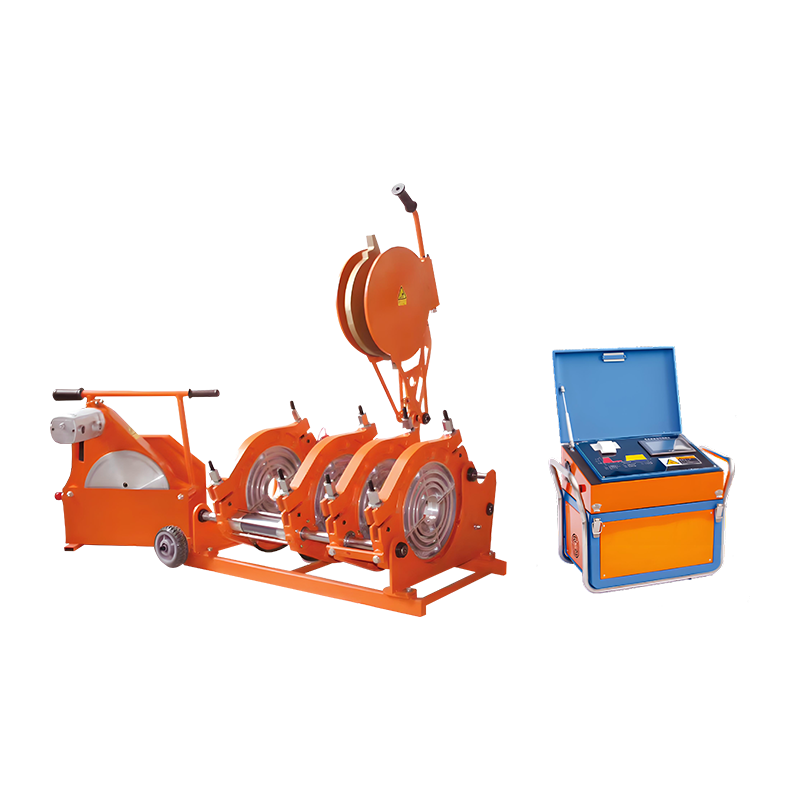
| 20mm – 160mm | Manual butt fusion machine | Gas service lines, water service connections, small drainage | Manual (operator applied) |
| 90mm – 400mm | Hydraulic butt fusion machine (medium) | Water distribution mains, gas mains, industrial piping | Hydraulic cylinder |
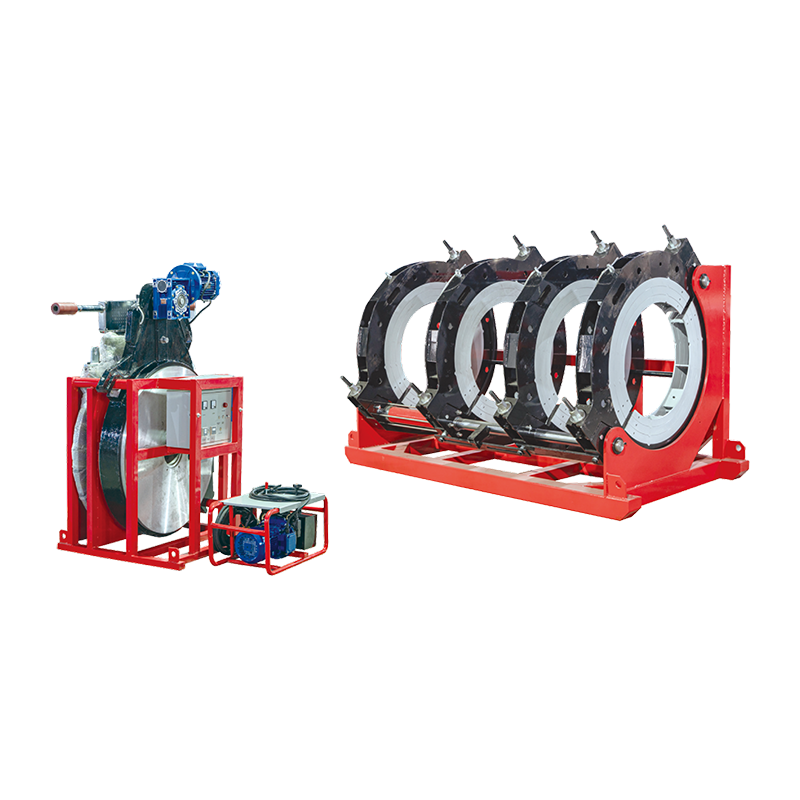
| 315mm – 800mm | Hydraulic butt fusion machine (large) | Water transmission mains, sewer force mains, mining | Hydraulic cylinder |
| 630mm – 1600mm+ | Heavy-duty hydraulic machine | Major infrastructure, bulk water, large mining lines | High-force hydraulic system |
| Any diameter (critical service) | CNC / automated data-logging machine | Gas transmission, regulated water, pharmaceutical piping | Automated hydraulic + CNC |
The shift from manual to hydraulic machines at larger diameters is not simply about convenience — it is a quality and safety requirement. For a 315mm SDR11 HDPE pipe, the calculated fusion force is in the range of 4,000 to 6,000 Newtons, which no operator can apply manually with sufficient consistency. Hydraulic machines eliminate operator variability from pressure application, producing more consistent and verifiable joints at these sizes.
When Fusion Welding Is Not the Right Choice
A complete answer to when to use fusion welding must also address when not to use it. Fusion welding creates a permanent, non-demountable bond. Recognizing the situations where this is a limitation — rather than an advantage — prevents the wrong application of the technology.
- Temporary or frequently reconfigured systems: Process plants, test rigs, and temporary construction dewatering systems that require regular reconfiguration should use flanged or mechanical joints that can be disassembled without cutting and re-welding pipe. Butt fusion welding every joint in a system that will be rearranged monthly creates unnecessary cost and pipe wastage.
- Dissimilar material connections: Butt fusion can only join the same thermoplastic material and compatible SDR values. Where the system requires a transition from HDPE to PVC, from plastic to metal, or between incompatible plastic grades, a mechanical transition fitting or flange adapter is the correct solution, not fusion welding.
- Very small diameters below 20mm: Below approximately 20mm OD, butt fusion becomes impractical due to the difficulty of maintaining alignment, applying consistent pressure across a very small joint area, and managing bead geometry. Socket fusion tools or compression fittings are more appropriate at these sizes.
- No certified operator available: Fusion welding is a skilled, certified activity in most regulated sectors. If no certified operator is available on site and the project timeline does not allow for mobilization of one, a mechanical joining solution may be used as an interim measure — but this should be flagged as a deviation from specification and documented accordingly. Attempting butt fusion without properly trained operators is not a cost-saving measure; it is a liability-generating one.
- Extreme cold weather without environmental controls: Butt fusion welding in ambient temperatures below approximately 5°C requires specific adaptations — insulated wind shields, pre-warming of pipe ends, adjusted heating times — to compensate for heat loss from the melt surface during the changeover phase. Without these controls, cold weather fusion produces cold-fusion defects that pass visual inspection but fail under pressure testing or long-term service loading. If the environmental controls cannot be provided, work should be deferred rather than accepting substandard joints.
Regulatory and Standards Context: When Fusion Welding Is Mandated
In many project categories, the question of when to use fusion welding is not purely a technical decision — it is a regulatory one. The following standards and regulatory frameworks effectively mandate fusion welding as the joining method for plastic pipe in the specified service categories:
- 49 CFR Part 192 (USA): Federal pipeline safety regulation requiring qualified procedures and qualified personnel for all plastic pipe joining in gas service. In practice, this means butt fusion or electrofusion with documented process records and certified welders.
- EN 12007 series (Europe): European standard for gas supply systems up to 16 bar. Specifies fusion welding requirements for HDPE and PE pipe in gas distribution, including operator qualification and machine calibration requirements.
- ISO 21307: International standard for butt fusion welding procedures for polyethylene pipe and fittings, covering process parameters, equipment requirements, and joint assessment criteria.
- ASTM F2620 (USA): Standard practice for heat fusion joining of polyethylene pipe and fittings, specifying procedures and parameters for butt fusion, socket fusion, and saddle fusion in North American practice.
- DVS 2207-1 (Germany/Europe): German welding society standard for hot-element butt welding of thermoplastic pipes and fittings, widely referenced across European infrastructure projects as the technical benchmark for process parameters and joint quality.
- AS/NZS 4130 and WSA 01 (Australia/New Zealand): Australian water industry standards specifying fusion welding as the default joining method for HDPE pipe in water utility applications, including operator competency requirements referenced to PIPA certification schemes.
Understanding which standards apply to a specific project is part of the decision-making process for fusion welding specification. Projects that fall under regulated service categories have the decision made for them — fusion welding is required. Projects outside these categories should still consider fusion welding wherever the engineering case supports it, even when not strictly mandated.
Cost Considerations: When the Economics Support Fusion Welding
The upfront cost of butt fusion welding machines and certified operator labor is higher than that of mechanical joining for most projects. The economic case for fusion welding rests on the total lifecycle cost comparison, not the initial installation cost. Several cost factors consistently favor fusion welding over the life of an installation:
Zero maintenance requirement on joints
Mechanical joints require periodic inspection, gasket replacement, bolt re-torquing, and corrosion protection maintenance over their service life. A large urban water distribution network with tens of thousands of mechanical joints carries a continuous maintenance burden measurable in millions of dollars annually. A fused HDPE network of equivalent size requires zero joint maintenance — the joints simply do not require attention once installed correctly.
Reduced leak frequency and water loss
Water utilities in developed countries report non-revenue water (NRW) losses — water produced but not billed, primarily from leakage — ranging from 10% to over 40% of system output in networks dominated by aging mechanical joint pipe. Converting to fused HDPE eliminates joint leakage as a loss mechanism. The capital cost of a butt fusion welding machine program for a pipe replacement project is frequently offset within the first several years of operation by reduced water production costs alone.
Reduced failure and emergency repair costs
Emergency pipe repairs — particularly in buried infrastructure under roads or in commercial districts — are extremely expensive relative to the cost of the original installation. A single failure event requiring road excavation in a city center can cost more than the butt fusion welding machine used to install the original pipe. Even a modest reduction in failure frequency from using fusion welding instead of mechanical joints produces a rapid return on the equipment and training investment.
Lower fitting cost for long straight runs
Electrofusion — the main alternative fusion method — requires a dedicated electrofusion fitting for every joint. On a project involving 500 joints in 250mm pipe, electrofusion fitting costs alone can reach tens of thousands of dollars in consumable fittings. Butt fusion welding requires no consumable fittings on straight pipe runs. The machine is a capital or rental cost, but the per-joint cost for butt fusion on long straight runs is substantially lower than electrofusion once fitting costs are factored in.
Practical Checklist Before Committing to Fusion Welding on a Project
Before specifying or mobilizing butt fusion welding machines and crew for a project, verify the following conditions are met or can be met:
- The pipe material is a fusible thermoplastic (HDPE, PP, PVDF, PA) and all pipes to be joined are the same material, SDR, and compatible melt flow index.
- A certified fusion welding operator is available with current certification applicable to the material, diameter, and regulatory context of the project.
- A butt fusion welding machine of appropriate diameter and force capacity is available, with current calibration records for both the heating plate temperature and the pressure gauge.
- Power supply of adequate voltage and stability is available at the welding location, or a generator of sufficient capacity has been arranged.
- Ambient temperature and weather conditions are within acceptable limits, or appropriate environmental controls (wind shields, heating tents) have been arranged for cold or wet weather work.
- The welding location provides sufficient access to align pipe ends in the machine clamps, insert and remove the heating plate during changeover, and allow the cooling phase to complete without disturbing the joint.
- If the project requires data logging and traceability (gas pipeline, regulated water main), the machine is equipped with a compatible data logger and the operator understands the documentation requirements.
- A joint inspection protocol has been established — at minimum, visual bead inspection for every joint, and destructive testing of a statistical sample if required by the project specification or applicable standard.
If all of these conditions can be satisfied, fusion welding with a properly specified butt fusion welding machine is the correct choice for any application involving thermoplastic pipe where joint quality, long-term reliability, and lifecycle cost are priorities. The cases where it is not the right choice — temporary systems, very small diameters, dissimilar material transitions — are the exceptions, not the rule, in most infrastructure and industrial piping work.