 English
 中文简体
中文简体 русский
 عربى
عربى

Content
- 1 What Is an Electrofusion Machine and How Does It Differ from Butt Fusion Welding Machines
- 2 How an Electrofusion Machine Works: The Technology Behind the Joint
- 3 Butt Fusion Welding Machines: How They Work and Where They Outperform
- 4 Electrofusion Machine vs Butt Fusion Welding Machine: Side-by-Side Comparison
- 5 Key Specifications to Evaluate When Buying an Electrofusion Machine
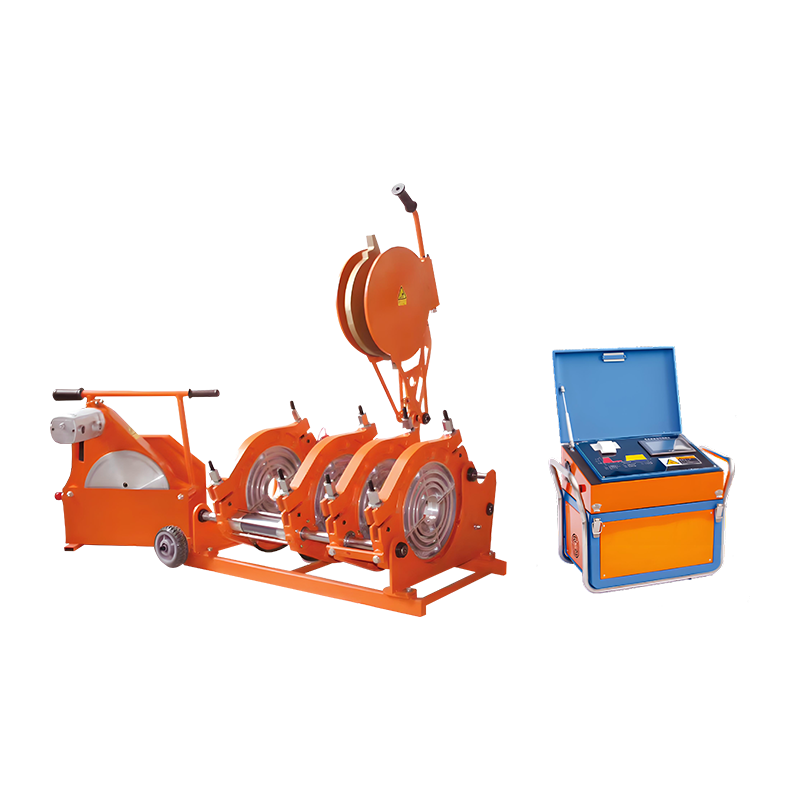
- 6 Butt Fusion Welding Machine Types and Configurations
- 7 Common Failure Causes and How to Avoid Them
- 8 International Standards Governing Electrofusion and Butt Fusion Welding
- 9 Maintenance and Calibration Requirements for Long Service Life
- 10 Cost Analysis: Total Project Cost Comparison
- 11 Selecting the Right Machine for Specific Applications
- 12 Top Manufacturers of Electrofusion Machines and Butt Fusion Welding Machines
- 13 Weld Quality Testing Methods for Electrofusion and Butt Fusion Joints
What Is an Electrofusion Machine and How Does It Differ from Butt Fusion Welding Machines
If you work with polyethylene (PE) or polypropylene (PP) piping systems, the welding method you choose directly determines joint strength, leak resistance, and long-term service life. The two dominant technologies are the electrofusion machine and the butt fusion welding machine. While both create permanent thermoplastic joints, they operate on fundamentally different principles and suit different field conditions.
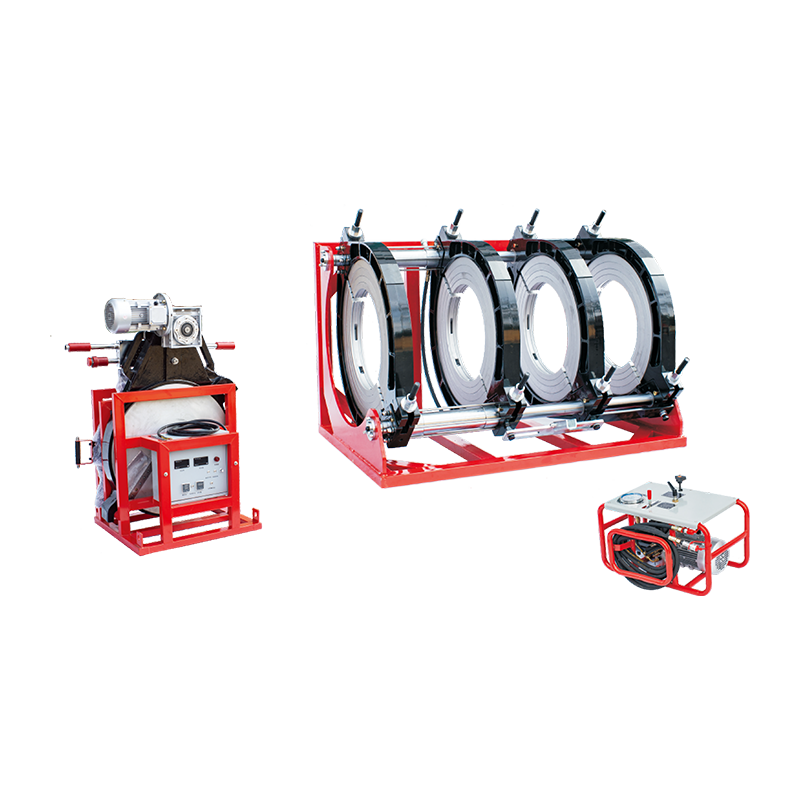
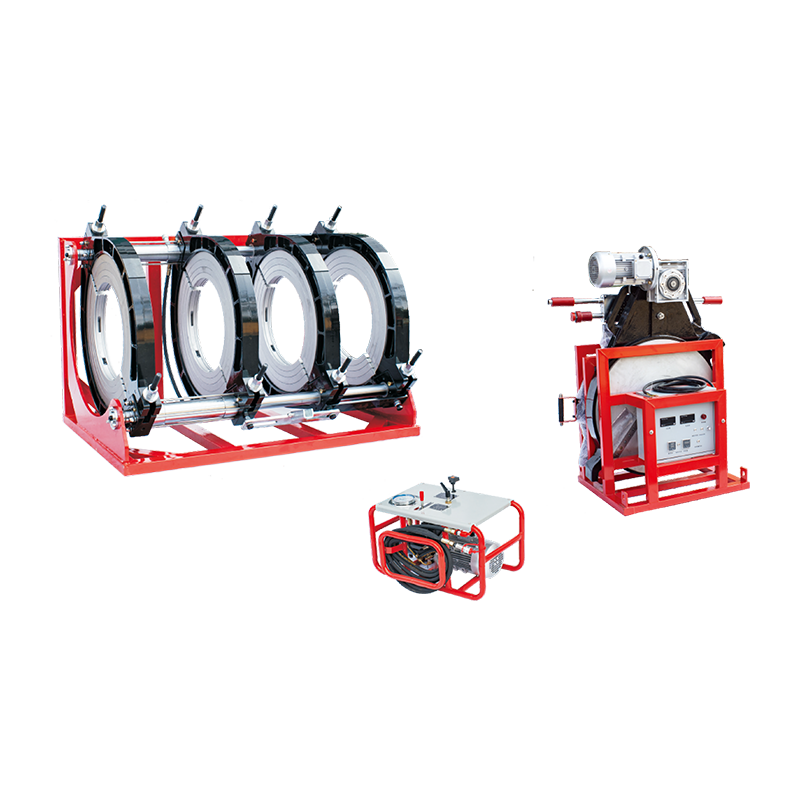
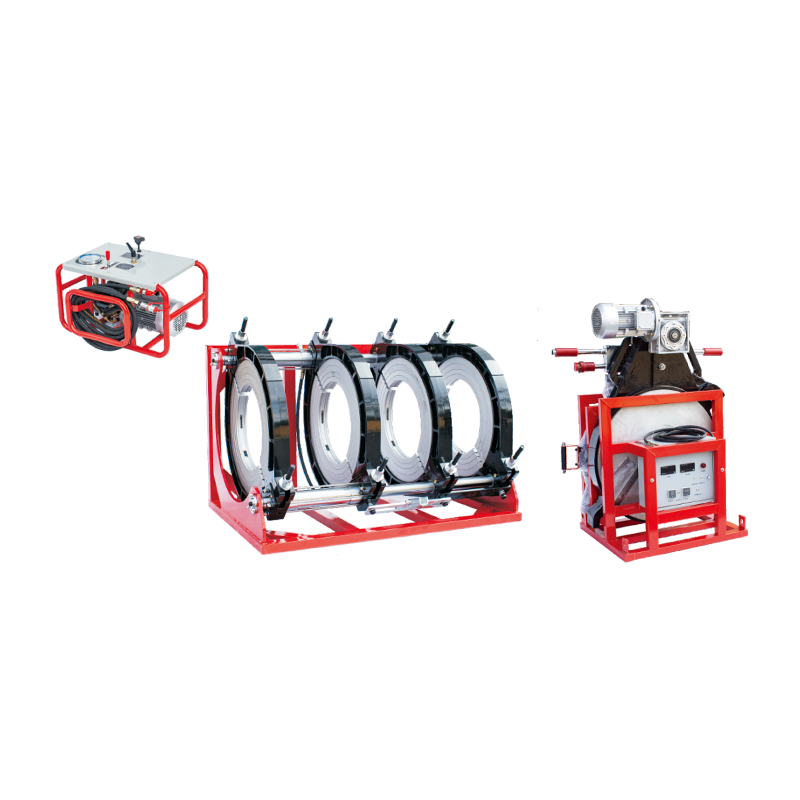
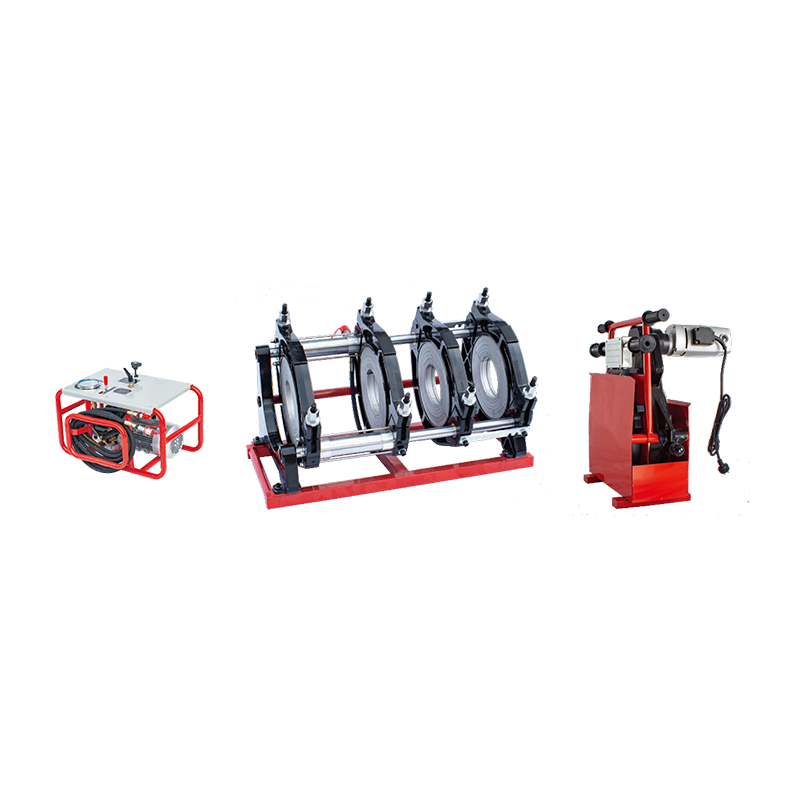
An electrofusion machine works by passing an electrical current through a wire coil embedded inside a special fitting. That current generates heat, which melts the fitting and the pipe surface simultaneously, fusing them into a single homogeneous joint. A butt fusion welding machine, by contrast, heats both pipe ends directly with a flat heating plate, then removes the plate and presses the ends together under controlled force until they cool and bond.
The core practical difference: electrofusion excels in confined, hard-to-reach spaces and for repair work, while butt fusion welding machines are faster and more cost-efficient for long straight pipeline runs in open terrain. Neither method is universally superior — the right choice depends on pipe diameter, site conditions, budget, and regulatory requirements.
How an Electrofusion Machine Works: The Technology Behind the Joint
The electrofusion process relies on precision-controlled electrical energy delivery. A modern electrofusion machine reads a barcode or datamatrix code printed on each fitting, then automatically sets the correct voltage, current, and fusion time for that specific fitting. This eliminates guesswork and significantly reduces operator error.
Step-by-Step Electrofusion Process
- Cut the pipe to the correct length with a square, clean cut.
- Scrape the pipe surface within the fitting zone to remove oxidation — this step is non-negotiable for joint integrity.
- Clean both the pipe surface and the fitting interior with approved isopropyl alcohol wipes and allow to dry completely.
- Insert the pipe ends into the electrofusion fitting and clamp them with a pipe alignment clamp to prevent any movement during fusion.
- Connect the electrofusion machine leads to the fitting terminals.
- Scan the fitting barcode; the machine reads and programs the correct parameters automatically.
- Start the fusion cycle. The machine delivers the exact energy needed — typically between 8V and 48V depending on fitting size.
- Wait for the mandatory cooling period (shown on the fitting or machine display) before removing clamps or applying any load.
Fusion times vary widely depending on fitting diameter and wall thickness. A small 20mm electrofusion coupler may fuse in under 40 seconds, while a 630mm fitting can require fusion cycles exceeding 20 minutes. Cooling times are equally critical — rushing this phase causes internal stress and weak joints even if the fusion cycle was flawless.
High-end electrofusion machines from manufacturers such as Ritmo, Hürner, Georg Fischer, and Plasson store complete weld records internally — date, time, operator ID, fitting barcode data, ambient temperature, voltage, and current. This data can be exported via USB or Bluetooth for quality documentation, which is mandatory on gas distribution and water infrastructure projects in many countries.
Butt Fusion Welding Machines: How They Work and Where They Outperform
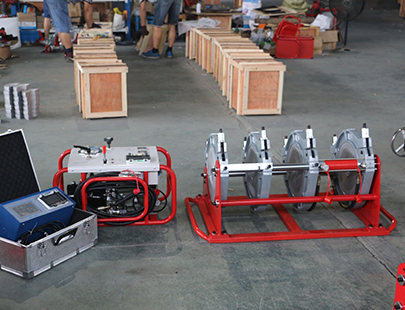
Butt fusion welding machines use a four-stage process: clamping, facing, heating, and joining. The pipe ends are held in aligned clamps, then a rotating facing tool trims them to perfectly flat, parallel surfaces. A heated plate (typically set between 200°C and 230°C for PE100) is inserted between the pipe ends and held until a specified bead height forms. The plate is then rapidly removed and the ends are pressed together under calculated fusion pressure until the joint cools.
Butt Fusion Welding Process Stages
- Clamping and alignment: Pipes are inserted into the machine's jaw clamps and aligned using the integrated facing tool as a reference.
- Facing: The electric or pneumatic facing tool removes surface contamination and creates a flat end face. Shavings must be continuous and uniform — uneven shavings signal misalignment.
- Heating: The heated plate contacts both pipe ends simultaneously under a specified drag pressure plus the fusion pressure. Heat soak time is calculated from pipe wall thickness — typically 10 seconds per millimeter of wall thickness for PE100.
- Joining: Plate is removed in the shortest possible changeover time (typically under 5–6 seconds for larger diameters), then ends are pressed together at the calculated joining pressure. Bead shape is the key visual quality indicator.
- Cooling: Joint remains under pressure in the clamps for the full cooling time — never remove early.
For a 315mm OD PE100 pipe with SDR11 (wall thickness approximately 28.6mm), the heat soak time is roughly 286 seconds, joining pressure is calculated from pipe cross-sectional area and required stress (typically 0.15 N/mm²), and cooling time in the machine runs approximately 30–40 minutes. Modern CNC butt fusion welding machines automate all these parameters, removing the need for manual calculation on site.
Butt fusion machines range from small manual units handling pipes from 20mm to 160mm, up to large hydraulic CNC machines capable of welding pipes up to 2000mm in diameter. Major manufacturers include McElroy (USA), Ritmo (Italy), Widos (Germany), Hürner (Germany), and Rothenberger.
Electrofusion Machine vs Butt Fusion Welding Machine: Side-by-Side Comparison
Choosing between these two technologies comes down to several concrete factors. The table below summarizes the key differences to guide your decision.
| Parameter | Electrofusion Machine | Butt Fusion Welding Machine |
|---|---|---|
| Pipe diameter range | 20mm – 1200mm (fitting dependent) | 20mm – 2000mm+ |
| Space requirement | Minimal — works in tight trenches | Needs clear pipe ends and working room |
| Fitting cost | High (electrofusion fittings are expensive) | Low (plain pipe ends, no special fittings) |
| Machine cost | $1,500 – $8,000+ (USD) | $2,000 – $100,000+ (USD) |
| Operator skill required | Moderate (surface prep critical) | Higher (many process variables) |
| Weld data logging | Standard on most modern units | Standard on CNC units, optional on manual |
| Speed on long runs | Slower (fitting per joint) | Faster (no fitting cost or setup per joint) |
| Repair and tie-in work | Ideal | Difficult in confined spaces |
| Compatible materials | PE80, PE100, PP, PVDF (fitting dependent) | PE, PP, PVDF, PB, PA |
| Weather sensitivity | Low (enclosed fitting protects joint area) | High (wind and cold affect plate temperature) |
Key Specifications to Evaluate When Buying an Electrofusion Machine
Not all electrofusion machines deliver the same reliability, compliance, or data management capability. Before purchasing or renting, evaluate the following specifications carefully.
Output Voltage and Power Range
Electrofusion fittings require different voltages — commonly 8V, 12V, 24V, 36V, or 48V — depending on manufacturer and size. A machine with an output range of 8V to 48V and a power output of at least 2,000W covers the vast majority of fittings on the market. Some large-diameter saddle fittings demand outputs up to 4,000W or beyond. Confirm the machine's power range matches your fitting portfolio before purchase.
Barcode and Datamatrix Reading
Automatic parameter input via barcode scanning is now standard on quality machines. Better machines also read 2D datamatrix codes and QR codes, accommodating fittings from Georg Fischer, Plasson, Friatec, Radius Systems, and others. Manual parameter input is acceptable as a backup but should not be the primary input method on professional jobs, since miskeying a fusion time or voltage is a common source of failed joints.
Data Logging and Traceability
ISO 12176-2 covers electrofusion machine marking and data management requirements. Projects under EN 12007 (gas pipelines) or EN 805 (water supply) typically require full weld traceability. Look for machines storing at least 1,000 weld records, with USB or Bluetooth export capability. Some machines integrate GPS tagging, which is invaluable for locating joints on buried infrastructure years later.
Ambient Temperature Compensation
Electrofusion fittings are engineered at a reference temperature of 20°C. In cold conditions (below 10°C) or hot environments (above 30°C), fusion energy requirements change. Advanced electrofusion machines automatically adjust fusion time based on measured ambient temperature, compensating for this variable without requiring the operator to recalculate manually. This feature is particularly important in regions with extreme temperature swings.
Input Power Flexibility
Site power is rarely clean or stable. Quality electrofusion machines include automatic voltage stabilization and can operate on generator power with input voltage ranging from 85V to 265V AC. This protects the machine's electronics and ensures consistent output regardless of generator fluctuation — a common cause of partial fusion failures on remote job sites.
Display and User Interface
A clear, high-contrast display is critical for outdoor use in bright sunlight or low-light trench conditions. Multilingual interfaces are important on international projects. Look for displays showing real-time current, voltage, elapsed time, cooling countdown, and fault codes with explanations — not just blinking error lights.
Butt Fusion Welding Machine Types and Configurations
Butt fusion welding machines come in several configurations, each suited to different pipe sizes, production volumes, and site conditions.
Manual Butt Fusion Machines
Manual machines are typically used for pipes from 20mm to 160mm. The operator controls clamp movement and pressure manually. These machines are lightweight, affordable (often under $3,000 USD), and suited to low-volume work or small contractor operations. The main limitation is operator-dependent consistency — human variation in applying pressure and timing the plate removal introduces variability between welds.
Hydraulic Butt Fusion Machines
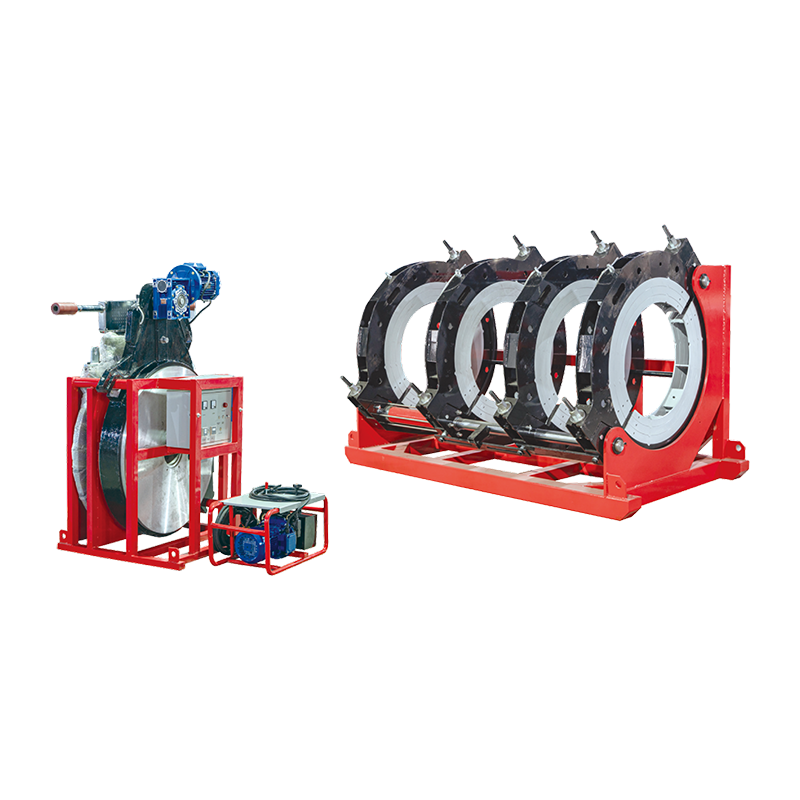
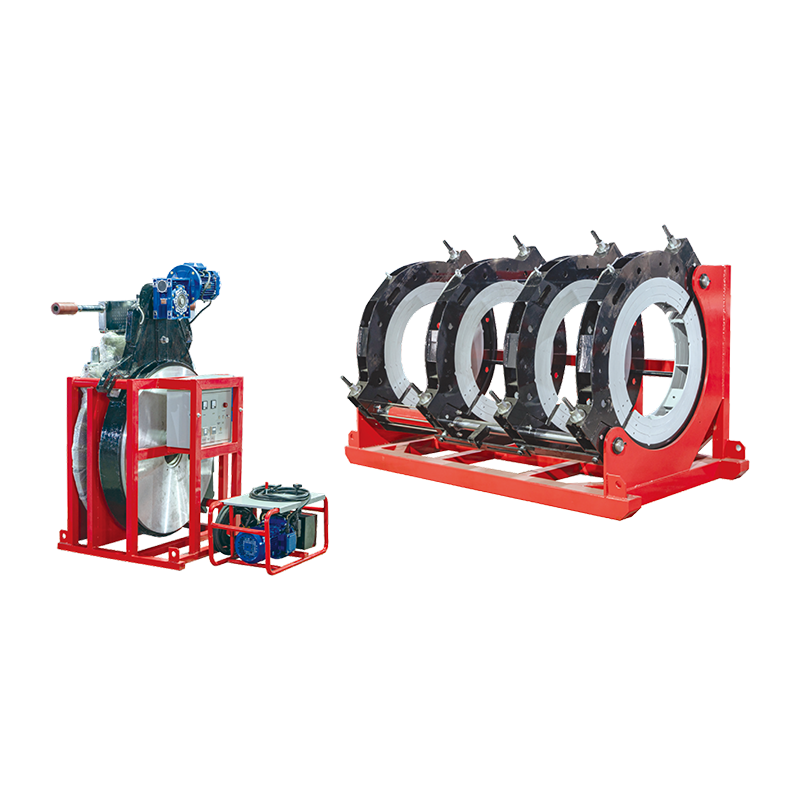
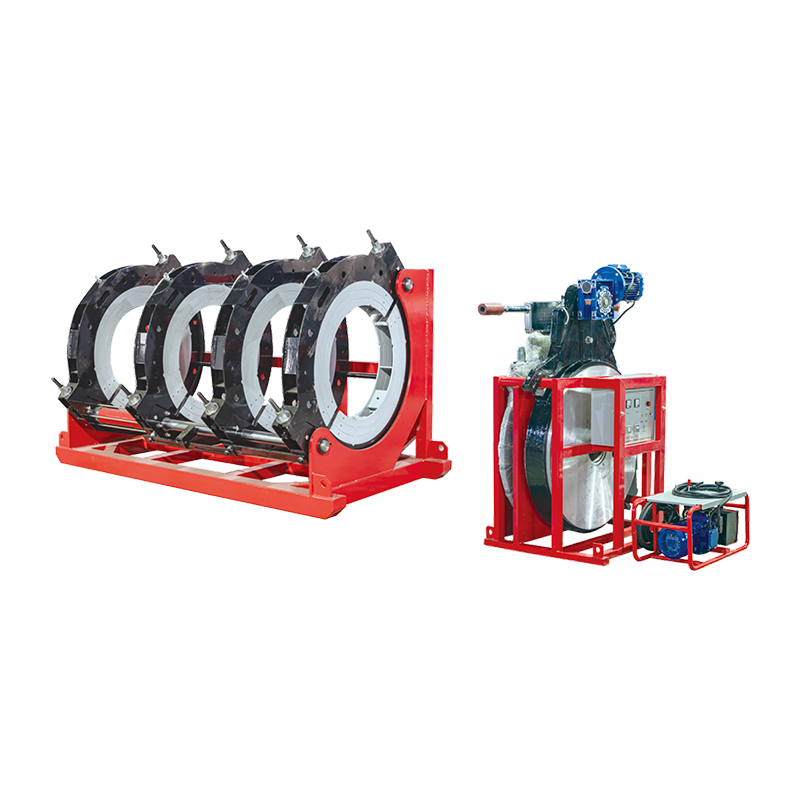
Hydraulic machines use a powered hydraulic system to apply precise, consistent pressure throughout the fusion cycle. They cover pipe diameters from roughly 90mm up to 630mm in mid-range units, and up to 2000mm in heavy industrial configurations. Pressure is controlled via a hydraulic gauge or digital readout rather than manual force. Hydraulic machines deliver significantly more consistent welds than manual units and are the standard for gas and water main installation.
CNC Hydraulic Butt Fusion Machines
CNC butt fusion welding machines automate the entire process. The operator inputs pipe material, diameter, SDR (standard dimension ratio), and ambient temperature. The machine's controller calculates all parameters per ISO 21307 or DVS 2207-1, controls heating plate temperature, fusion pressure, changeover time, and cooling time automatically, and logs every weld with a timestamp and parameter record. These machines are the preferred choice for large infrastructure projects where weld documentation is contractually required and quality assurance is audited.
Wheeled and Tracked Site Machines
For very large diameter work (400mm and above), butt fusion machines are often mounted on wheeled or tracked carriages. These roll along the pipeline as work progresses and include pipe support rollers to hold heavy pipe sections in alignment. Some configurations integrate the pipe facing tool, heating element, and joining mechanism as a single self-contained system capable of completing multiple joints per shift on large pipeline projects.

Common Failure Causes and How to Avoid Them
Both electrofusion and butt fusion joints fail for identifiable, preventable reasons. Understanding these failure modes helps you establish quality procedures that eliminate them systematically.
Electrofusion Machine Failures
- Inadequate surface scraping: The oxidized PE surface layer must be removed to a depth of 0.1–0.3mm. Skipping or rushing this step is the leading cause of cold fusion — the joint looks complete externally but has poor interfacial bonding. Always use a purpose-built pipe scraper or debeader tool, never sandpaper.
- Contamination after scraping: Touching the scraped surface with bare hands deposits skin oils that prevent fusion. Clean with fresh isopropyl alcohol (minimum 99% purity) immediately before fitting insertion, allow to flash off completely.
- Pipe movement during fusion: Even slight movement during the heating cycle disrupts the melt pool. Always use approved pipe alignment clamps and leave them in place for the full cooling period.
- Incorrect pipe insertion depth: Each electrofusion fitting has a marked insertion depth. Under-insertion leaves unsupported pipe outside the coil zone, creating a weak section. Mark the insertion depth on the pipe with a permanent marker before inserting.
- Power interruption during cycle: If power is cut mid-cycle, the joint must be cut out and replaced entirely — never attempt to restart a partial fusion on the same fitting.
Butt Fusion Welding Machine Failures
- Incorrect heater plate temperature: Always verify plate temperature with a calibrated non-contact thermometer or thermocouple before starting. Plates that read 220°C on the controller dial can be 10–20°C off in practice, particularly on older machines with degraded thermostats.
- Extended changeover time: The pipe ends begin to cool the instant the heating plate is removed. Excessive changeover time (over 6 seconds on pipes above 400mm) results in a cold weld with poor bead formation and reduced tensile strength.
- Dirty or damaged heating plate: PE residue on the plate causes sticking and uneven heat transfer. Clean plates with wooden or plastic scrapers only — metal tools scratch the PTFE coating. Replace the plate coating when sticking becomes frequent.
- Misalignment: High-low misalignment (pipe ends not concentric) of more than 10% of wall thickness is cause for rejection per most welding standards. Always check alignment with the facing tool removed and before starting the heat soak.
- Insufficient bead height: Minimum bead height requirements are specified in ISO 21307 — if the bead is too small, heat soak was insufficient. Cut out and re-weld.
International Standards Governing Electrofusion and Butt Fusion Welding
Working within international standards is not optional on most utility, infrastructure, or industrial projects. The following standards are most frequently referenced.
| Standard | Scope | Application |
|---|---|---|
| ISO 12176-1 | Butt fusion welding machine requirements | PE pipe welding equipment |
| ISO 12176-2 | Electrofusion machine requirements and marking | Electrofusion equipment |
| ISO 21307 | Butt fusion welding procedures for PE pipes | Weld parameter calculation |
| DVS 2207-1 | Welding of thermoplastics — hot-element butt welding | European standard, widely adopted globally |
| EN 12201 | PE pipe systems for water supply | Water infrastructure |
| EN 1555 | PE pipe systems for gas supply | Gas distribution networks |
| ASTM F1290 | Standard practice for electrofusion joining | North American projects |
Operator certification requirements vary by country and project type. In the UK, operatives welding PE gas mains must hold EUSR registration. In Germany, DVS certification courses are the recognized qualification. In the USA, ASME B31.8 and company-specific procedures govern gas pipeline welding qualifications. Always confirm the certification requirements specified in your project contract before mobilizing on site.
Maintenance and Calibration Requirements for Long Service Life
Both electrofusion machines and butt fusion welding machines require regular maintenance and calibration to deliver accurate results. A machine that was perfectly calibrated at the factory but has never been rechecked after two years of site use is a liability.
Electrofusion Machine Maintenance
- Inspect output leads and crocodile clips before every use — damaged insulation or corroded contacts cause resistance variations that alter delivered energy.
- Check the barcode scanner lens for dirt and scratches regularly. A mis-read barcode that forces manual parameter entry removes a critical error-prevention layer.
- Send the machine for annual calibration verification by the manufacturer or an accredited test laboratory. ISO 12176-2 specifies calibration checks for voltage output, current measurement, time accuracy, and ambient temperature sensor accuracy.
- Store in a protective case — circuit boards and sensors in electrofusion machines are sensitive to vibration, moisture ingress, and impact damage from being thrown in the back of a work vehicle.
Butt Fusion Welding Machine Maintenance
- Verify heating plate temperature with a calibrated contact or infrared thermometer at the start of each shift. Record the readings. Temperature deviation of more than ±5°C from the setpoint requires thermostat servicing.
- Inspect the PTFE coating on the heating plate for scratches, flaking, or PE contamination. Contaminated plates cause uneven heat transfer and pipe sticking, both of which compromise joint quality.
- On hydraulic machines, check hydraulic fluid level and condition quarterly. Degraded fluid causes pressure fluctuations and inconsistent joining force.
- Inspect facing tool blades before each job. Dull blades create torn rather than shaved surfaces, leaving peaks and valleys that prevent even contact across the full pipe face.
- Clamp jaws and guide rods must be clean, lubricated, and free of PE debris. Binding or stiff movement leads to uneven pressure application and misaligned joints.
- Annual third-party machine certification is required on many projects per ISO 12176-1. Keep calibration certificates current and on site for inspection.
Cost Analysis: Total Project Cost Comparison
The purchase price of the machine is only one part of total project welding cost. A realistic cost comparison must account for consumables, fitting costs, labor time, and quality failure risk.
Electrofusion Cost Factors
The primary cost driver for electrofusion is fitting price. A 110mm PE100 electrofusion coupler from a major brand (Georg Fischer, Plasson, Radius Systems) costs roughly $15 to $35 USD. A 315mm electrofusion coupler may cost $150 to $350 USD or more. On a project requiring 500 joints at 110mm, fitting costs alone range from $7,500 to $17,500 USD, before any equipment or labor costs. For repair work or projects with few joints, this premium is acceptable. For 10km of straight pipe run with a joint every 12 meters (approximately 833 joints), the fitting cost becomes a significant budget line.
Butt Fusion Cost Factors
Butt fusion welding machines eliminate fitting costs entirely — you are welding pipe-to-pipe. The consumable cost per joint is essentially zero beyond a thin PE shaving from the facing operation. The machine cost is higher for hydraulic and CNC units, but amortized over hundreds or thousands of joints, the per-joint machine cost is low. A CNC hydraulic machine at $25,000 USD amortized over 5,000 joints adds $5 per joint in machine cost — far below the fitting cost of any electrofusion coupler of equivalent diameter. For high-volume straight pipeline installation, butt fusion welding is almost always the lower total cost method.
Labor Time Per Joint
On 110mm pipe, an experienced operator can complete a butt fusion weld in approximately 15–25 minutes including setup, facing, heating, joining, and cooling. An electrofusion joint on the same size pipe takes roughly 20–40 minutes when factoring in scraping, cleaning, fitting insertion, fusion cycle, and full cooling. On large diameter pipe (315mm+), butt fusion cooling times run 30–45 minutes in the machine, similar to large electrofusion cooling requirements, so the time differential narrows at larger diameters.

Selecting the Right Machine for Specific Applications
Rather than choosing one technology universally, experienced contractors often carry both types of equipment and select the right tool based on the specific joint situation. Here is a practical guide by application type.
- Gas distribution networks (low pressure, PE80/PE100, up to 180mm): Electrofusion machines dominate in urban trenching environments where working space is restricted and individual joint quality is paramount. Both methods are permitted, but electrofusion is preferred by most network operators for ease of quality documentation.
- Water main installation (large diameter, 200mm–630mm+): Butt fusion welding machines are the standard choice. CNC hydraulic machines are preferred for compliance documentation. Electrofusion saddle fittings are commonly used for branch connections even on butt-fused mains.
- Pipeline rehabilitation and repair: Electrofusion is almost always used. The confined space around an existing pipe, the need to tie into existing infrastructure, and the irregular working conditions all favor the electrofusion approach.
- Industrial process pipework (chemical plants, mining, food processing): Both methods are used, with the choice driven by pipe material, system pressure, and plant specifications. PVDF and PP systems in chemical service often use electrofusion due to fitting availability and space constraints within plant structures.
- Horizontal directional drilling (HDD) installations: Butt fusion is the only practical method for pre-fusing long strings of pipe before pulling through a bore. Electrofusion joints in pull-through sections are generally not permitted by design engineers due to differential stiffness at the fitting zone.
- Sliplining and pipe bursting: Butt fusion welding machines are used to pre-fuse long pipe strings above ground before insertion. Joint-by-joint electrofusion in these applications is impractical.
Top Manufacturers of Electrofusion Machines and Butt Fusion Welding Machines
The global market for plastic pipe welding equipment is served by a number of established manufacturers. Understanding the strengths of each helps you make an informed procurement decision.
Electrofusion Machine Manufacturers
- Hürner (Germany): Well known for industrial-grade electrofusion machines with comprehensive data logging, Bluetooth connectivity, and a wide output voltage range. The HST 300 and HST Fusion series are widely specified on gas infrastructure projects.
- Ritmo (Italy): Produces a broad range of both electrofusion and butt fusion equipment. Their electrofusion units are valued for ruggedness and site durability. Strong distribution network across Europe, Middle East, and Asia.
- Georg Fischer Piping Systems (Switzerland): GF manufactures both electrofusion fittings and the electrofusion machines designed to work with them. Their ELGEF Plus fitting range and matching control units are common in pharmaceutical and chemical processing applications.
- Plasson (Israel): Major fitting manufacturer that also supplies compatible electrofusion machines. Common in water utility applications across Europe and the Middle East.
- Rothenberger (Germany): Offers mid-range electrofusion machines suitable for trade contractors. Good price-to-performance ratio for projects not requiring premium data management features.
Butt Fusion Welding Machine Manufacturers
- McElroy (USA): The dominant brand in North America, with a range covering 20mm to 2000mm pipe. Known for the DataLogger weld reporting system and TracStar series of self-propelled large-diameter machines. Widely used on gas transmission and water main projects.
- Widos (Germany): Specialist in high-precision butt fusion and socket fusion machines. The Widos 5000 series CNC machines are frequently specified on large European water and gas projects requiring full traceability.
- Hürner (Germany): In addition to electrofusion machines, Hürner produces hydraulic and CNC butt fusion machines up to 1200mm diameter. The CNC series stores up to 10,000 weld records with full parameter documentation.
- Ritmo (Italy): Offers a comprehensive butt fusion range from compact manual units to large hydraulic machines. Their Alia and Delta series cover most standard contractor requirements.
- Worldpoly (Australia): Growing manufacturer with a strong presence in Australasia and Southeast Asia. Their machines are designed for durability in hot, dusty site environments common in mining and resource projects.
Weld Quality Testing Methods for Electrofusion and Butt Fusion Joints
Visual inspection alone is insufficient to verify joint integrity on pressure pipeline systems. Several destructive and non-destructive testing methods are used to verify weld quality.
Non-Destructive Testing (NDT)
- Phased array ultrasonic testing (PAUT): Currently the most capable NDT method for PE fusion joints. PAUT can detect lack of fusion, voids, and inclusions within the weld zone. Increasingly specified on high-pressure gas transmission projects. Equipment is expensive and requires trained operators, but it provides a permanent record of the internal weld condition.
- High-voltage holiday detection: Used on thin-walled pipes to detect surface discontinuities. Limited applicability for thick-walled pressure pipe welding quality assessment.
- Pressure testing: Hydrostatic or pneumatic pressure testing to 1.5× design pressure for a specified hold period is the most common field acceptance test for completed pipeline sections. Does not locate specific joint defects but confirms system integrity.
Destructive Testing
- Tensile test (butt fusion): A section cut from the joint area is pulled in tension until failure. A good butt fusion joint should fail in the parent pipe, not at the weld interface. Failure at the weld face indicates insufficient fusion.
- Peel or bend test (electrofusion): The fitting is dissected and the pipe-fitting interface is examined. A good electrofusion joint shows cohesive failure in the PE material — tearing of the PE — not adhesive failure at the interface. A clean separation at the interface with a smooth surface indicates cold fusion.
- Guided bend test (butt fusion): A strip cut from the weld zone is bent around a former of specified radius. Cracks or splits indicate insufficient fusion or a contaminated weld zone.
Most project specifications require destructive test samples to be taken at a frequency of 1 in every 50 production welds or at the start of each day's welding, whichever occurs more frequently. Test results must be kept with the weld records for the project.