 English
 中文简体
中文简体 русский
 عربى
عربى

Content
- 1 What Is a Gas Fusion Machine and How Does It Work?
- 2 Core Components of Butt Fusion Welding Machines
- 3 The Butt Fusion Welding Process — Step by Step
- 4 Types of Gas Fusion Machines: Choosing the Right Equipment
- 5 Where Gas Fusion Machines Are Used: Industries and Applications
- 6 Critical Welding Parameters That Determine Joint Quality
- 7 Common Defects in Butt Fusion Welds and How to Prevent Them
- 8 Gas Fusion Machine Maintenance: Keeping Equipment Performing to Standard
- 9 How to Select the Right Butt Fusion Welding Machine for Your Project
- 10 Frequently Asked Questions About Gas Fusion Machines
- 10.1 What is the difference between a gas fusion machine and an electrofusion machine?
- 10.2 Can a butt fusion welding machine join pipes of different SDR ratings?
- 10.3 How long does a butt fusion joint last in service?
- 10.4 What operator qualification is needed to use a butt fusion welding machine?
- 10.5 Can butt fusion be performed in cold or wet weather?
- 10.6 What non-destructive tests are used to verify butt fusion weld quality?
- 10.7 How often should the heating plate on a butt fusion machine be replaced?
- 10.8 Is butt fusion possible for pipes larger than 2,000 mm diameter?
- 10.9 What is the internal bead and should it be removed?
What Is a Gas Fusion Machine and How Does It Work?
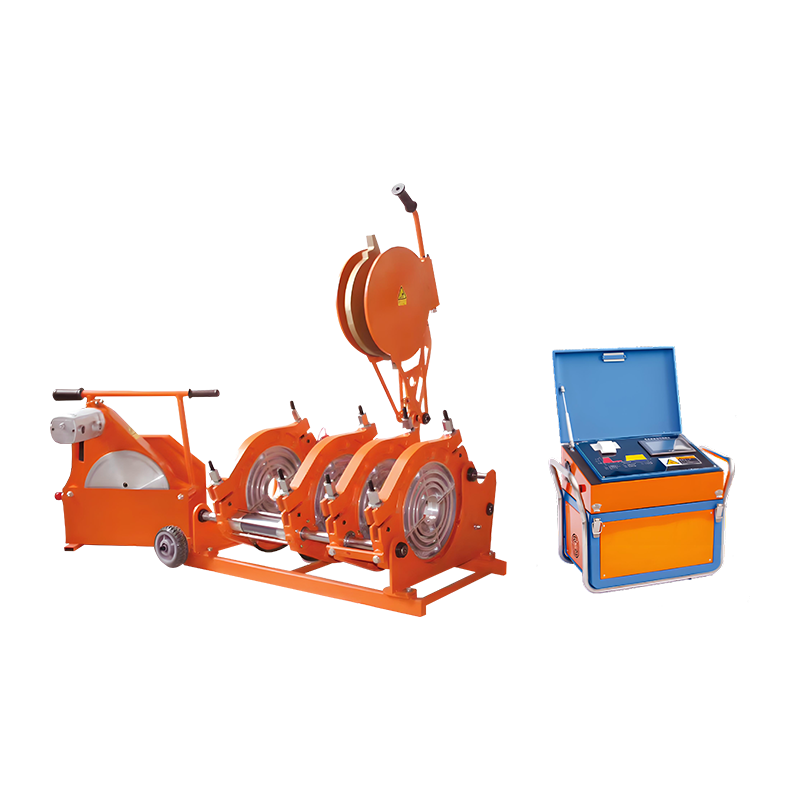
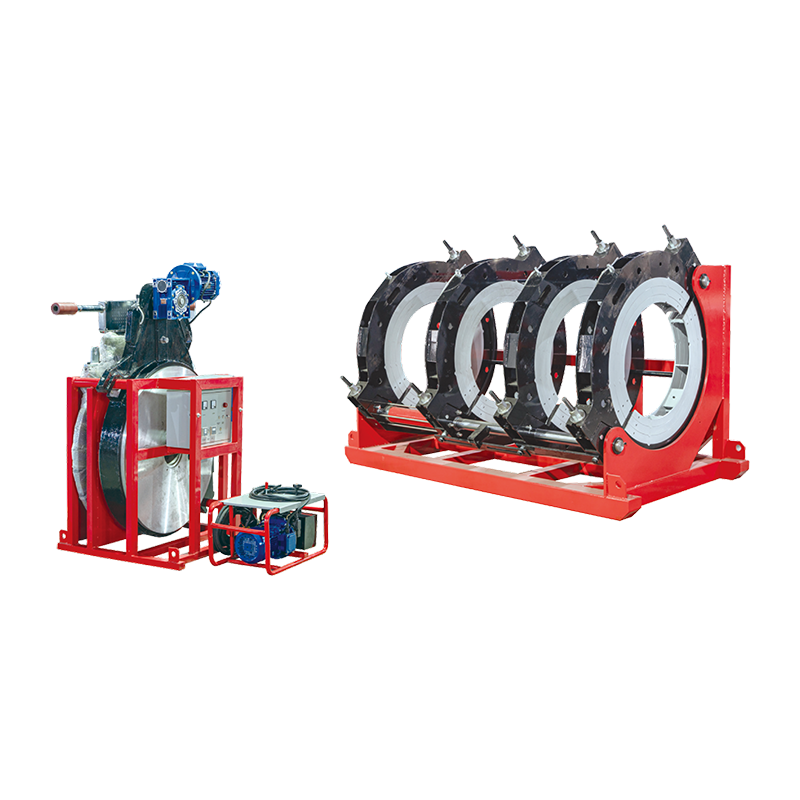
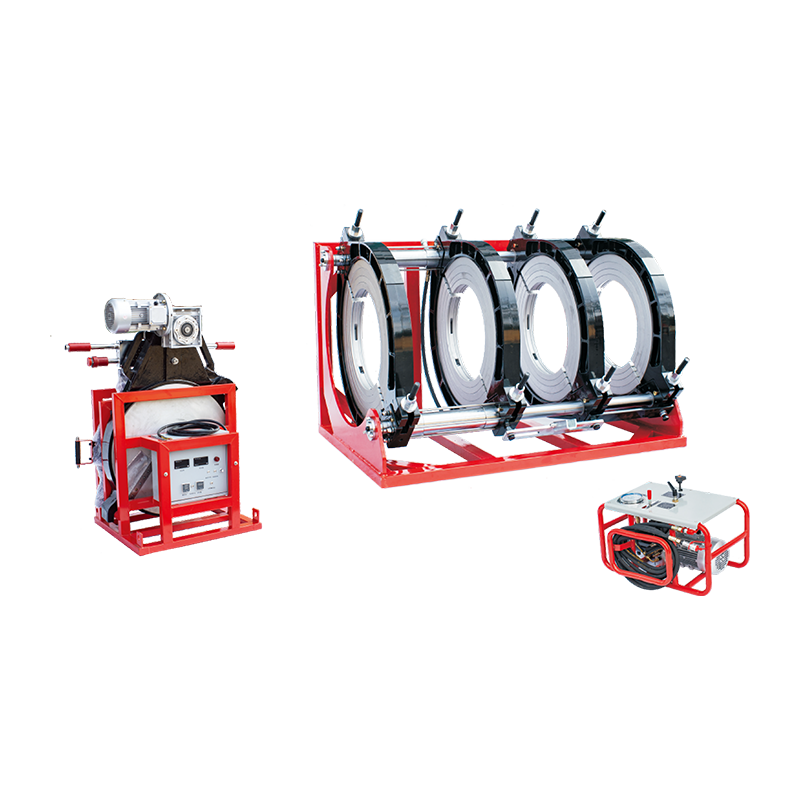
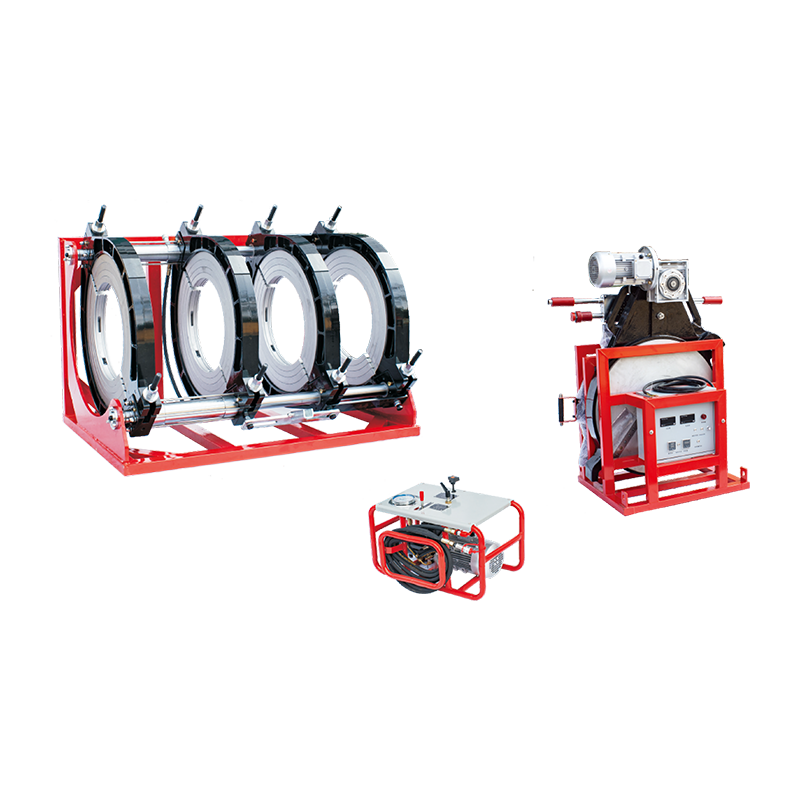
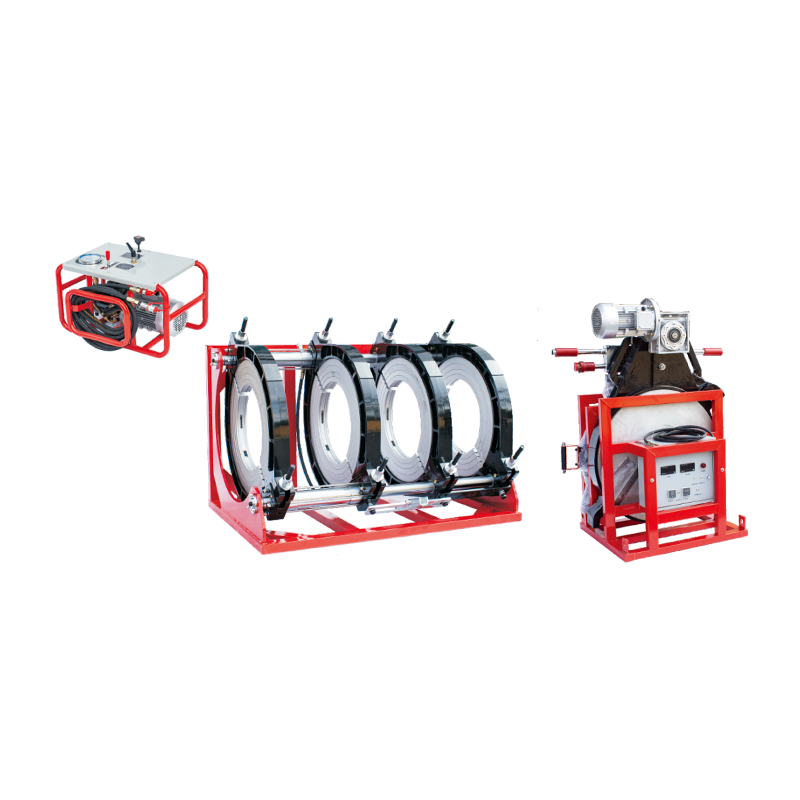
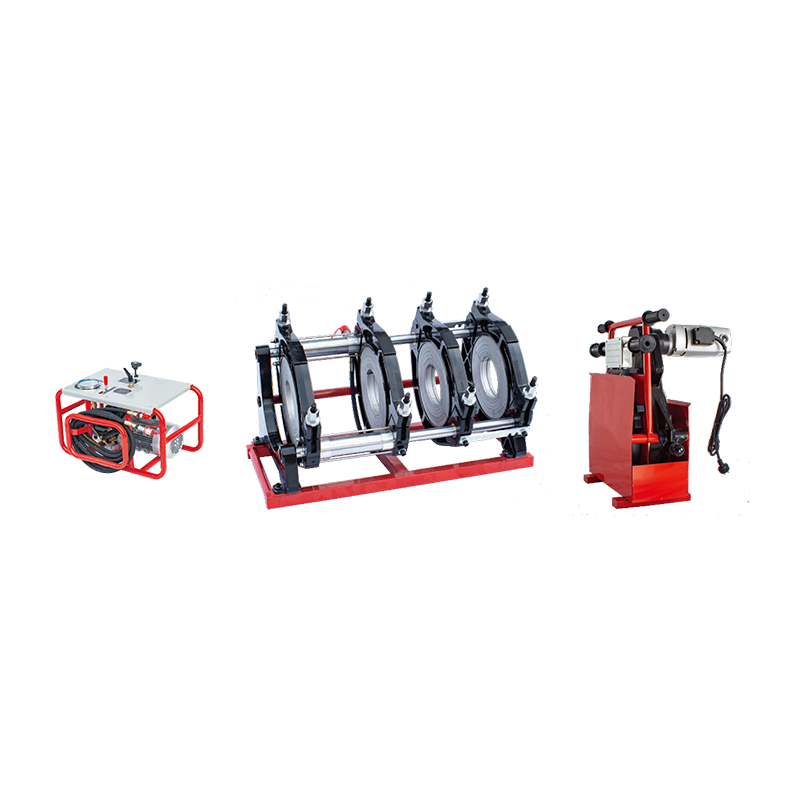
A gas fusion machine — more precisely known as a butt fusion welding machine — is industrial equipment engineered to join thermoplastic pipes and fittings by applying controlled heat and mechanical pressure. The two pipe ends are heated against a flat heating plate until the material reaches a molten state, then the plate is removed and the two softened ends are pressed together under calibrated force, forming a single, continuous, leak-free joint as the material cools.
This method is the global standard for joining polyethylene (PE), polypropylene (PP), and PVDF pipelines used in gas distribution, water supply, mining slurry lines, and industrial fluid transport. Unlike mechanical couplings or adhesive joints, a properly executed butt fusion weld creates a joint that is as strong as — or stronger than — the pipe itself. Pressure ratings of fused joints routinely match or exceed the parent pipe specification under ISO 21307 and ASTM F2620 testing protocols.
Key takeaway: Butt fusion welding machines produce permanent, full-bore joints with zero flow restriction, making them the preferred joining method for high-pressure gas and water infrastructure worldwide.

Core Components of Butt Fusion Welding Machines
Understanding what makes up a butt fusion welding machine helps operators select the right unit, maintain it correctly, and troubleshoot problems in the field. Every machine — from a compact manual unit for 63 mm pipe to a fully hydraulic CNC-controlled rig capable of welding 2,000 mm diameter mains — shares the same functional architecture.
Heating Plate (Mirror)
The PTFE-coated aluminum or steel plate that contacts both pipe ends simultaneously. Surface temperature is typically maintained between 200°C and 230°C for PE100 pipe. Temperature uniformity across the plate face should be within ±5°C per EN 12732 guidance.
Clamping Frame and Jaws
Holds pipe ends axially aligned. Jaws come in interchangeable sets for different pipe diameters. Misalignment greater than 10% of pipe wall thickness is the leading cause of weld defects in field joints.
Hydraulic or Manual Carriage
Drives the pipe ends toward and away from the heating plate, then brings them together for fusion under precisely controlled force. Hydraulic machines provide consistent, measurable pressure — critical for pipes above 160 mm OD.
Facing / Trimming Tool
A rotating cutter that squares the pipe ends before heating. Proper facing removes oxidized material and creates a flat, parallel surface. Shavings should be thin and continuous — coarse chips indicate a dull blade that must be replaced.
Control Unit
Ranges from a simple analog thermometer on manual units to a fully programmable PLC on CNC machines that logs time, temperature, and pressure for every weld. Data logging is mandatory for gas distribution projects in many countries.
Power Source
Most gas fusion machines run on 230 V or 400 V single/three-phase power. Generator compatibility is essential for remote pipeline projects. Power draw for the heating plate on a DN500 machine can exceed 3 kW.
The Butt Fusion Welding Process — Step by Step
Every reliable gas fusion machine weld follows a defined sequence. Deviating from any step — even slightly — can produce a weld that looks perfect externally but fails prematurely under pressure cycling or ground movement. The following procedure aligns with the DVS 2207-1 standard widely referenced by pipeline engineers globally.
- Preparation: Clean pipe ends with lint-free cloth and isopropyl alcohol. Remove moisture. Confirm pipe SDR rating and material match between the two pieces being joined.
- Clamping and alignment: Load pipes into the machine jaws. Verify axial alignment — use a straightedge across the joint line. Maximum allowable step (misalignment) is 10% of wall thickness.
- Facing: Insert the facing tool and trim both ends simultaneously until continuous, unbroken shavings appear around the full circumference. Remove facing tool without touching the cut surfaces.
- Drag pressure measurement: Close the jaws until pipe ends touch (no heating plate). Record the hydraulic pressure required to move the carriage — this is the drag pressure that will be added to the fusion pressure during welding.
- Heating phase: Insert the pre-heated plate (confirmed at target temperature ±5°C). Apply bead-up pressure until a uniform bead of 1–2 mm appears around both ends. Reduce to soak pressure and hold for the calculated heating time (based on wall thickness — typically 10 seconds per mm for PE100 at 210°C).
- Plate removal: Separate the pipe ends, remove the plate, and bring the ends together. This must happen within the changeover time specified by the pipe manufacturer — usually 4–8 seconds for most pipe diameters.
- Fusion phase: Apply fusion pressure (drag pressure + calculated jointing pressure) and hold under this force for the full cooling time — typically 1 minute per mm of wall thickness, minimum 10 minutes.
- Cooling and release: Do not release the clamps early. Allow the joint to cool in the machine. Remove pipe only after reaching below 60°C at the weld zone.
- Visual inspection: Check bead width consistency. A uniform double bead that rolls back toward the pipe surface is a positive indicator. Asymmetric or undersized beads warrant further investigation.
Types of Gas Fusion Machines: Choosing the Right Equipment
Butt fusion welding machines are classified primarily by their actuation method and level of automation. The right choice depends on pipe diameter range, project volume, available power, and whether weld data recording is contractually required.
| Machine Type | Pipe Diameter Range | Pressure Control | Data Logging | Best Application |
|---|---|---|---|---|
| Manual | 63 mm – 160 mm | Operator-controlled | None | Small residential service lines |
| Semi-Hydraulic | 90 mm – 400 mm | Hydraulic with gauge | Optional add-on | Municipal water and gas mains |
| Fully Hydraulic | 160 mm – 1,200 mm | Closed-loop hydraulic | Integrated | Transmission pipelines, industrial |
| CNC / Automatic | 63 mm – 2,000 mm | PLC-automated | Full weld traceability | Gas distribution, critical infrastructure |
Manual Gas Fusion Machines
The simplest and most portable category. The operator manually controls carriage movement and monitors a dial thermometer on the heating plate. These units are lightweight — typically under 30 kg for a 160 mm machine — making them practical for confined spaces and remote service connections. The trade-off is operator dependency: fusion pressure relies entirely on the technician reading a mechanical gauge and timing manually. For low-volume residential work on small-diameter PE lines, manual machines remain cost-effective and widely used.
Hydraulic Butt Fusion Welding Machines
Hydraulic actuation replaces manual force with a power pack driving one or two cylinders. This change eliminates the single biggest variable in large-pipe butt fusion: operator fatigue affecting pressure consistency during the cooling phase, which can last over 30 minutes for thick-walled pipe. A DN630 SDR 11 PE100 pipe with a wall thickness of roughly 57 mm requires cooling under pressure for approximately 57 minutes — a period during which a manual operator cannot reliably maintain constant force.
CNC Automatic Butt Fusion Welding Machines
The top of the range. A PLC runs the entire weld sequence — heating time, changeover, fusion pressure ramp, and cooling — while simultaneously logging every parameter to a tamper-proof internal memory or external data card. For natural gas distribution networks, regulators in Germany (DVGW GW 330), the United Kingdom (IGE/TD/3), and increasingly across Southeast Asia mandate this level of documentation. A single CNC butt fusion machine can produce 40–80 documented welds per shift on a pipe spool fabrication line, with every joint traceable to operator ID, date, time, pipe batch, and machine serial number.

Where Gas Fusion Machines Are Used: Industries and Applications
Butt fusion welding machines are not limited to the gas sector despite the common shorthand "gas fusion machine." The technique applies to any thermoplastic pipeline where joint integrity is safety-critical or where zero-leak performance is needed over a design life measured in decades.
Natural Gas Distribution
PE80 and PE100 pipelines for medium-pressure gas distribution (typically up to 10 bar) rely almost exclusively on butt fusion joints for mainline pipe. The method produces joints with the same pressure rating as the parent pipe, eliminating the weak point that mechanical couplings introduce. According to the International Gas Union's 2022 World LNG Report survey data, polyethylene now accounts for more than 80% of new gas distribution pipe installed across Western Europe — all joined by heat fusion.
Potable Water Infrastructure
Water utilities specify butt fusion for trunk mains precisely because the joint contains no rubber seals, metals, or adhesives that could leach into drinking water or degrade under chlorine dosing. HDPE water mains installed with butt fusion welding machines routinely achieve 50+ year service lives with documented examples exceeding that in temperate climates.
Mining and Mineral Processing
Slurry pipelines carrying abrasive tailings, acid mine drainage, and process chemicals demand pipe joints that cannot be undermined by vibration or chemical attack. HDPE butt-fused pipelines have replaced steel in many mine tailings applications because the smooth bore resists abrasion, and the fused joint has no crevice for corrosion to initiate.
Industrial Chemical Processing
PVDF and PP pipelines for chemical plants use butt fusion to join pipe runs carrying acids, caustics, and solvents. Gas fusion machines adapted for these materials run at different plate temperatures — PVDF requires 235–260°C versus 200–230°C for PE — with otherwise identical procedures.
District Heating Networks
Pre-insulated PE carrier pipes for district heating require field joints that maintain both the fluid pipe integrity and the insulation continuity. Butt fusion on the carrier pipe is the standard approach, with jacket welding performed separately after the carrier joint is complete and tested.
Offshore and Subsea
Thermoplastic composite pipe (TCP) and HDPE pipelines used for subsea water injection and umbilical applications are assembled using butt fusion where the pipe specification allows. The technique's ability to produce joints without metal hardware is valuable in seawater environments where cathodic protection systems can be disrupted by dissimilar metals.
Critical Welding Parameters That Determine Joint Quality
Every butt fusion weld is defined by four interdependent parameters. Get all four right and the joint will outlast the pipe. Compromise any one of them and you introduce a potential failure point that may not appear until the pipeline is under sustained pressure or thermal cycling stress.
Heating Plate Temperature
For PE100, the target is 210°C ± 10°C at the plate surface. Below 200°C, insufficient melt depth leads to cold welds with low tensile strength. Above 230°C, oxidative degradation begins to degrade the polymer at the joint interface, reducing long-term slow crack growth resistance. Temperature should be verified with a calibrated contact thermometer — the plate's own indicator is a starting point, not a substitute for direct measurement.
Heating Time
Calculated as a function of wall thickness. DVS 2207-1 specifies 10 seconds per millimeter of wall thickness at 210°C for PE, with a minimum heating time of 40 seconds regardless of wall thickness. For a DN250 SDR 11 pipe with a 22.7 mm wall, that is a minimum soak time of 227 seconds (about 3 minutes 47 seconds) in the low-pressure heating phase.
Fusion Pressure
Jointing pressure is calculated from the pipe cross-section and material specification. For PE100 with a 0.15 N/mm² target jointing stress, a DN500 SDR 11 pipe requires approximately 250–280 bar hydraulic pressure at the machine cylinder to achieve the correct interface stress. Many operators use manufacturer-supplied pressure tables rather than calculating from first principles — always confirm the table matches both the pipe SDR and the machine cylinder bore.
Cooling Time Under Pressure
The most commonly shortened parameter on pressured jobsites. Cooling time under the full fusion force must be maintained until the weld zone temperature falls below approximately 60°C. Removing the pipe prematurely allows the still-soft melt zone to deform under gravity or handling, reducing cross-sectional area and introducing residual stress at the joint. For large-diameter pipe in hot ambient conditions (above 35°C), cooling times can exceed 90 minutes for a single weld.
Common Defects in Butt Fusion Welds and How to Prevent Them
Visual bead appearance is the first quality check but it is not sufficient alone. The following defects can be present with an apparently acceptable external bead, which is why procedure compliance and parameter logging are the primary quality assurance tools.
| Defect | Root Cause | Prevention | Detection Method |
|---|---|---|---|
| Cold weld (inadequate fusion) | Low plate temperature or short heating time | Verify plate temp with contact thermometer; follow time tables | Destructive bend test; ultrasonic |
| Contaminated weld interface | Dust, grease, or moisture on pipe ends after facing | Clean ends post-facing; do not touch cut surfaces | Ultrasonic testing; tensile test |
| Misaligned joint | Pipe not properly clamped; worn jaw inserts | Check alignment after clamping; replace worn jaws | Visual inspection; step gauge measurement |
| Overheated weld | Plate temperature too high; excessive heating time | Regular plate temperature calibration | Bead color (brownish); OIT testing |
| Premature cooling | Clamps released before weld zone cools below 60°C | Use timed cooling protocol; never rush cool with water | Dimensional check of bead; bend test |
| Excessive changeover time | Plate removal took longer than specification allows | Practice plate removal sequence; keep path clear | Log analysis on CNC machines |
Gas Fusion Machine Maintenance: Keeping Equipment Performing to Standard
A gas fusion machine that is not properly maintained becomes a liability on a pipeline project. Worn jaw inserts lead to misalignment. A contaminated or damaged heating plate surface produces inconsistent heat transfer. A hydraulic system with worn seals cannot maintain the programmed pressure during a 45-minute cooling phase. Maintenance is not optional — it is part of the weld quality system.
Daily Checks Before First Weld
- Inspect heating plate surface for scratches, buildup, or PTFE coating damage. A damaged plate must be replaced — do not attempt to continue welding with a compromised surface.
- Verify plate temperature at the center and at four edge points using a calibrated contact thermometer. Variation greater than ±5°C requires investigation before use.
- Check hydraulic fluid level. Low fluid causes sluggish carriage movement and inconsistent pressure.
- Inspect facing tool blades for sharpness. Dull blades produce torn surfaces rather than clean cuts and must be replaced immediately.
- Confirm jaw insert sizes match the pipe diameter being welded.
Weekly and Monthly Maintenance Tasks
- Lubricate carriage slides and guide rods per the manufacturer schedule. Dry guides cause jerky movement that disrupts pressure application during fusion.
- Check all hydraulic hose connections for seeping fluid. Even small leaks indicate seal degradation and will worsen under sustained welding cycles.
- Test pressure gauge accuracy against a reference gauge. Hydraulic gauges drift over time — an error of 10 bar in a 200-bar system is a 5% pressure error in every weld.
- Inspect electrical cables and connections on the heating plate circuit. Damaged insulation near the plate is a burn hazard and affects temperature uniformity.
- For CNC machines: download and back up weld data logs. Confirm data storage is functioning before starting a new project.
Annual Calibration and Service
Most pipeline project specifications require annual calibration of the heating plate temperature sensor and hydraulic pressure system by an accredited service center. Calibration records must be available on site. A machine with an expired calibration is typically grounds for rejection of all welds produced after the calibration due date — a significant commercial risk on large pipeline contracts.

How to Select the Right Butt Fusion Welding Machine for Your Project
Matching the gas fusion machine to the project avoids both underperformance and unnecessary capital cost. The following factors should be evaluated systematically before procurement or rental.
Pipe Diameter Range
Select a machine whose jaw range covers the largest pipe on the project with at least one size increment of headroom. Forcing a machine to weld at its absolute maximum diameter risks misalignment and inadequate clamping force. For a project spanning DN110 to DN315, a machine rated to DN400 is the practical choice.
Pipe Material
PE, PP, PVDF, and ECTFE all have different plate temperature requirements. A machine equipped only with a PE-calibrated temperature controller cannot safely weld PVDF. Confirm the control unit supports the required temperature range for your material.
Documentation Requirements
Gas distribution and drinking water projects often mandate full weld traceability. If your contract requires printed or electronic weld records per EN 12007-3 or ASTM F2620, only a CNC machine with integrated data logging meets the specification. Check this before mobilizing a manual or semi-hydraulic unit.
Power Availability
Remote project sites with generator power need a machine whose heating plate wattage fits the available generator output. A DN630 machine may draw 4–5 kW for the heating plate alone. Add hydraulic power pack consumption and factor in startup inrush current, which can be 3–5× the running load.
Portability vs. Throughput
A spool fabrication shop with a fixed weld station benefits from a large, heavy machine with fast cooling fans and multi-pipe handling fixtures. A field crew installing a service connection in a 600 mm wide trench needs a unit that two people can carry and set up in under 10 minutes. These are fundamentally different products despite sharing the same butt fusion process.
After-Sales Support and Spare Parts
A facing blade that fails at the start of a project shift is a half-day delay if spare blades are on site, or a full project shutdown if the supplier cannot deliver in time. Prioritize machine brands with local spare parts inventory and field service technicians who can reach the site within 24 hours.
Frequently Asked Questions About Gas Fusion Machines
What is the difference between a gas fusion machine and an electrofusion machine?
A gas fusion machine (butt fusion welding machine) joins pipes by heating the cut pipe ends directly against a heated plate, then pressing them together. An electrofusion machine joins pipes using a fitting with embedded resistance wire — current passes through the wire to melt the fitting interior and bond to the pipe outside diameter. Butt fusion is faster and lower in fitting cost for mainline pipe, while electrofusion is preferred for tight spaces, repair work, and transitions where pipe ends cannot be aligned in a butt fusion clamp.
Can a butt fusion welding machine join pipes of different SDR ratings?
No. Butt fusion requires both pipe ends to have the same wall thickness to achieve uniform melt depth during heating. Joining pipes of different SDR ratings creates a mismatch at the interface — one side will be over-heated and one under-heated when the correct plate temperature is applied. Transitions between different SDR pipes must use electrofusion fittings or mechanical adapters specifically designed for SDR transitions.
How long does a butt fusion joint last in service?
PE100 butt fusion joints on gas and water pipelines are designed for a minimum service life of 50 years at the rated operating pressure and temperature. Field evidence from early PE pipeline installations in Europe (some dating to the 1960s) demonstrates that properly fused joints with no installation damage routinely exceed this target. The joint itself does not degrade differently from the parent pipe — failure modes are dominated by external damage or installation defects, not material aging at the weld.
What operator qualification is needed to use a butt fusion welding machine?
Operator competency requirements vary by country and application. For gas distribution pipelines in Germany, operators must hold a DVS 2212 Part 1 qualification. In the United Kingdom, IGEM/TD/3 references the need for trained and assessed operators. Many water utilities and gas network operators run their own in-house assessment programs. At minimum, all operators should complete manufacturer training on the specific machine model before performing production welds. Training records should be retained on site for audit.
Can butt fusion be performed in cold or wet weather?
Cold ambient temperatures extend both heating and cooling times because the pipe surface acts as a heat sink. Below 5°C, most standards require the use of a wind and weather shelter around the weld zone and may require additional pre-heating of the pipe ends. Welding in rain or standing water is generally not permitted — moisture on the pipe face after facing can create steam inclusions at the weld interface. Hot weather above 35°C extends cooling times and requires protection of the joint from direct sunlight during the cooling phase to ensure uniform temperature throughout the wall thickness.
What non-destructive tests are used to verify butt fusion weld quality?
Visual inspection of bead geometry is the most common field check. Beyond visual, phased array ultrasonic testing (PAUT) and time-of-flight diffraction (TOFD) are the primary NDT methods for butt fusion welds on gas and water pipelines. These methods can detect planar defects (cold welds, lack of fusion), inclusions, and significant voids without destroying the joint. Destructive testing methods — tensile testing, bend testing, and impact testing on test pieces — are used for procedure qualification and periodic production verification rather than 100% inspection of every field joint.
How often should the heating plate on a butt fusion machine be replaced?
The PTFE coating on a heating plate typically lasts between 1,500 and 3,000 welds depending on the pipe material, cleanliness of operations, and whether the operator ever contacts the plate surface with tools or gloves. A plate with visible surface damage, deep scratches, or areas where the coating has delaminated should be replaced immediately. Operating with a damaged plate risks pipe melt sticking to the surface, contaminating subsequent welds, and producing non-uniform heat transfer that weakens the joint.
Is butt fusion possible for pipes larger than 2,000 mm diameter?
Standard butt fusion welding machines are commercially available up to approximately 2,000 mm (2 meter) OD. Beyond this diameter, custom-engineered equipment is required and is used for large-scale water transmission mains and tunnel lining applications. The engineering challenges at very large diameters are primarily mechanical — maintaining uniform contact pressure across the full pipe face during heating and fusion — rather than material science limitations of the fusion process itself.
What is the internal bead and should it be removed?
Every butt fusion weld produces both an external bead (visible outside the pipe) and an internal bead (inside the bore). For most gas and water applications, the internal bead is left in place — its flow restriction effect is negligible, and removing it risks introducing a notch defect at the removal point that is worse than the bead itself. Internal bead removal (de-beading) is specified for applications where the bead could trap sediment (some water quality applications) or where pigs must pass through the pipeline for cleaning or inspection — a smooth bore is required in piggable pipelines.