 English
 中文简体
中文简体 русский
 عربى
عربى

Content
- 1 What Is a Pipe Welding Machine for PPR 110mm and Why Butt Fusion Is the Right Method
- 2 How Butt Fusion Welding Machines Work on PPR 110mm Pipe
- 3 Key Technical Parameters for PPR 110mm Butt Fusion Welding
- 4 Socket Fusion vs. Butt Fusion Welding Machines for PPR 110mm: Which One to Use
- 5 What to Look for When Selecting a PPR 110mm Pipe Welding Machine
- 6 Manual vs. Hydraulic Butt Fusion Welding Machines for PPR 110mm
- 7 Common Applications for PPR 110mm Butt Fusion Pipe Welding
- 8 Step-by-Step Welding Procedure for PPR 110mm Using a Butt Fusion Machine
- 9 Common Mistakes in PPR 110mm Butt Fusion Welding and How to Avoid Them
- 10 Maintenance and Care of Butt Fusion Welding Machines for PPR Work
- 11 Why PPR 110mm Butt Fusion Joints Outperform Mechanical Connections
What Is a Pipe Welding Machine for PPR 110mm and Why Butt Fusion Is the Right Method
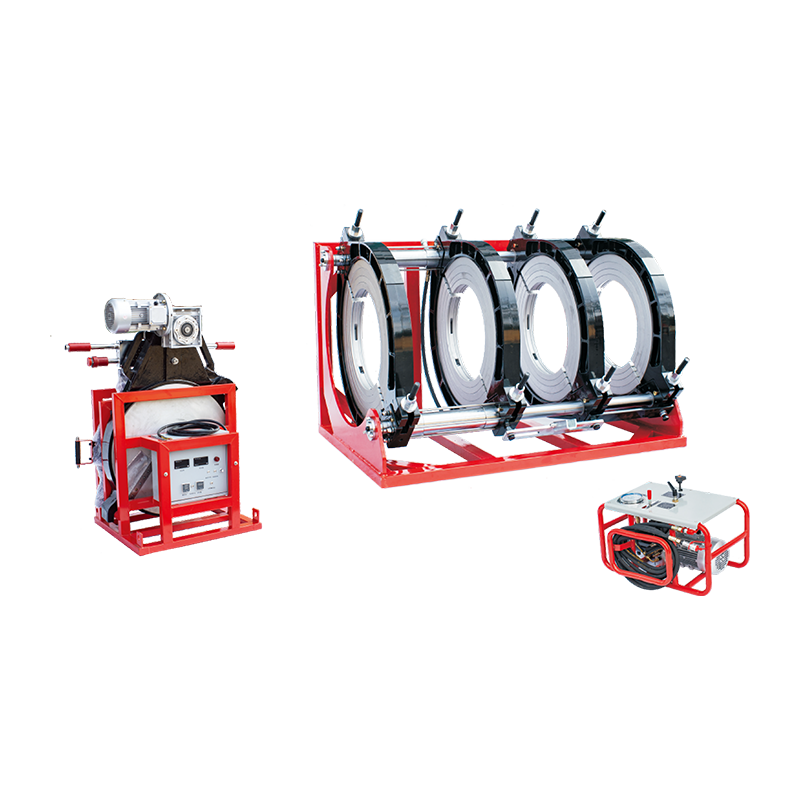
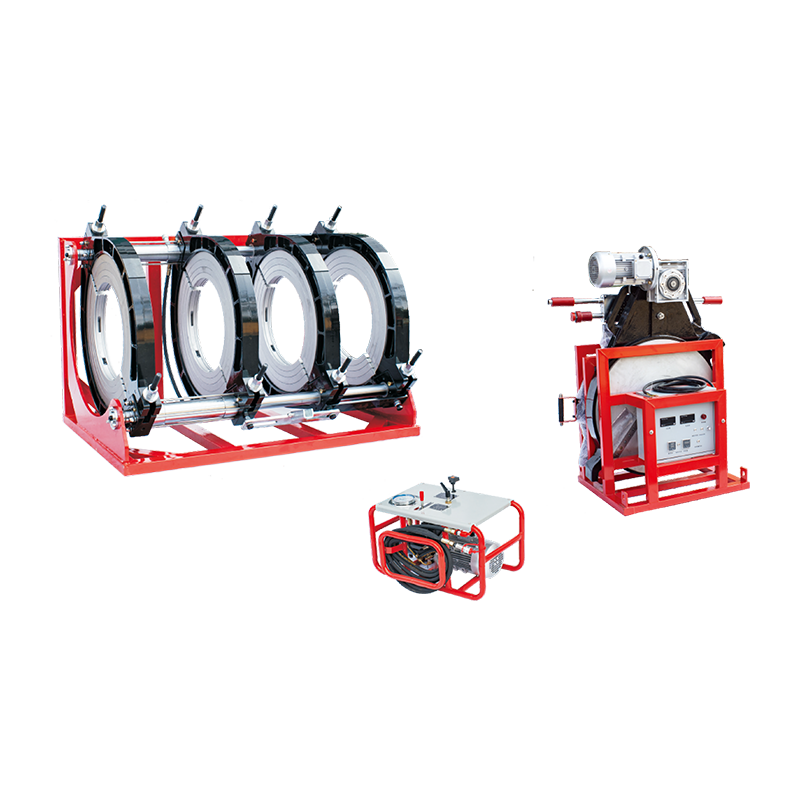
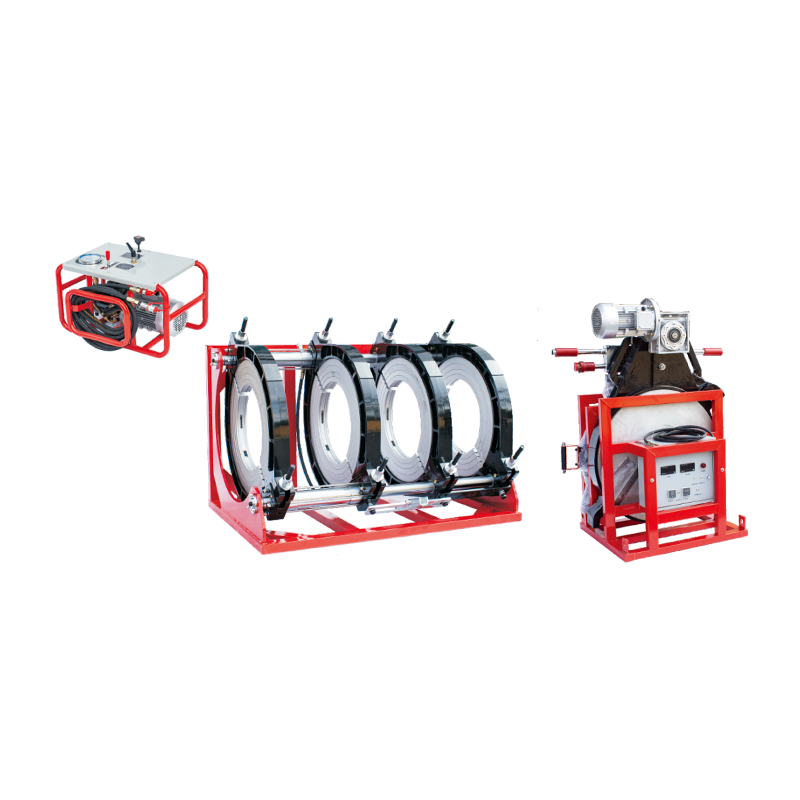
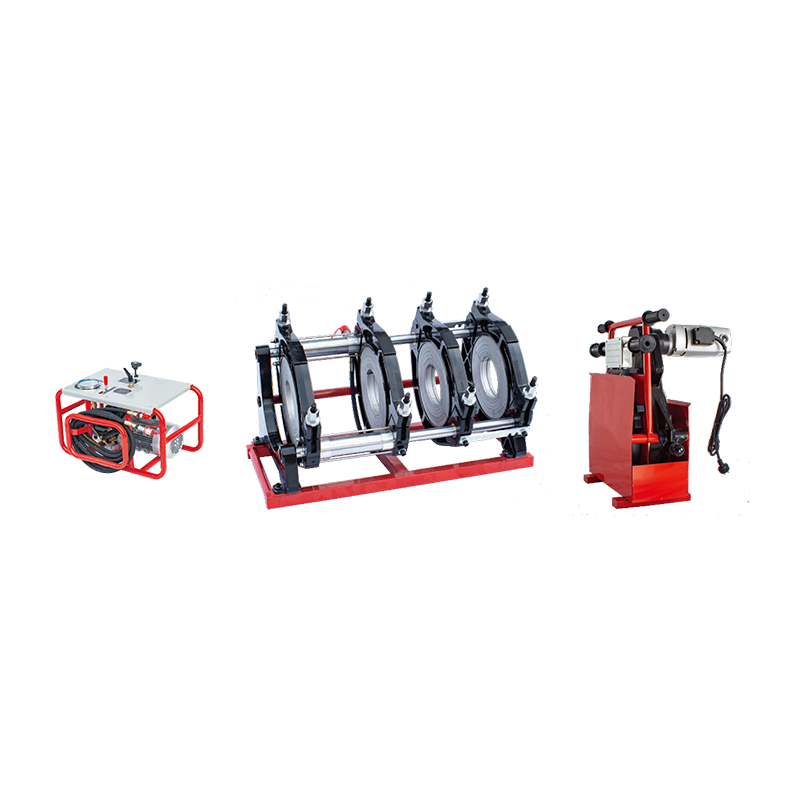
When you are connecting PPR pipes at the 110mm diameter range, the most reliable and code-compliant approach is heat fusion — and specifically, for pipes of this size and above, Butt Fusion Welding Machines deliver the strongest, leak-proof joints available in the industry. Unlike socket fusion tools designed for smaller diameters (typically 20mm to 63mm), a pipe welding machine for PPR 110mm uses end-to-end thermal bonding that fuses the molecular structure of both pipe ends into a single continuous piece. The resulting joint is as strong as — or in many cases stronger than — the original pipe wall. This is the defining advantage that makes butt fusion the preferred method for large-diameter PPR installations in water supply, heating systems, industrial pipelines, and municipal infrastructure.
PPR (Polypropylene Random Copolymer) pipe at 110mm outer diameter is a common specification in commercial plumbing, district heating, and industrial water transport. At this size, socket fusion tools become impractical — the die heads are large, the forces involved are significant, and alignment accuracy is harder to maintain by hand. Butt fusion welding machines solve all three issues by providing mechanically controlled clamping, motorized or hydraulic pressure application, and a precisely heated plate that brings both pipe ends to the correct melt temperature simultaneously. The result is a joint that meets ISO 15874, DVS 2208-1, and ASTM F2389 standards without relying on adhesives, solvents, or mechanical fittings.
The bottom line: if you are working with PPR pipe at or above 75mm — and especially at 110mm — a dedicated butt fusion welding machine is not optional. It is the correct tool for the job, both from a performance standpoint and from a regulatory compliance perspective.

How Butt Fusion Welding Machines Work on PPR 110mm Pipe
Understanding the operating principle of a butt fusion welding machine helps you use it correctly and avoid the most common mistakes. The process has four distinct stages, and skipping or rushing any of them leads to defective joints.
Stage 1 — Clamping and Alignment
Both pipe ends are secured in the machine's clamps and aligned on the same axis. Misalignment of even 1–2mm can cause uneven bead formation and a joint that fails under pressure. Quality butt fusion machines for 110mm PPR pipe include precision carriage systems that keep both ends concentric throughout the entire process.
Stage 2 — Facing (Trimming)
The built-in electric trimmer (also called a facing tool or milling cutter) planes both pipe ends flat and perpendicular to the pipe axis. This step removes contamination, oxidation, and any uneven surfaces. After facing, the gap between the two pipe ends should be less than 0.5mm for 110mm diameter pipe. The trimmer blade is typically made from high-speed tool steel and features a double-sided design, allowing the blade to be flipped when one edge dulls.
Stage 3 — Heating
The Teflon-coated heating plate is inserted between the two aligned pipe ends. Both ends are pressed against the plate simultaneously. For PPR pipe, the correct heating plate temperature is 260°C to 280°C, as specified by ISO 15874 and ASTM F2389. At this temperature range, the polypropylene reaches its melt state without degrading or carbonizing. The heating time is diameter-dependent — for 110mm pipe, this is typically in the range of 40 to 60 seconds depending on ambient temperature and pipe wall thickness. Modern butt fusion machines use closed-loop PID temperature control with a high-accuracy sensor to maintain the plate at the set temperature within ±2°C.
Stage 4 — Joining and Cooling
Once the melt beads appear uniformly around both pipe ends, the heating plate is removed quickly (within 3–5 seconds) and the pipe ends are pressed together at the specified joining pressure. The two molten surfaces mix at a molecular level and are held under constant pressure while the joint cools. For 110mm PPR pipe, the recommended cooling time under pressure is typically 8 to 12 minutes. Moving or disturbing the joint before full cooling is the most common cause of joint failure in field installations. After cooling, the joint forms a single monolithic piece with no seam, no gasket, and no mechanical connection — just fused polymer.
Key Technical Parameters for PPR 110mm Butt Fusion Welding
Getting the parameters right is the difference between a joint that lasts decades and one that fails under the first pressure test. The table below covers the critical specifications for welding PPR pipe at the 110mm outer diameter:
| Parameter | Specification | Notes |
|---|---|---|
| Heating plate temperature | 260°C – 280°C | Per ISO 15874 and ASTM F2389 |
| Heating time (110mm OD) | 40–60 seconds | Adjust upward in cold ambient conditions |
| Plate removal time | < 5 seconds | Any delay causes cold welds |
| Cooling time under pressure | 8–12 minutes | Do not disturb the joint during this period |
| End gap after facing | < 0.5mm | Critical for uniform bead formation |
| Hydrostatic test pressure | 1.5× working pressure | Minimum 30-minute test duration |
| Pipe operating temperature range | -10°C to 95°C | For standard PPR-80/PPR-100 grades |
| Machine power consumption | 1,000–3,000 W | Varies by machine model and voltage (110V or 220V) |
One data point worth highlighting: the hydrostatic test requirement of 1.5 times the working pressure held for a minimum of 30 minutes is the standard acceptance criterion. Any joint that passes this test without pressure loss or visible deformation is considered structurally sound. This figure comes directly from the quality assurance protocols published for PPR pipe fusion systems and gives installers a clear, quantifiable benchmark rather than relying on visual inspection alone.
Socket Fusion vs. Butt Fusion Welding Machines for PPR 110mm: Which One to Use
Both socket fusion and butt fusion are legitimate heat fusion methods, but they are not interchangeable at 110mm. Here is a practical comparison:
| Criterion | Socket Fusion (Hand Tool) | Butt Fusion Welding Machine |
|---|---|---|
| Recommended diameter range | 20mm – 63mm (up to 110mm with large kit) | 63mm – 630mm+ |
| Joint type | Socket + spigot overlap | End-to-end monolithic |
| Fitting required | Yes (socket fitting) | No (pipe-to-pipe) or with fittings |
| Alignment control | Manual (operator skill dependent) | Mechanically controlled |
| Pressure rating consistency | Variable (operator dependent) | High (machine-controlled) |
| Machine cost | Lower | Higher |
| Suitability for 110mm PPR | Marginal / not preferred | Strongly preferred |
Some socket fusion machines are rated for PPR up to 110mm — the RJQ-110 type machines, for instance, include die heads at 75mm, 90mm, and 110mm. These can work for low-pressure domestic applications. However, for any installation where the pipe will carry pressurized water or operate near its rated temperature, Butt Fusion Welding Machines provide significantly better consistency and a fully traceable, verifiable joint. The manual butt fusion approach at this diameter requires only one trained operator and delivers results that independent testing and field experience consistently confirm are superior to socket fusion at the 110mm threshold.
What to Look for When Selecting a PPR 110mm Pipe Welding Machine
Not all butt fusion welding machines on the market are built to the same standard. When specifying a pipe welding machine for PPR 110mm work, these are the features that actually matter in day-to-day use:
Temperature Control System
The heating plate must maintain a stable temperature between 260°C and 280°C for PPR. Machines with closed-loop PID (Proportional-Integral-Derivative) control and a digital display are significantly more reliable than simple dial-controlled units. The sensor should monitor the actual plate surface temperature, not just the element output. A plate that fluctuates by ±15°C during use will produce inconsistent welds — some too hot (causing carbonization), some too cold (causing cold welds that look fine but fail under pressure).
The industry benchmark from modern PPR fusion systems is temperature control within ±2°C of the set point. This level of precision is achievable with current electronic control technology and should be treated as a minimum requirement for commercial work.
Heating Plate Construction
The plate should be made from high-quality cast aluminum with a thickness of at least 18mm. Thicker plates store more thermal energy, which prevents temperature drop when the cold pipe ends are pressed against the plate during the heating phase. The working surface should be coated with PTFE (Teflon) to prevent the molten PPR from sticking. A Teflon coating that peels or degrades will contaminate the melt surface and cause adhesion failure. Check whether the manufacturer offers replacement Teflon coatings, as this is a consumable component.
Pipe Clamp and Carriage Design
For 110mm pipe, the clamps must grip the pipe without deforming the cross-section. Aluminum cast clamps are preferred over steel for weight savings on job sites without compromising strength. The carriage should travel smoothly with minimal lateral play — side-to-side movement during the joining phase can shear the melt layer before it bonds. Machines that use precision-machined guide rods and low-friction bushings will maintain alignment better over the working life of the equipment.
Facing Tool Quality
The trimmer (facing tool) blade should be made from high-speed tool steel with a double-sided design. After one side dulls, the blade is simply reversed — a practical feature that extends service life without requiring replacement. The facing depth stop should be adjustable and repeatable, as inconsistent facing depth is one of the most common causes of uneven bead formation in field welding.
Voltage and Power Options
Butt fusion welding machines for PPR 110mm are available in both 110V and 220V configurations. North American job sites typically require 110V tools for compatibility with standard site power. European and Asian sites generally use 220V. Power consumption for a 110mm-rated machine is typically between 1,000 and 3,000 watts depending on model and whether both the heater and trimmer are operated simultaneously. Confirm the site power capacity before selecting a machine — running an underpowered supply will cause the plate temperature to drop under load and produce inconsistent welds.
Standards Compliance and Certification
Look for machines that explicitly meet DVS 2208-1 (the German standard widely referenced internationally for thermoplastic pipe welding equipment) or equivalent ISO standards. CE certification is a baseline requirement for equipment sold into European markets. Some manufacturers also provide machines calibrated to ASTM F2620 procedures for projects in North American markets. Warranty terms are a practical indicator of build quality — reputable manufacturers of Butt Fusion Welding Machines typically offer a minimum 2- to 3-year parts warranty.

Manual vs. Hydraulic Butt Fusion Welding Machines for PPR 110mm
At the 110mm diameter, both manual and hydraulic butt fusion welding machines are practical options, and the right choice depends on project scale, budget, and the consistency requirements of the application.
Manual Butt Fusion Machines
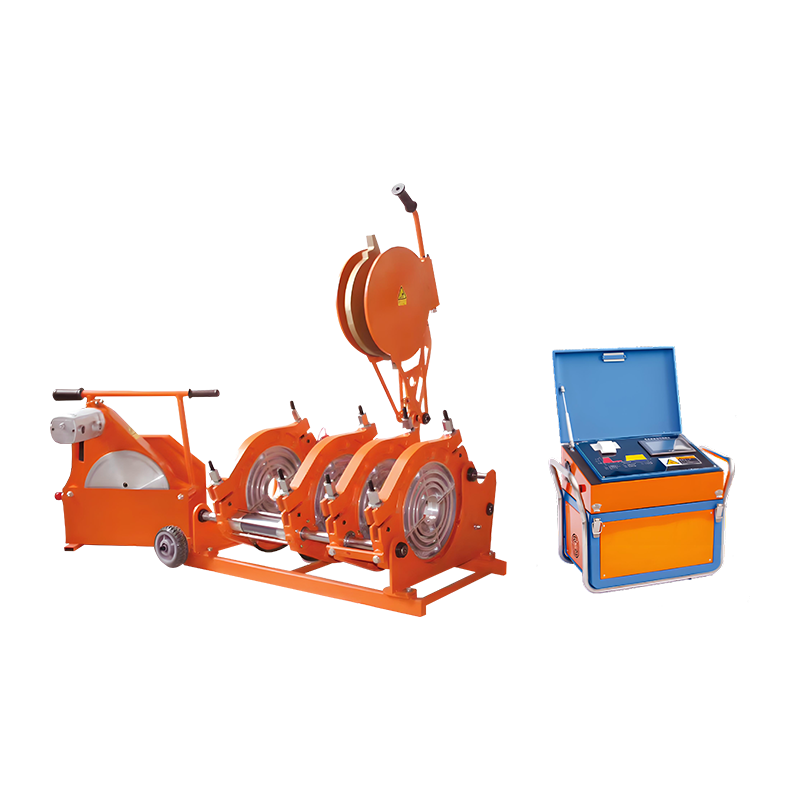
Manual Butt Fusion Welding Machines clamp the pipes with a physically operated carriage and require the operator to apply joining pressure by hand or via a simple lever mechanism. At 110mm, manual machines are viable because the cross-sectional area of the pipe is still manageable by a trained operator. A single operator is typically sufficient. These machines are lighter, more portable, and significantly less expensive than hydraulic models — making them the standard choice for contractors working on residential heating systems, light commercial plumbing, and small municipal water connections at this diameter.
The limitation is consistency: manual pressure application varies between operators and between joints within the same project. For most 110mm PPR applications, this variation falls within acceptable tolerances, but high-criticality systems (pressurized industrial lines, medical facility water supply, gas distribution) should use hydraulic equipment.
Hydraulic (Semi-Automatic) Butt Fusion Machines
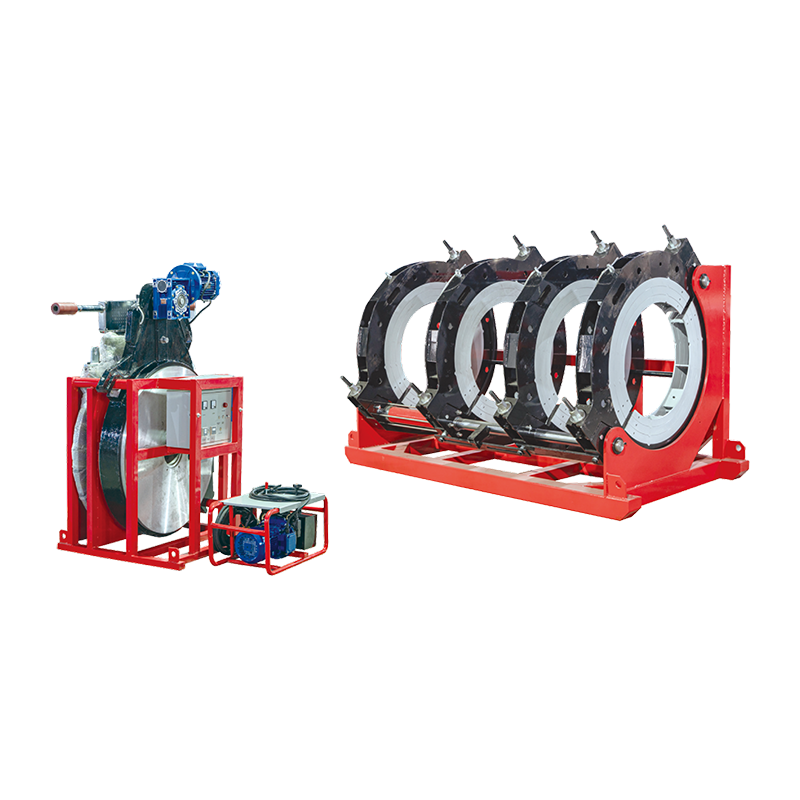
Hydraulic Butt Fusion Welding Machines use a powered hydraulic circuit to control clamping force, heating pressure, and joining pressure precisely. The operator sets the parameters, and the machine executes each phase at the correct pressure. This eliminates human variability from the process entirely. For 110mm PPR pipe, the joining pressure is calculated based on pipe wall area and material specifications — the machine applies exactly that pressure, every time, regardless of operator fatigue or experience level.
Semi-automatic hydraulic machines also typically include data logging capability, recording the actual temperature, pressure, time, and operator ID for each weld. This documentation is increasingly required for water utility and gas distribution projects, where every joint must be traceable. The trade-off is weight, size, and cost — hydraulic machines for the 110mm range are considerably heavier than manual models and require more setup time on the job site.
Common Applications for PPR 110mm Butt Fusion Pipe Welding
PPR pipe at 110mm outer diameter sits at a size that bridges residential and commercial infrastructure. Butt Fusion Welding Machines make these applications practical and reliable:
- Hot and cold water distribution in multi-story buildings: PPR's ability to handle continuous operating temperatures up to 95°C makes it a preferred material for building-wide hot water loops. At 110mm, the main risers and collector headers in apartment buildings and hotels are commonly installed using butt fusion welding machines to ensure the joints can sustain decades of thermal cycling.
- District heating and cooling networks: Small to medium district energy systems use 110mm PPR pipe extensively for the secondary distribution loop. Butt fusion joints handle the temperature differentials and pressure fluctuations that these systems experience without fatigue cracking over time.
- Industrial process water and chemical transport: PPR's resistance to a wide range of chemicals makes it suitable for process water systems in food processing, pharmaceutical production, and light chemical handling. The leak-free nature of butt fusion joints eliminates the contamination risk associated with mechanical fittings.
- Irrigation and agricultural water supply: Large-scale irrigation networks frequently use 110mm PPR for the main supply lines. Butt fusion welding is preferred because the joints require zero maintenance over the service life of the installation and can be buried without protective sleeves.
- Wastewater management systems: In sewage and wastewater handling, PPR pipe at 110mm joined by butt fusion provides the chemical resistance and joint integrity needed for long-term underground service without the seam separation risk of rubber-gasket joints.
- Geothermal and HVAC systems: Butt fusion welded PPR handles the pressure cycling and temperature extremes of geothermal ground loops and hydronic heating systems without degrading the joint quality over time.
Step-by-Step Welding Procedure for PPR 110mm Using a Butt Fusion Machine
Following a structured procedure is essential for consistent joint quality. The sequence below reflects current best practice for manual butt fusion welding of PPR 110mm pipe:
- Inspect and clean the pipe ends. Remove any dirt, grease, moisture, or surface contamination. PPR is sensitive to surface contamination at the melt zone — even fingerprint oils can create micro-voids in the joint. Wipe both ends with a clean, dry cloth.
- Set up and preheat the machine. Power on the butt fusion welding machine and set the heating plate temperature to 260°C–270°C for standard PPR. Allow the machine to reach the set temperature fully — this typically takes 10 to 15 minutes. Do not start welding until the digital display confirms temperature stability.
- Secure the pipe ends in the clamps. Insert both pipe sections into the machine's clamp jaws, leaving the appropriate length of pipe protruding for facing. Tighten the clamps firmly — the pipe must not be able to rotate or shift during any phase of the operation.
- Face both pipe ends. Insert the facing tool and run it against both pipe ends simultaneously until the trimmer produces continuous, fine shavings from both surfaces. This confirms that both faces are flat, clean, and perpendicular. Check the gap between the two faced ends — it should be less than 0.5mm. Remove the facing tool.
- Insert the heating plate and apply heating pressure. Slide the preheated plate between the two pipe ends and press both ends against it at the specified initial pressure until melt beads of approximately 0.5mm appear uniformly around the full circumference. Then reduce to the specified heating pressure (often near-zero drag pressure) and begin timing the heat soak period. For 110mm PPR, this phase is typically 40–60 seconds.
- Remove the heating plate. At the end of the heating time, quickly retract both pipe ends away from the plate and remove the plate from the machine — this must be completed in under 5 seconds. Any delay causes the melt surface to cool below the fusion temperature before the pipe ends contact each other.
- Join the pipe ends and apply cooling pressure. Immediately bring both molten pipe ends together smoothly and apply the joining pressure specified for the pipe diameter and SDR rating. The bead should roll outward uniformly around the full circumference. Maintain this pressure without interruption for the full cooling period — 8 to 12 minutes for 110mm PPR pipe.
- Inspect the finished joint. After the cooling period, release the clamps and visually inspect the bead. A properly made butt fusion joint shows a uniform, symmetrical bead of equal width all the way around. Irregular bead width, notching, or asymmetry indicates a process deviation that should be investigated before proceeding.
- Conduct pressure testing. After the full installation is complete, conduct hydrostatic pressure testing at 1.5 times the system working pressure for a minimum of 30 minutes. Log the results. This is the final quality confirmation step and is required by most plumbing and infrastructure standards.
Common Mistakes in PPR 110mm Butt Fusion Welding and How to Avoid Them
Field experience with PPR butt fusion work at the 110mm diameter reveals several recurring errors. Knowing what to watch for prevents failures before they occur:
Using Incorrect Heating Temperature
Operators who set the heating plate to the same temperature used for PE pipe (around 200°C–230°C) will produce cold welds in PPR — joints that appear intact but have insufficient molecular bonding. PPR requires 260°C–280°C. Conversely, plates set above 300°C for extended periods will degrade the polypropylene, producing a discolored, brittle joint that can be identified by a dark or yellowish bead. Always verify the plate temperature with a calibrated contact thermometer before beginning a new work session.
Contaminated Pipe Surfaces
Oil, grease, moisture, and dust on the pipe ends at the time of fusion will be trapped in the joint. These contaminated zones become points of weakness under pressure cycling. The solution is straightforward: wipe both ends with a clean, lint-free cloth immediately before placing them in the machine. Do not touch the pipe ends with bare hands after cleaning — skin oils are sufficient to contaminate the melt zone.
Insufficient Cooling Time
This is probably the most frequent error in fast-paced construction environments. Removing the pipe from the machine before the cooling time has elapsed — or moving the pipe by hand to continue the installation — disrupts the molecular bonding process. The joint may appear solid but will have reduced structural integrity. The 8–12 minute cooling window for 110mm PPR is not a guideline — it is a physical requirement based on the thermal mass of the pipe and the time needed for the polymer to return to its amorphous solid state.
Misaligned Pipe Ends
If the two pipe ends are not collinear when the joint is made, the bead will be asymmetric — wider on the outer curve of the misalignment, narrower on the inner curve. A consistent offset of more than 10% of the wall thickness is cause for cutting out the joint and remaking it. Use the machine's alignment jigs and check the pipe orientation in both planes before starting the heating phase.
Skipping the Facing Step
Attempting butt fusion without facing the pipe ends is a common shortcut on time-pressured projects. Unfaced pipe ends are never perfectly flat and perpendicular, even when cut with a high-quality pipe cutter. The resulting contact with the heating plate is uneven, the melt bead is irregular, and the joint strength is unpredictable. Always face. It takes under 60 seconds and prevents the most common cause of joint rejection on pressure tests.

Maintenance and Care of Butt Fusion Welding Machines for PPR Work
A properly maintained butt fusion welding machine will deliver consistent performance over many years of regular use. The following maintenance practices protect the equipment and ensure weld quality remains stable:
- Clean the heating plate after each session. Any PPR residue left on the Teflon coating will carbonize during subsequent heating cycles, creating high and low spots on the plate surface. Use a soft wooden or plastic spatula to remove residue while the plate is still warm. Never use metal tools on the Teflon surface.
- Inspect the Teflon coating regularly. A scratched, peeling, or unevenly worn Teflon surface requires replacing the plate or re-coating it. Using a damaged plate leads to melt adhesion and inconsistent heat transfer. Most manufacturers supply replacement Teflon-coated plates as a service part.
- Lubricate the carriage guide rods. The carriage that moves the pipe clamps should travel smoothly without lateral play. Apply light machine oil to the guide rods periodically. Stiff or binding carriage movement makes it harder to apply consistent joining pressure in the critical seconds after the heating plate is removed.
- Inspect and sharpen or replace the facing tool blade. A dull trimmer blade produces uneven facing and leaves rough surfaces that increase the risk of air trapping in the melt zone. The double-sided design common in quality machines gives you one reversal before replacement is needed.
- Calibrate the temperature sensor periodically. Even high-quality temperature sensors can drift over time, especially in machines that see heavy use. Verify the actual plate temperature against a calibrated contact thermometer at the beginning of any major project. A 10°C error in the sensor reading can meaningfully affect joint quality.
- Store the machine in a dry, protected environment. Moisture ingress into the heating element or electrical control components is the leading cause of premature machine failure. Most Butt Fusion Welding Machines for PPR 110mm work include a protective carrying case — use it for transport and storage.
Why PPR 110mm Butt Fusion Joints Outperform Mechanical Connections
For anyone evaluating whether to invest in a pipe welding machine versus using mechanical fittings at 110mm, the long-term data strongly favors butt fusion. Here is why:
Mechanical fittings — compression fittings, flanges, and threaded connections — introduce potential leak points at every joint. Each requires gaskets, O-rings, or thread sealant that age, compress, and eventually fail under thermal cycling and pressure variation. In a system with dozens or hundreds of 110mm connections, the probability of at least one mechanical joint failing within a 10- to 20-year service period is high.
Butt fusion welded PPR joints have no gaskets, no threads, no O-rings, and no adhesive. The joint is the same material as the pipe. When made correctly with a properly calibrated Butt Fusion Welding Machine at the right temperature and pressure, a PPR butt fusion joint does not degrade independently from the pipe itself. It requires no maintenance over its service life. The pipe and all its welded joints will age at the same rate.
From a cost perspective: the upfront investment in a butt fusion welding machine is recovered quickly when you factor in the elimination of mechanical fitting hardware costs (which are substantial at 110mm), the elimination of joint maintenance, and the reduction in warranty callbacks or insurance claims related to plumbing failures. For contractors working regularly with 110mm PPR installations, the machine pays for itself within a project or two compared to the alternative approach.